


How Religious Groups Commandeered Government Funds for Israel’s Battered North
Government decisions and new Ministry of Education criteria have created a rehabilitation mechanism that rewards communities which welcome Garinim Torani’im and sets religious criteria for financial support – deepening the gaps between secular, mixed and Arab communities in the post-war North. A Shomrim report
Government decisions and new Ministry of Education criteria have created a rehabilitation mechanism that rewards communities which welcome Garinim Torani’im and sets religious criteria for financial support – deepening the gaps between secular, mixed and Arab communities in the post-war North. A Shomrim report
Government decisions and new Ministry of Education criteria have created a rehabilitation mechanism that rewards communities which welcome Garinim Torani’im and sets religious criteria for financial support – deepening the gaps between secular, mixed and Arab communities in the post-war North. A Shomrim report
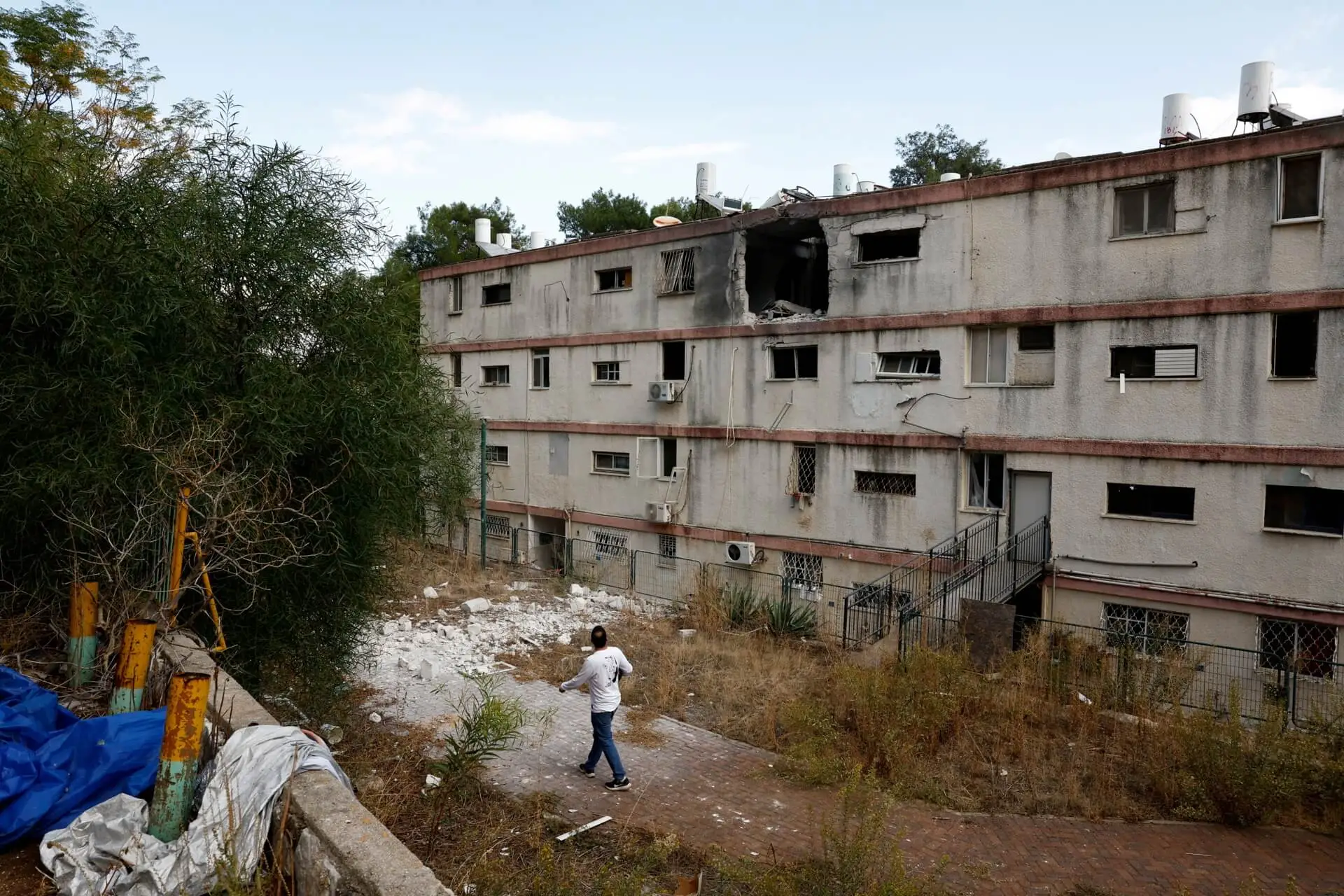
A building in Kiryat Shmona after a rocket hit in November 2024. Photo: Reuters

Keren Cohen Kivelä
February 3, 2026

Summary


Listen to a Dynamic Summary of the Article
Created using NotebookLM AI tool
In the center of Metula – an Israeli town of just over 2,000 residents on the border with Lebanon – there is a modern-looking building with large glass panes surrounded by green frames. Usually, the building is home to the 95 students who attend Hanadiv Elementary School – which was established more than 120 years ago and has moved location several times; around a year before the October 7 war, it was reopened after renovations. During the course of the war, the school – which has become a symbol of Israeli resilience on the northern border – sustained a direct missile hit, requiring extensive rebuilding to get it ready for the students. Even though the local authority worked diligently on the rebuild, the school has remained unused this academic year because so few children have returned to the town.
David Azoulay, the head of the Metula council, told Shomrim that 55 percent of the town’s residents have returned since the war ended and that 30 families have also moved there. He says that the newcomers are part of a private initiative by families from the National Religious camp, who followed in the footsteps of families who moved there before the war and who encouraged their friends and acquaintances to do the same.
According to Azoulay, while Metula welcomes these newcomers, there is some concern among veteran residents that these newcomers may try to change the secular nature of the community. As in all of his previous public comments, Azoulay is at pains to say that while he is a traditionally observant Jew, he knows that he was elected as head of a secular council – and he has no plans to change that. “When someone suggests that I close the road in front of the synagogue on Shabbat or that a certain business shouldn’t be open on Shabbat, I am very resolutely against it.”
In a conversation with Shomrim, Azoulay addressed the question of whether these new families are helping the community rebuild. “The families who came here did so in order to help us, without us asking for any assistance – and now we have to find a solution for the dozens of additional students who need bus rides into Kiryat Shmona every day [for religious education frameworks]. That doesn’t really help us.” The newcomers are also not contributing to commerce in the town, he adds, since they refuse to buy from stores that are open on Shabbat. Azoulay does not believe that most of these families will remain in Metula in the long run and that most will leave after a few years.
Metula was one of the worst-hit Israeli communities during the October 7 war, yet it has been excluded from several of the government-funded rebuilding programs launched in recent months. An in-depth investigation by Shomrim indicates there has been a surge in funding for initiatives with a distinctly religious agenda, through the allocation of public funds for NGOs that run Garinim Torani’im. As a result, communities where there is no official Garin Torani operating and those without a Jewish majority are discriminated against when it comes to public funding and are placed at a disadvantage when it comes to rehabilitation efforts.

“The families who came here did so in order to help us, without us asking for any assistance – and now we have to find a solution for the dozens of additional students who need bus rides into Kiryat Shmona every day [for religious education frameworks]. That doesn’t really help us.”
No Torah studies – no funding
On December 22, the government decided to add 10.7 million shekels in coalition funding to the Ministry of Education for the activities of Garinim Torani’im. The very next day, the ministry’s legal advisor issued a statement claiming that she was only informed of the figures verbally and that she had yet to receive the official wording of the decision. Among the justifications cited by the ministry for the additional funding was the fact that “there has been a consistent increase in the activity of educational Garinim Torani’im,” which “have proved their effectiveness in contributing to society in recent years.”
This latest budgetary increase came some two months after the government passed a resolution, at the request of Minister of Education Yoav Kisch, to add tens of millions of shekels for the expansion and bolstering of the Garinim Torani’im’s activities. Once all these add-ons have been totaled up, the Ministry of Education alone will have funded Garinim Torani’im activities across Israel to the tune of more than 42 million shekels ($13.5 million) over the past year.
One day after the latest budgetary increase was announced, the Ministry of Justice published on its website an updated criteria document issued by the Ministry of Education, detailing the allocation of funding for Garinim Torani’im in northern communities from which residents were evacuated during the war. According to this document, the first criteria for eligibility is that there is a Beit Midrash where Torah studies take place in the community.
While secular and mixed Jewish-Arab groups are only entitled to request funding within the framework of the Settlement and Ministry of National Missions’s mission-based groups, Garinim Torani’im – which are by definition religious – have a special status within the Ministry of Education Moreover, the yeshiva around which the Garin Torani is formed is also entitled to special funding as a Torah institution. A Shomrim analysis of the Accountant General’s database funding reveals that the vast majority of money goes to religious and ultra-Orthodox groups, even within the list of organizations supported in the mission-driven framework – which is supposed to be available for all sectors of the population – due to the large number of Garinim Torani’im.
This has created a triple injustice: toward nonreligious associations which are competing for the same budgets, while their religious counterparts have potential access to other sources of funding; toward communities that the state has conditioned rebuilding funds on their agreement to absorb organizations committed to promoting a religious agenda; and toward communities for whom these organizations are a red herring, since most of the residents are not Jewish.
These criteria for funding, however, are just the tip of the iceberg. A study published in December 2024 by the Adva Center attempted to gauge the extent of the Israeli government’s financial support for Garinim Torani’im. According to its findings, state funding for the 96 organizations which run the groups stood at around 97.1 million shekels (out of a total of 111.4 million shekels that went to all of the umbrella organizations) in 2022. Between 2020 and 2022, a total of 400.3 million shekels ($129 million) was transferred from the public coffers to these organizations. In practice, the budget is a lot higher, however, since these figures do not take into account indirect support, which cannot be accurately measured.
According to the dedicated criteria document for the rehabilitation of the north, half of the funding is supposed to be distributed to NGOs based on the number of families who relocated to the evacuated communities: one point is awarded for each returning family, four points for a new family and five for a family which is involved in educational and community activities. The other half of the funding is earmarked for the umbrella groups accompanying these associations – the most important and prominent of which is the Kehillot Foundation, officially known as the Foundation for the Renewal of Communities in Israel. Over the past two years, the Kehillot Foundation alone has received a total of more than 5.5 million shekels from the government.

Kisch told the audience that “the Ministry of Education plays a very significant role in bolstering the Garinim Torani’im,” explaining that “the location and significance of the Garinim Torani’im have become especially important across the country – and certainly in the North.
‘Judaize the Galilee – unapologetically and unreservedly’
When the most recent conference of the Garinim Torani’im was held over the summer in Kiryat Shmona, the theme of the event was rehabilitation of the North. The conference was hosted by the chairman of the Kehillot Foundation, Yitzhak Lax, an attorney who was previous head of Amidar, Israel’s national public housing company. Last year, Lax called for an immediate halt to all legal actions against Benjamin Netanyahu, arguing that “the prime minister is being subjected to investigations over a Bugs Bunny doll, cigars and champagne – at a critical time for the country.”
Among those attending the conference were Shmuel Eliyahu, whose father is considered one of the founders of the Garinim Torani’im, as well as a long list of cabinet ministers and Knesset members. In his opening remarks, Lax asserted that the current goal of the movement is “to Judaize the Galilee.” He went on to say: “I am deliberately using that phrase – without fear and without reservation; with courage and truth.” Throughout the conference, a second mission was mentioned time and time again: instilling a “Jewish spirit” in local communities.
Ze’ev Elkin, who serves as both minister of Jerusalem affairs and housing stated that Garinim Torani’im were originally founded on the understanding that “we have to go into the toughest places… but also places where everything is ostensibly fine and all they need is the injection of some Jewish spirit.” MK Avi Maoz used his address to the conference to claim that the first thing that the Jewish National Identity Authority – which he heads – did when it was established in 2023 was to reallocate a large part of its budgets to the Garinim Torani’im. He told attendees that he and his people discovered that “the Jewish people rise like a lioness in the heroics of war and also in the heroics of its Jewish identity.”
Kisch, who has recently become the main driving force behind additional funding for these organizations, also used his speech at the conference to brag about one of his initiatives. He told the audience that “the Ministry of Education plays a very significant role in bolstering the Garinim Torani’im,” explaining that “the location and significance of the Garinim Torani’im have become especially important across the country – and certainly in the North. He described the national mission of rehabilitating northern Israel as “super important and strategic work.” Kisch also promised members of the Garinim Torani’im that the Ministry of Education would continue working energetically to increase their funding.
In December, the Kehillot Foundation launched a new initiative aimed at enticing young couples and families to join Garinim Torani’im in the North. Social media accounts promoting the program call on anyone who is interested to join communities with a diverse population, such as Kiryat Shmona and Carmiel. The small print, however, promises them a new home in “a warm and diverse religious community.” The invitation to a special event also notes that there will be no women's singing there – even though, in its response to this article, the Kehillot Foundation insisted that the invitation was extended to secular and religious Israelis alike.
At the same time, the Ministry of the Negev, Galilee and National Resilience announced that it planned on launching a joint 10-million-shekel project with the Kehillot Foundation. As part of the initiative, the Foundation will work to encourage yeshivas students and graduates to settle in the local authorities where they studied, up to 9 kilometers from the northern border, while promising that “thanks to the Foundation’s unique experience, it will complement government activity and bring to bear unique capabilities that do not exist within the government mechanism.” To this end, the Foundation has asked the government to fund half of the cost of the project.

“Are they building contractors? Are they self-employed people who are opening businesses? Or are they just getting plum jobs from the likes of [Settlements Minister] Orit Strook and the religious apparatchiks? All of the contractors and the small business owners left, haven’t returned and won’t return – because they have already opened their small business somewhere else.”
‘How will religious preaching help us?’
Kiryat Shmona was the northernmost Israeli town evacuated during the war and it plays a starring role in the Kehillot Foundation’s campaigns. According to the organization, the Garin Torani that operates in the city – which is run by an NGO called For the Strengthening of Kiryat Shmona and the Galilee with Torah Values (Bitzur, in Hebrew) – has absorbed dozens of new families and many more have expressed an interest in moving to the city.
Although officials from the Bitzur NGO insist that the goal of the Garin is socially oriented, a Shomrim investigation reveals that it is engaged in another activity: it runs the local branch of the Zehut organization, which seeks to disseminate material aimed at increasing Jewish content in the state-run education system by deploying young religious women performing national service. The organization, which has been given government funding of more than 4 million shekels over the past two years, is active in more than 700 classrooms across the country.
The head of Bitzur in Kiryat Shmona, Shulamit Timsit, told Shomrim that the Garin community is integrated into the fabric of the city and that it operates various projects, such as the establishment of an occupational center and activities for retirees. When it comes to projects linked to Jewish identity, Timsit says that she vehemently opposes any effort to bring religious content into secular institutions, but insists that the content being introduced to schools is relevant to Jews no matter the extent of their religious observance.
In November, Yuval Hovav – who heads the Kehillot Foundation’s efforts to settle the North – published an article on the Kipa website, in which he accused the media of sensationalizing the state of Kiryat Shmona for the sake of ratings and argued that coverage of the city has been massively skewed. “It’s the easiest thing in the world to take pictures of some shopping mall on the outskirts of the city – parts of which were closed even before the war – and to present that as an accurate picture of the whole community,” he wrote. However, based on figures from the ground and on conversations with locals, the media’s rather gloomy coverage of the city feels accurate.
Thus far, less than 18,000 of the city’s pre-war population of 26,000 have returned. The cabinet held its weekly meeting in the city last week and introduced a new package of incentives designed to encourage residents’ return, including grants for businesses and individuals, as well as allocating additional funding to encourage newcomers. Leaders of protest movements insist, however, that they are not buying into this false representation.
Shiran Ohayun, an activist from the city, wrote on social media that the cabinet meeting in Kiryat Shmona was nothing more than a publicity stunt by the government. “What’s happening here is a new settlement at the expense of local residents… All of the grants that were supposed to go to people from Kiryat Shmona have been handed over to the new residents.”
Dror, a Kiryat Shmona native in his 40s who still lives in the city, says that “Nothing has changed since July. Anyone who wants to come back has already done so. That’s about two thirds of the population. Fewer young families have come back.”
“People are afraid and don’t feel secure,” he adds. “Every time there’s an explosion, the municipality has to put out a message saying everything is okay, because the WhatsApp groups start to be inundated with rumors. You have to remember that, for 15 years, they lied to people in this region, saying that they were imagining things when they heard noises. That was how the IDF and government responded and, 15 years later, they admitted that they were lying and that there were [cross-border] tunnels.”
Asked whether he believes that the Garinim Torani’im are contributing to the rehabilitation of Kiryat Shmona, Dror is furious. “Are they building contractors? Are they self-employed people who are opening businesses? Or are they just getting plum jobs from the likes of [Settlements Minister] Orit Strook and the religious apparatchiks? All of the contractors and the small business owners left, haven’t returned and won’t return – because they have already opened their small business somewhere else.”
“These Garinim Torani’im come here to preach religion. How are they going to help? What financial support are they providing? Will they go to a pub in the evening? Will they go to watch a movie? Will they open a business?”
Asked whether he plans on leaving the city, Dror’s answer leaves room for doubt.
“Not at the moment,” he says. “Everyone’s very anxious about what will happen. We’ll have to wait and see.”
Responses
The Ministry of Education said in response: “The Ministry operates by virtue of government decisions and within its defined areas of responsibility. In accordance with Government Decision 2826, the Ministry advanced a temporary and updated criteria document in 2025 for educational-Garinim Torani’im that operated in northern communities even prior to the evacuation, with the goal of enabling the renewal of their educational-community activities upon the residents’ return to their communities.
“The Ministry of Education supports educational-Garinim Torani’im according to support criteria, which determine the nature of their activities, including a Torah-educational component that is part of their definition. Financial support, amounting to approximately 42 million shekels, is intended for all educational-Garinim Torani’im operating throughout the country, of which there are about 80, and is not intended exclusively for northern communities. Within the framework of Government Decision 2826, the extent of dedicated support for the rehabilitation of northern communities stands at approximately 2.5 million shekels. The Ministry does not assign Garinim Torani’im to communities and does not determine their identity; they operate on their own initiative and in cooperation with the local authorities.”
The Kehillot Foundation said in response: “The Kehillot Foundation incorporates about 70 mission-based educational Garinim Torani’im working to strengthen communities, civil resilience and social activity. During the recent war, the Garinim Torani’im operated in many cities and communities and led large-scale initiatives to assist the home front: operating shelters, accompanying reservist families, assisting vulnerable populations, strengthening volunteer networks and integrating into municipal emergency teams for the benefit of the residents in the cities and communities where they operate.
“The Kehillot Foundation’s ‘Tzafona’ initiative works to strengthen settlement and community resilience in the North, based on a broad and multi-sectoral national vision. The project accompanies young couples and families, both religious and secular, from the initial stage of interest, through finding housing solutions and connecting them to educational and employment frameworks, to actual absorption in the various northern communities.
“Since the outbreak of the war, more than 30 families have moved to live in the North as part of the rehabilitation and strengthening processes of the region, and more than 130 additional families are currently in advanced absorption processes. These processes take place in full coordination and contact with local authorities, in accordance with the needs, challenges and vision defined by the cities and communities.
“The ‘Tzafona’ project works in cooperation with local authorities and regional entities, and operates within partnerships to promote absorption and renewal in the North. For example, in Kiryat Shmona, we are partners in a regional round table that includes about 10 organizations working to strengthen the city and the community, alongside organizations that appeal to diverse audiences. The project’s activity focuses on strengthening services at the municipal level for the benefit of the entire population.
“The ‘Tzafona’ project also works with high-tech companies, employment centers and academic institutions, with the goal of strengthening the economy, expanding employment opportunities and creating high-quality jobs. This activity is intended to benefit the residents of the North and establish a stable economic and social infrastructure that enables long-term growth and rehabilitation. Strengthening the North is an unparalleled national priority. The Kehillot Foundation is proud to lead this action together with many partners, with full transparency, public responsibility and a deep commitment to Israeli society as a whole.”