


How a Rapidly Changing Haredi Media Landscape Is Challenging Rabbis and Politicians Alike
Recent years have seen a surge in Haredi digital media platforms which are largely uncensored and free to tackle taboo subjects. ‘Covering things up kills people,’ says Yaakov Katzburg, the founder and CEO of Pargod, the most prominent of these new media outlets. With the rabbinical leadership losing its grip on the narrative during an election year, these taboo-breaking platforms pose a real threat to the Haredi establishment. A special Shomrim report
Recent years have seen a surge in Haredi digital media platforms which are largely uncensored and free to tackle taboo subjects. ‘Covering things up kills people,’ says Yaakov Katzburg, the founder and CEO of Pargod, the most prominent of these new media outlets. With the rabbinical leadership losing its grip on the narrative during an election year, these taboo-breaking platforms pose a real threat to the Haredi establishment. A special Shomrim report
Recent years have seen a surge in Haredi digital media platforms which are largely uncensored and free to tackle taboo subjects. ‘Covering things up kills people,’ says Yaakov Katzburg, the founder and CEO of Pargod, the most prominent of these new media outlets. With the rabbinical leadership losing its grip on the narrative during an election year, these taboo-breaking platforms pose a real threat to the Haredi establishment. A special Shomrim report
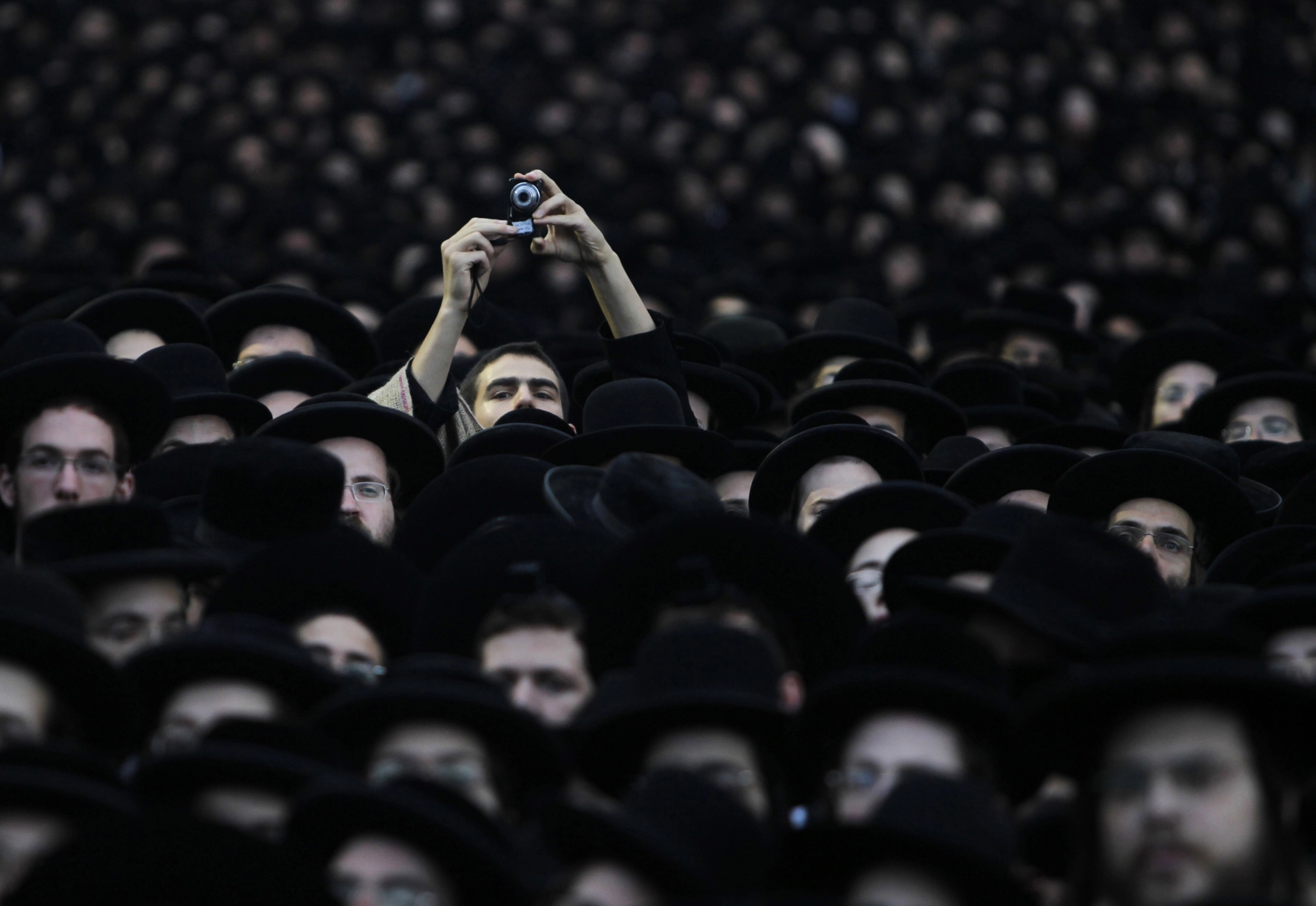
An ultra-Orthodox protest against military conscription: Photo: Reuters

Lir Spiriton
February 1, 2026

Summary


Listen to a Dynamic Summary of the Article
Created using NotebookLM AI tool
About three weeks ago, an event took place that should have been a defining moment for much of Israel’s ultra-Orthodox community amid the crisis over the IDF draft exemption law: Shomrim revealed the internal Haredi policy vis-à-vis funding for so-called drop-out yeshivas – the establishment for young men who are at-risk of abandoning the Haredi lifestyle, in which an estimated one-third of all ultra-Orthodox yeshiva students study. Beyond the financial and budgetary issues, the revelation was also an unequivocal clarification that the leadership of the ultra-Orthodox sector has decided to “sacrifice” the at-risk students by allowing them to be drafted into the military, so that the state leaves the rest of the students alone and resumes the flow of funding to the other yeshivas.
For the Haredi street, the revelation was an earthquake. Without any “official” announcement, a large proportion of “the rabbis” – a somewhat vague phrase which usually refers to the rabbis who control the ultra-Orthodox political parties – are not only backtracking on their long-held policy of “Death before conscription,” they are intimating which Haredi youths will serve in the army: the drop-outs – and almost every ultra-Orthodox person in Israel has a relative or friend who fits that definition.
Notwithstanding the enormity of the drama, it has not made headlines in Israel’s Haredi media. The mainstream ultra-Orthodox media, without exception, maintained total silence over the issue. Responsibility for spreading the news fell to Pargod, a relatively new and hugely popular outlet, which disseminates news and information on several digital platforms, the most popular of which is WhatsApp, where it has tens of thousands of followers.
The huge popularity of Pargod, according to interviewees for this article, stems directly from the fact that it is not afraid to deal with topics that most other media outlets refrain from covering due to internal self-censorship. Among the issues that traditional outlets shy away from are any criticism of the leadership, sexual assaults, corruption and many others. According to Pargod’s Wikipedia page, it has more than 200,000 followers on all its various platforms and it is not the only such outlet. The success of these outlets in rapidly accumulating followers proves that the Haredi public is hungry for information on issues that, until recently, were considered taboo.
The changes may be slow and not immediately evident, but the Haredi community in Israel has undergone a massive upheaval in recent years on many fronts. The changes in media consumption habits may well be the most significant of these changes. Up until just 20 or so years ago, ultra-Orthodox society got its information almost exclusively from the printed press, which was heavily censored by an internal rabbinical committee and was controlled by the political parties. In the years that followed, the newspapers were joined by additional platforms, such as phone-based news hotlines (“Kav Nayes”), radio stations, more newspapers and internet sites. While many of these were not affiliated with any political party, they still maintained a strict self-censorship of content and toed the societal line.
The proliferation of smartphones and permanent internet connectivity in the aftermath of the coronavirus pandemic shattered the status quo. First, by providing a glimpse of media from the outside world and later by providing the ground from which an alternative Haredi media could emerge – based on digital platforms. The internal competition that this has created means that media outlets are now covering issues that, until recently, were considered off limits.
While it is, of course, impossible to predict what impact these new platforms will have in the long term, the coming year will without doubt be an important milestone in the process. With an election on the horizon, the Haredi leadership will have to make a reckoning with the ultra-Orthodox public on several issues: its handling of the draft law, irrespective of how that legislative process ends; the evaporation of state funding for ultra-Orthodox educational institutions; the reduction in welfare payment to Haredi families; and many more. And, for the first time, it will have to do so without being in total control of the media narrative.
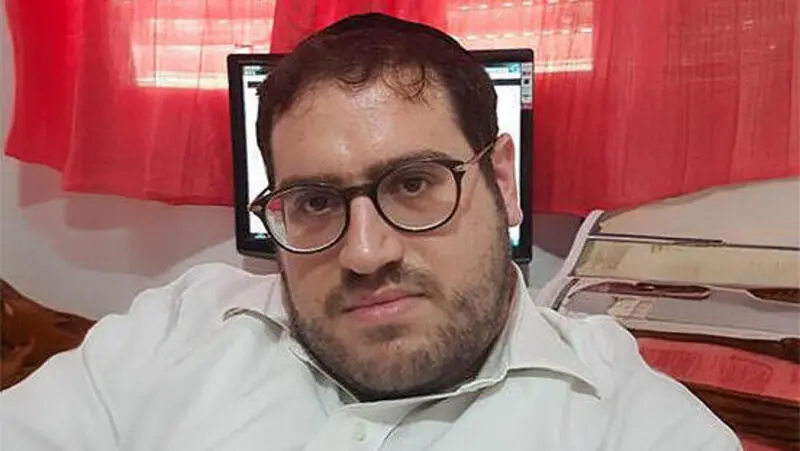
“We simply have to reeducate the public. It’s like sweeping all the dirt in your house under the sofa because that’s the easiest thing to do – even if, one day, someone will move the sofa and find everything. The media is the same."
Challenging Netanyahu
Ultra-Orthodox society consumes printed content far more than the general Israeli population. According to Indox – a company which maps media consumption in the ultra-Orthodox community – around 70 percent of Haredi households purchase or are exposed to a weekend newspaper.
The oldest newspapers in the ultra-Orthodox sector are Hamodia, which was established in 1950 as the official organ of Agudat Yisrael; Yated Ne’eman, which is affiliated with Degel Hatorah and was founded in 1985; and Hamevaser, launched by the Porush dynasty’s Shloimei Emunim faction to represent several different Haredi communities. Shas also had a newspaper for several years, before it was sold to private ownership. Since 2017, it has published Haderech, a daily newspaper with an expanded Friday edition.
An analysis of these publications gives the impression that one of the main remaining taboos is coverage of Haredi politicians, their goals and their alliances. In a previous interview with Shomrim, former Yated Ne’eman journalist Benny Rabinovitz was highly critical of the way that the ultra-Orthodox media protects the politicians. “It’s a kind of journalism that is utterly and shockingly detached from reality. That includes all media outlets, from newspapers to radio stations. Everything,” he said, citing coverage of the draft law as an example. “The ultra-Orthodox media is really stirring up the issue (…) they need to find a new scapegoat every day so that they can find a headline for their front pages. Every couple of days, the target changes.” Nonetheless, Rabinovitz points out, the one person who has almost completely avoided criticism over the draft law is none other than Prime Minister Benjamin Netanyahu – despite his many promises to the rabbis that he would deal with the issue to their satisfaction. “They are very careful not to offend him and I believe that this is at the direction of the Haredi politicians,” he adds.
As mentioned, party-affiliated newspapers enjoyed a monopoly for many decades, but, in the end, they were also exposed to competition from bodies that can be generally grouped together under the umbrella of “conservative Haredi media.” While these outlets are not affiliated with any party, they operate within internal restrictions when it comes to covering certain issues – a kind of self-censorship.
One of the oldest of these outlets is Mishpacha, which even has an internet site, where it claims a readership of 250,000 a month and almost 3,200 advertisers. “The newspaper began as a monthly periodical aimed at the family and then became a weekly which tried to provide a wide range of media services,” says publisher Eliyahu Paley. “At a later stage, it became a daily newspaper which reports on current affairs and news, with special supplements for parents, children and so on.”
Paley says that Mishpacha is unique in that is appeals to the general ultra-Orthodox public and not just segments and factions within it, that it sees the rabbinical leadership of all the Haredi streams as worthy of exposure and that it addresses issues that affect the whole of ultra-Orthodox society. “That could be articles about matchmaking, about drop-out youth or even about domestic violence, mental-health issues, special-needs children and so on,” he says. It’s worth noting that, in the distant past, party-affiliated newspapers refrained from covering even those issues, which is perhaps why Paley adds that “as a newspaper, we are also very loyal to the values of ultra-Orthodox society.”
What does that mean exactly?
“From the day that it was established, the newspaper has also had a spiritual committee. Just like an ethics committee or a legal counsel, we have advisors on matters of Torah and Halakha. It’s part of the DNA of how an ultra-Orthodox newspaper operates.”
Paley adds that the content guidelines set by Mishpacha have gradually been adopted by the party-affiliated newspapers. However, there are very clear limits to the relative openness of Mishpacha. For example, Paley says that his newspaper does not seek “to challenge the rabbinical leadership.” Asked to expand on this, he says that “we have refrained and continue to refrain from any attempt to impose an agenda on issues that are in the public consciousness and on which the Great Torah Leaders have ruled.”
Can you elaborate?
“If the rabbis have already discussed an issue, we do not believe that it is our newspaper’s role to challenge or try to educate them. We see our role as disseminating information about certain issues, such as discrimination against Sephardi girls when it comes to school admissions. In our first years, we dealt a lot with that issue and we put it firmly on the agenda. This created awareness and dialogue and also ensured that figures from the leadership stepped in to try and resolve the problem. But the rule set by the first editors and the spiritual committee is that when there is a dialogue, when the Torah sages have addressed the issue, it is not the role of a newspaper to present its own position. That is what characterizes this newspaper: it is committed to codes and it respects Torah scholars and the rabbinical leadership.”
How does that square with, for example, the issue of the draft law, on which various members of the rabbinical leadership have differing views?
“Within the communities themselves – the Hasidim, the Lithuanians and the Sephardim – there are differing approaches and that is exactly where our newspaper makes its biggest contribution. Putting issues on the agenda and providing a platform for the positions of Degel Hatorah and those of Agudat Yisrael – and where each of them is trying to pull in its own direction. We do this to allow the reader to better understand each event. Did we put Rabbi Leibel [a prominent pro-draft figure in the ultra-Orthodox world] on the front page of our newspaper? No. Because the agenda he is promoting does not necessarily square with the accepted agenda of the Haredi leadership.”
When asked about the more recent Haredi media outlets, Paley says: “Because there is no effective regulation, it’s a mixed bag of quality and trash. You can find some excellent stuff there, but on the flip side, there’s a ton of sensationalism, gossip and worse. My feeling is that, to put it bluntly, there’s more harm than good coming out of it.”
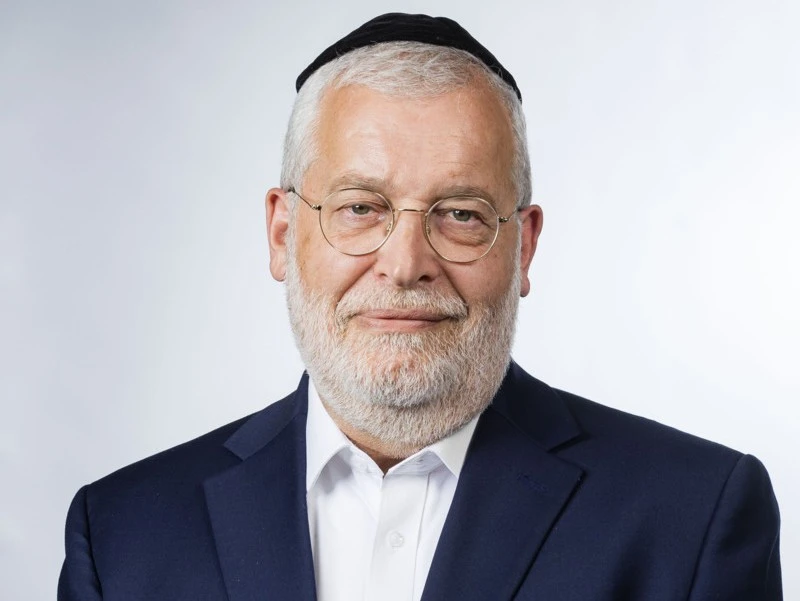
“From the day that it was established, the newspaper has also had a spiritual committee. Just like an ethics committee or a legal counsel, we have advisors on matters of Torah and Halakha. It’s part of the DNA of how an ultra-Orthodox newspaper operates.”
One phone for show, one in the pocket
During the 1990s and 2000s, Mishpacha was joined by additional media outlets, several of which began life as online platforms, such as Kikar Hashabat and Hadrei Haredim, as well as radio stations like Kol Hai and Kol B’rama. The journalistic ethics implemented by the vast majority of these outlets was and remains entirely Haredi: there are some issues which simply are not discussed, rabbis are very rarely criticized and so on. And still, the fact that these are media outlets which are not party-affiliated means that the gray area between what is forbidden and what is permitted has expanded. Some five years ago, Dr. Ines Gabel, a lecturer at the Open University, conducted a study about the development of the Haredi media in Israel. Her study examined the new voices that have appeared on the ultra-Orthodox media landscape and the extent to which they have influenced Haredi society. The study was primarily based on qualitative content analysis articles published in Mishpacha and interviews with staff members.
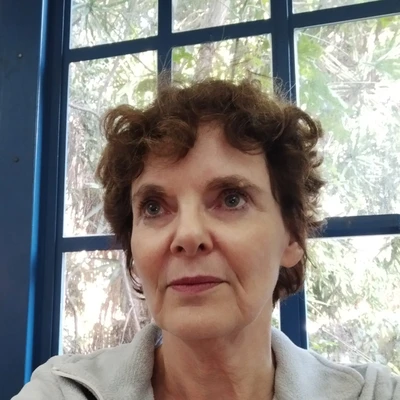
According to Gabel, after her research was published, editors from Mishpacha severed ties with her. They were angry that the study dealt with what she defines as “the interplay between opposition and criticism and conformism and the need to be part of the community.” She argues that in a dogmatic and disciplined society like the ultra-Orthodox society in Israel it is difficult to publicly express dissent, forcing the Haredi media to do so covertly. She agrees that Mishpacha “is a slightly liberal and slightly different voice, but they did not want to say so out loud.”
Asked if a large part of the ultra-Orthodox population is looking for this kind of media outlet, Gabel compares the phenomenon to the fact that many Haredim use two different phones: one smartphone and one “kosher” phone. “They keep a kosher phone for the sake of the school’s requirements, but it’s a charade that everyone is in on; everyone knows there’s another phone in the pocket,” she says. “But to say that you have an extra phone is to express open criticism. Not saying anything allows you to remain part of the community. I find the same phenomenon exists in the media. In our study, for example, we found articles in which interviewees expressly encouraged people to obtain further education and to join the workforce. Nobody at the newspaper talks about it; they talk about other issues. But the people involved are familiar and a Haredi newspaper would not normally give them a platform.”
.webp)
‘Cover ups kill people’
The final segment of the ultra-Orthodox media map is what can cautiously be referred to as the first shoots of a free press which quickly penetrated to the heart of mainstream ultra-Orthodox society thanks to digital dissemination platforms from social networks like WhatsApp and Telegram to repeatedly blocked newsletters and even a dedicated telephone line that used artificial intelligence to read the latest news headlines.
The Pargod Group, the largest of these groups, is a clear example of this new landscape. It operates with a level of openness that did not exist in the past, is unafraid to voice criticism, and at the same time remains ultra-Orthodox in its worldview and in the political positions it promotes - positions that reflect the prevailing views among its readers.
The tragedy earlier this month at an ultra-Orthodox daycare center in Jerusalem, where two infants died of heat exhaustion and dehydration, provided a clear example of the gulf that exists between the two generations of ultra-Orthodox media outlets. The established outlets echoed the narrative put forward by the Haredi politicians, who railed against the “edicts” – the cancellation of subsidized daycare as part of the battle over the draft law – which they claimed forced more ultra-Orthodox families to send their children to unlicensed daycare centers. From that point, it was only a matter of time before Attorney General Gali Baharav-Miara became the focus of criticism. In truth, however, the tragic incident in Jerusalem has nothing to do with these sanctions.
The new Haredi media – from radio stations to Pargod – was a lot more circumspect about adopting that narrative. While it was given some airtime, this was often accompanied by caveats and calls for accountability. The situation highlights the dilemma for Haredi politicians this election cycle: they can push their narrative all they want, but for the first time, they are going to face real pushback.
Shomrim spoke to Yaakov Katzburg, founder and CEO of Pargod, about coverage of the daycare tragedy. “The written press published malicious articles blaming the attorney general, even though that daycare center had been operating illegally for three years and had nothing to do with the [sanctions] issue. It’s absurd to use such a terrible incident like that.”
Katzburg started his career in journalism working for Kav Nayes, which is where he was first exposed to the culture of censorship. When he could stand it no more, he launched the first WhatsApp group, without holding out much hope for success. He was surprised by the rate of growth, which forced him to come up with his current model for handling such widespread activity. He says that he works almost alone, relying on his own editorial judgement and not answering to committees, censors or advisors. On more than one occasion, he says, he has been asked to delete or censor his posts – but he steadfastly refuses. This was the case, he says, over his coverage of protests outside the homes of Haredi politicians who support the draft law.
“The Haredi public ignores a lot of things,” he says. “It ignored anything that does not fit in with its agenda – and I’m not just talking about sexual misconduct; I’m talking about certain rabbis who are less mainstream.
“We simply have to reeducate the public,” he states. “It’s like sweeping all the dirt in your house under the sofa because that’s the easiest thing to do – even if, one day, someone will move the sofa and find everything. The media is the same. It won’t help them to ignore things, because the ultra-Orthodox population has grown and the fringes are wide. Even on the issue of exemption from military service they went along with the fiction that everyone who got an exemption was necessarily a yeshiva student.
“I am not driving toward modernization, God forbid. I honestly and genuinely believe that a youth who is deeply engrossed in Torah study isn’t suitable for the army. I’m not saying that he shouldn’t contribute; I’m saying that he cannot do so. He was raised that way; he really does not look at women. He is dedicated to Torah study and serving in the army isn’t an option. But there are plenty of youths who are not in that situation.”
Katzburg says that his target audience is diverse and highly engaged, with a significant share of his content being user-generated. As for Pargod’s mission, he maintains that it’s all about providing the public with an authentic voice.
“My brother-in-law was killed in the Mount Meron disaster. What happened there was the devaluation of human life. No one talks about the fact that the crush happened when people were standing in line for food. They had finished the ceremony and went to eat. Why were they giving out food at a place like that? Did no one think ahead of time that it would be incredibly crowded in the tiny dining room adjacent to the tomb [of Rabbi Shimon bar Yochai]? So, I said to myself that there can be no more cover ups. Covering things up kills people. Why should a Haredi newspaper refrain from criticizing the organizers of that pilgrimage? Why? In short, the whole system needs to be shaken up and I think I’m in a position to do that.”

"What happened there was the devaluation of human life. No one talks about the fact that the crush happened when people were standing in line for food. Why should a Haredi newspaper refrain from criticizing the organizers of that pilgrimage? Why?”
The link between questioning and consuming content
Prof. Nili Steinfeld, a senior lecturer at Ariel University, has studied media consumption in ultra-Orthodox society. “The study itself tried to compare Haredim to secular Israelis in terms of their ability to identify fake news,” she says, stressing that she focused only on those ultra-Orthodox media consumers who are regular internet users to the same extent as their secular counterparts.
“The written word has a lot of power in Haredi culture,” she tells Shomrim. “But they learn this value within a very insular and ordered framework. Something in their internal practice tells them that asking questions is very important, but, at the same time, that there are some questions that are not asked.
“They are online just as much, just as regularly and just as extensively as secular Israelis, but there is something different about their use of the internet, their ability to understand, to differentiate, to ask and to question the information they are exposed to – and that’s what we are addressing. Do they know how to consume content in a critical manner? Do they know to ask who disseminates the information and to what end? Do they question why that article was served up to them and who was behind it? What do they want them to think? And what do they want them to be addressing? In that respect, I believe that the Haredim are lagging far behind secular Israelis, because it goes against their agenda and the way they were raised and educated.”
Can you try to explain it?
“It’s connected to how we were raised from a young age, how we ask questions, what questions we are allowed to ask, how we get answers and what it is permissible to doubt. In the Haredi experience, this doubt is very important, but very limited.”
Steinfeld acknowledges that this is a key instrument of control within the Haredi world. From her point of view, ‘In a society where the leadership is so absolute, everything starts at the top and filters down. It ends up powering all the social machinery – whether that machinery is actively managed or just shaped by the community’s overall nature.
“People tend to think of the media as some kind of watchdog which works to serve and protect the community. Even with all the changes that Haredi media outlets are undergoing, even with their openness, clear boundaries have been drawn. And they are being drawn from above.”
Will these changes have any impact on Haredi society? Gabel and Steinfeld may welcome this new openness, but they are unconvinced that, at the current time, it has enough power to make any significant change. “There’s a large gap between what is written in the newspaper and what people say, think or are willing to do. For many years, for example, people thought that when ultra-Orthodox join the workforce and will have contact with secular women, will be exposed to their ideas and get to know a different world – new ideas would permeate ultra-Orthodox society. That didn’t happen to the extent that people thought it would,” says Gabel. “I believe that there is opposition, but that it’s covert and still does not have the strength – or the chutzpah – to make a big enough difference.”