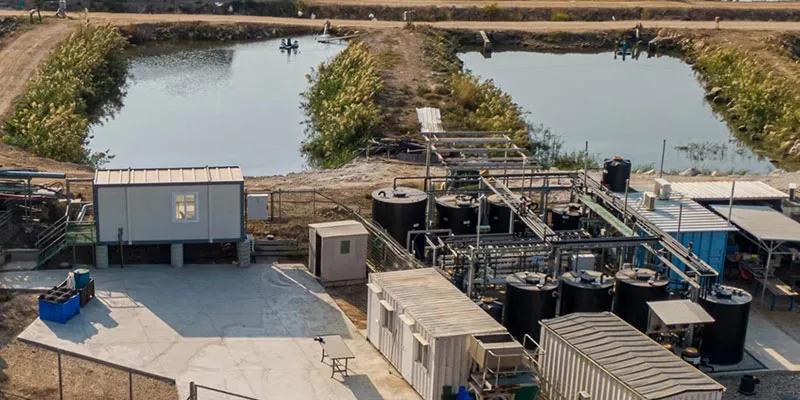



Structural Danger: The Growing Infrastructure Crisis in Beit Shemesh Schools and Kindergartens
Despite repeated warnings and several near-fatal incidents, dozens of Haredi educational institutions in the city continue to operate in temporary, unlicensed structures with little to no safety oversight. Meanwhile, City Hall and the Education Ministry continue to shift responsibility between them. A Shomrim tour of Beit Shemesh uncovered conditions that amount to a tragedy waiting to happen. Published in Mako
Despite repeated warnings and several near-fatal incidents, dozens of Haredi educational institutions in the city continue to operate in temporary, unlicensed structures with little to no safety oversight. Meanwhile, City Hall and the Education Ministry continue to shift responsibility between them. A Shomrim tour of Beit Shemesh uncovered conditions that amount to a tragedy waiting to happen. Published in Mako
Despite repeated warnings and several near-fatal incidents, dozens of Haredi educational institutions in the city continue to operate in temporary, unlicensed structures with little to no safety oversight. Meanwhile, City Hall and the Education Ministry continue to shift responsibility between them. A Shomrim tour of Beit Shemesh uncovered conditions that amount to a tragedy waiting to happen. Published in Mako
Photos: Shomrim

Daniel Dolev

Lir Spiriton
February 10, 2026

Summary


Listen to a Dynamic Summary of the Article
Created using NotebookLM AI tool
When two young girls were moderately injured in an accident at an educational facility in Beit Shemesh some two months ago as the result of the roof of an unauthorized structure collapsing, attention turned to the issue of schools and kindergartens operating without permits and without adequate supervision. Nonetheless, when Shomrim toured the city recently, we discovered that nothing has changed: Beit Shemesh is still home to educational facilities – some of them without permits – operating in temporary, mobile structures which are a clear violation of safety regulations.
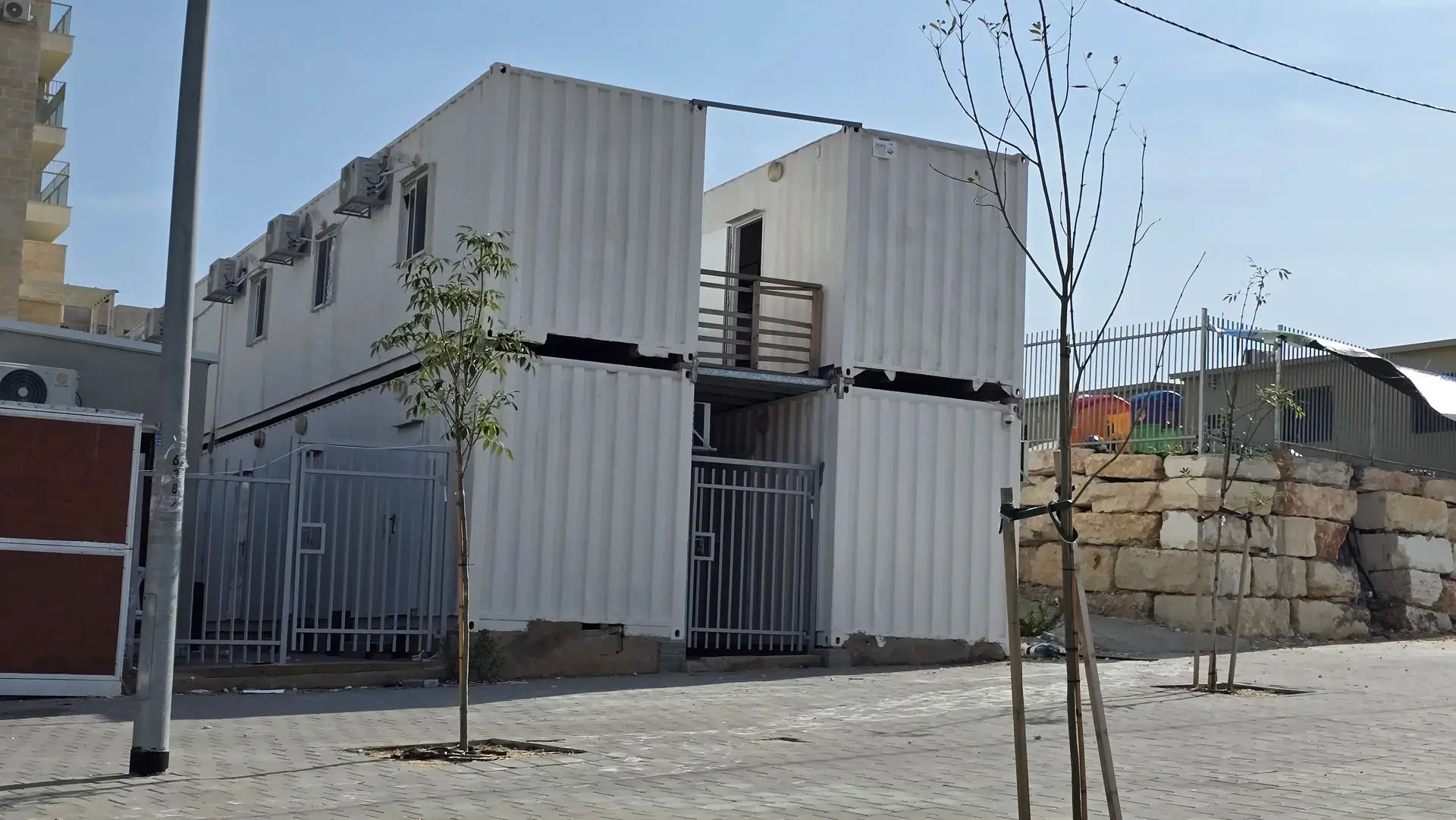
Not far from the scene of the accident in November is the Vizhnitz Primary School for Girls. From behind the fence, one can hear the girls playing. At the entrance to the school, a security guard asks us the purpose of our visit – and above us we can see temporary structures, two stories high, and a balcony held up with scaffolding. Based on aerial photographs, it is evident that the school has been erecting these structures steadily since 2017. According to the website of Beit Shemesh municipality and documents sent by the school, at least some of these structures are not authorized. Rabbi Menachem Greenbaum, the head of the association which runs the school, argues that they are either fully authorized or are “in the final stages of obtaining permits.” He presented us with engineering permits.
The problem stems from the fact the state is unable to build enough classrooms to meet population growth – especially in the ultra-Orthodox sector. According to a State Comptroller’s Report, there was a nationwide shortfall of 10,219 classrooms in schools and kindergartens in Israel in 2020. One of the solutions was to turn mobile structures into classrooms. The problem is especially acute in the Haredi education system.
As far back as 2007, the State Comptroller wrote about “thousands of Haredi educational institutions for compulsory education ages in all kinds of buildings, including structures established by private entities that do not comply with the Ministry of Education program, portable buildings and rented structures. The Ministry of Education has not mapped the educational institutions in the Haredi sector; consequently, it lacks centralized information regarding the types of buildings in which all Haredi educational institutions are located... The local authorities that were investigated also lacked full information regarding the physical condition of all Haredi educational institutions.”
.webp)
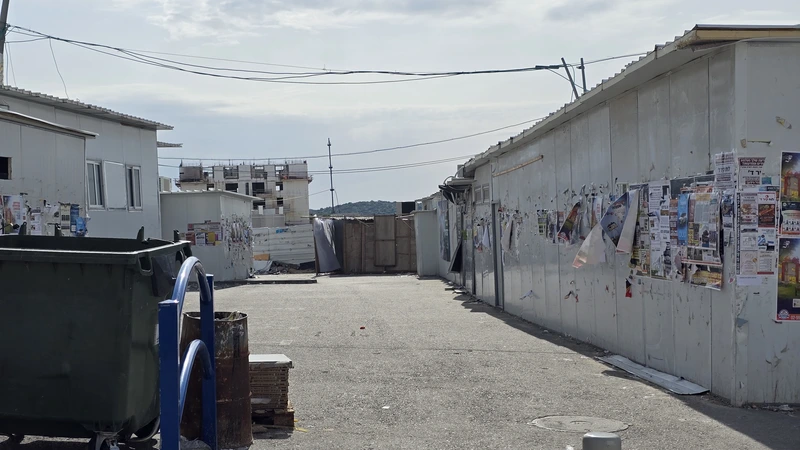
“We are on the verge of a catastrophe in the city,” said Beit Shemesh mayor Shmuel Greenberg, at a meeting of the Knesset’s Education Committee in June. “In two months from now, the school year will start – and I have a shortfall of 200 classrooms. I’ve got no idea where to find them. The city’s population grows by one classroom every day. The population increase is staggering and the rate of construction isn’t keeping pace.”
According to Greenberg, the funds allocated to his city for the construction of classrooms is unrealistic, given the population growth. “I get 20 million shekels [$6.4 million] for a school with 24 classrooms,” he said. “In the past, it used to cost me between 21 and 23 million shekels and we managed with that. But today, given that the formula hasn’t been updated for years and given the war-related inflation, it costs me 35 million shekels to build a school of that size. I can’t deal with it when I build 30 or 40 schools. My city is in the second socio-economic group. When the school year starts, they use mobile structures as a temporary solution – and that makes the land on which the classrooms are supposed to be built inaccessible.”
A kindergarten with cracked walls – alongside construction waste and a men’s mikveh
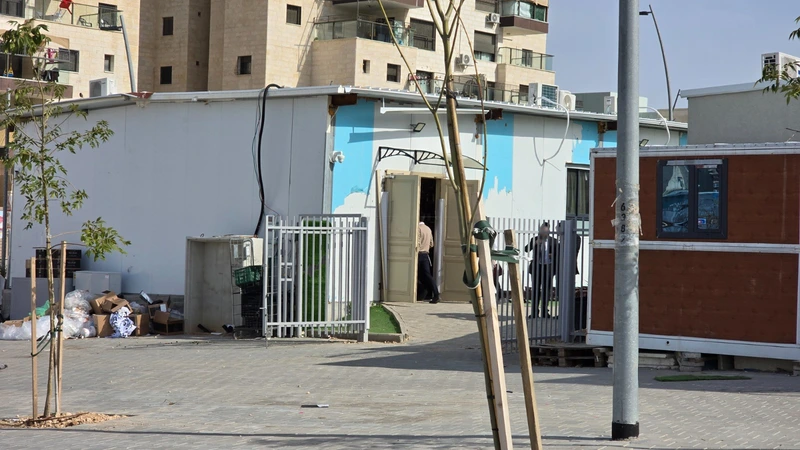
Beit Shemesh’s municipal kindergarten Number 7 perfectly illustrates the mayor’s point. The path leading to the kindergarten is narrow and runs alongside piles of construction waste – as well as the entrance to a men’s mikveh. Inside the building, there is a prominent crack in one of the walls, the smoke detectors are missing and a missing ceiling tile reveals electric cables. This may be considered acceptable wear and tear for a building that is supposed to be temporary, but less when dozens of children spend hours in it every day.
“Last week, I issued a letter regarding this kindergarten, which is located in a complex of kindergartens and mobile structures which I am sure lacks safety permits," says city council member Tami Sussman. “Parents and teachers informed me that the Ministry of Education has told them that they have to close the kindergarten because of an adjacent mobile structure that also doesn’t have a permit – which is a men’s mikveh. Why is there a men’s mikveh next to a kindergarten? I can tell you that I am the only person who has taken this to the media. There’s silence here. And I can also tell you that there are a lot of structures like that here.” According to Itzik Almaliah, the head of Beit Shemesh’ education department, this is the only municipal kindergarten operating out of a mobile structure and all the others are located in permanent buildings. Indeed, while the area around this municipal kindergarten is dotted with temporary structures that are being used as kindergartens, they are privately owned and operated by various associations.
The state of the city’s primary and secondary schools is also not encouraging. A tour of Beit Shemesh reveals that studying in a mobile structure is very much the norm. The problem is not only the fact that students are being taught in temporary classrooms, but that there appears to be an utter lack of supervision and enforcement. As TheMarker reported, the structure that collapsed in November was unlicensed. The kindergarten was operated by the Ohel Frieda Leah organization which, according to the Israel Hofsheet NGO, runs around 30 educational institutions across the country. As of 2023, its annual budget stood at 57 million shekels – at least 75 percent of which comes from government and municipal funding.
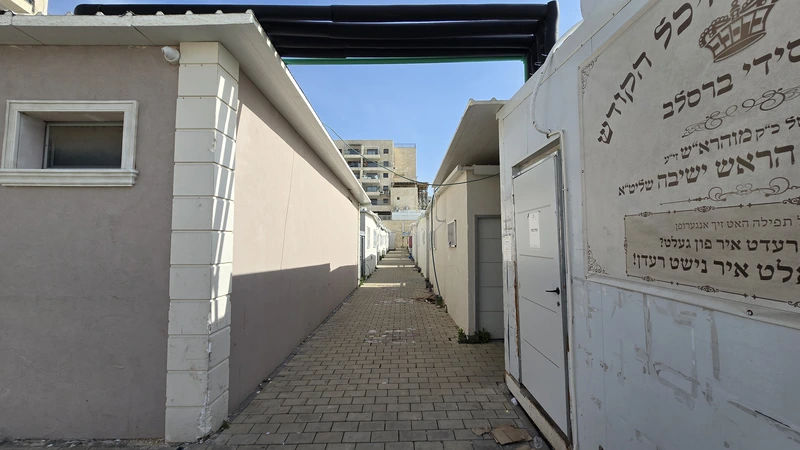
The difference between the institution that collapsed and many other educational institutions in the city is that, so far, it is the only one where disaster has struck. Located on Habakkuk Street is the Sternbuch Yeshiva for Boys – part of which is situated in cargo containers stacked into two stories and placed on raised ground so that their edges are dangling in the air. Aerial photographs on the government’s Mapping and Geographic Information System website show that the containers were placed during 2025 and reveal a discrepancy between their placement and the permitted plans. Rabbanit Sternbuch, who runs the administrative side of the yeshiva, confirmed that the containers do not have permits, but added that they do have safety permits – even showing Shomrim copies of permits from a civil engineer and a construction engineer. She added that the yeshiva has asked for a retroactive permit and is expecting a positive response within weeks.
Nearby Chabad Street is home to the Birchat Shmuel Yeshiva, which also uses containers stacked on top of each other. In this case, the “safety railing” is nothing more than a wooden pallet. A man who was on the site and who appeared to be a teacher – but declined to identify himself – claimed that the makeshift structure was only used for “afternoon rest.” In a telephone interview with ;12345676Shomrim, an official from the yeshiva claimed that the lower level was used as office space, while the upper level was not in use at all. Municipal education chief Almaliah also said that the top level of the containers may not be in use. Here, too, we were unable to locate a valid permit for the deployment of containers and mobile structures on the site. Not far away, there’s a Boyan Hasidic Talmud Torah, consisting of mobile structures placed adjacent to a construction site. The fence is made of corrugated sheet metal, as is common at construction sites. However, according to the manager of the site, in this case, the structures were erected with a permit.
.webp)

.webp)
Responsibility for enforcing planning and construction regulations rests with the municipality, while the Ministry of Education is responsible for issuing safety permits to educational institutions. In past High Court rulings, both bodies have been held equally and jointly responsible for ensuring student safety. In practice, each of them tends to highlight the other’s responsibilities.
Beit Shemesh education chief Itzik Almaliah insists that ultimate responsibility for student safety rests with the Ministry of Education . “It’s the Ministry of Education that gives them funding and that has its own advisors: health and safety advisors, firefighting experts – all of the demands that the institution must meet.” The Ministry of Education , for its part, said in response to this article that mobile structures must also abide by “planning and construction regulations” – which fall under the responsibility of the municipality. Both City Hall and the Ministry of Education declined to give Shomrim details of what enforcement measures have been taken against educational institutions.
“The situation ought to be a worry for every citizen of the State of Israel – especially the parents of children at kindergartens in Beit Shemesh,” says Uri Keidar, CEO of Israel Hofsheet. “There is a tacit agreement of silence in place to ignore this untenable situation, where it’s only a matter of time before the roof of a kindergarten collapses onto children’s heads. The State of Israel, which has allowed the existence of an ultra-Orthodox autonomy, must take responsibility for dismantling it, using any governmental means at its disposal.”
“This must be one of the next government’s most urgent issues, because under the current government, which Haredi politicians are keeping alive, there will never be any change – no matter how many Haredi children are killed as a result,” he adds.
Responses
"The mayor has been given a security detail – partly because of enforcement actions"
The Beit Shemesh municipality submitted the following response: “The municipality operates with consistency and determination against illegal construction. This year, the municipality’s Building Supervision Department won a national award of excellence thanks to its enforcement efforts. The enforcement policy is applied equally and consistently, and it has been approved by the Local Planning and Construction Committee. The mayor has even been assigned a security detail, partly due to extensive enforcement actions against illegal structures, which will continue according to policy.
“With regard to portable structures in educational institutions: most of these are older structures installed many years ago. Enforcement and supervision measures have been taken against some of them, while others hold legal installation permits. ‘Recognized But Unofficial’ and ‘Exempt’ educational institutions are not part of the state education system; therefore, the local authority does not grant them safety permits. They obtain their safety approvals directly from the Education Ministry, alongside municipal oversight regarding planning and construction aspects.”
The Ministry of Education responded: “The installation of portable structures in educational institutions requires compliance with safety requirements and planning and building laws. In certain cases, partly due to population growth, portable structures are used as a temporary solution, subject to reporting, approval and inspections by the authorized bodies, including safety officials, the Ministry of Health and the local authority. Structures that do not meet the requirements are dealt with in accordance with the law.”
The Jerusalem District of Fire and Rescue Services stated in response: “Israel Fire and Rescue Services conducts fire safety and life protection inspections in all recognized buildings under its jurisdiction. Addressing issues and correcting deficiencies are prioritized based on professional standards, defined schedules and operational constraints. At the same time, the Fire Department views cooperation with local authorities as a top priority. Regarding this matter, an official inquiry and a detailed letter were sent to the municipality clarifying the need for increased enforcement.”