


Israel’s ‘Hilltop Youth’ Are Getting Younger, as Minors Are Drawn Into West Bank Violence
At-risk teenagers, some of them school dropouts, are turning up at unauthorized outposts in the West Bank. Government officials have known about the phenomenon for years, even as some minors have become involved in violence against Palestinians. An interministerial report obtained by Shomrim found that some minors live there without basic living conditions, adult supervision or regular contact with their parents. Human-rights activists who document settler violence have found themselves repeatedly asking Israeli welfare authorities to intervene on behalf of the young settlers themselves.

At-risk teenagers, some of them school dropouts, are turning up at unauthorized outposts in the West Bank. Government officials have known about the phenomenon for years, even as some minors have become involved in violence against Palestinians. An interministerial report obtained by Shomrim found that some minors live there without basic living conditions, adult supervision or regular contact with their parents. Human-rights activists who document settler violence have found themselves repeatedly asking Israeli welfare authorities to intervene on behalf of the young settlers themselves.
At-risk teenagers, some of them school dropouts, are turning up at unauthorized outposts in the West Bank. Government officials have known about the phenomenon for years, even as some minors have become involved in violence against Palestinians. An interministerial report obtained by Shomrim found that some minors live there without basic living conditions, adult supervision or regular contact with their parents. Human-rights activists who document settler violence have found themselves repeatedly asking Israeli welfare authorities to intervene on behalf of the young settlers themselves.
Young settlers on a tractor near the Palestinian village of Qusra last month. Photo: Reuters.

Shuki Sadeh
September 11, 2026

Summary


Listen to a Dynamic Summary of the Article
Created using NotebookLM AI tool
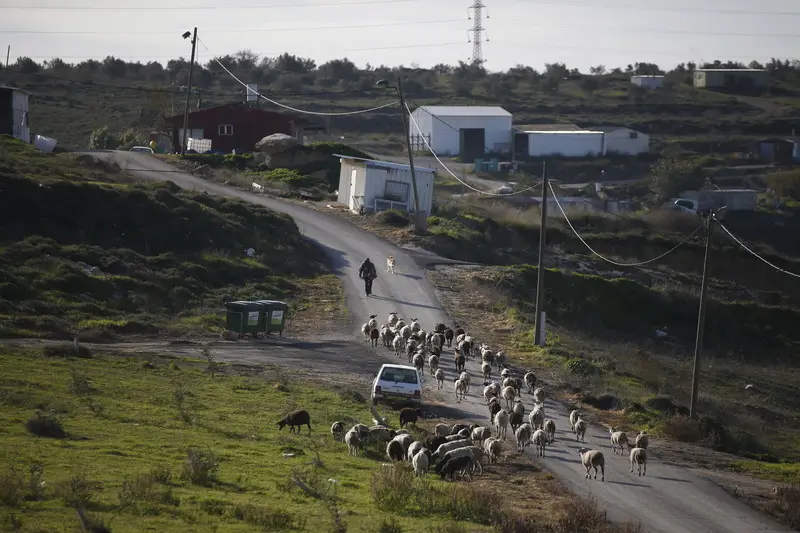
They are known in Israel as the “hilltop youth” - loosely organized groups of mostly young, religious Jewish Israelis who live in or frequent unauthorized outposts across the West Bank. Some are barely teenagers. Some have dropped out of school or left their families and made their way to unauthorized outposts in the West Bank, where they herd sheep, stand guard at night and sometimes are involved in confrontations with Palestinians.
There is no official estimate as to the number of so-called hilltop youth or how many of them are minors. Speaking at a meeting of the Knesset’s Education Committee in June, Col. (Res.) Avichai Tanami, who was appointed by Defense Minister Israel Katz as the civilian coordinator responsible for addressing the hilltop youth problem, said that there were around 1,000 of them. At the same meeting, however, a representative of the Education Ministry and the Welfare Ministry said that the number was between 600 and 800.
Although no one knows exactly how many hilltop youth there are, officials agree that increasingly younger children are showing up at the outposts. At the meetings of the Education Committee in June, Carmit Harush, the head of the Education Ministry’s Jerusalem District, said that the state has identified seventh and eighth graders, ages 12 or 13, going to outposts – so the ministry sought extra funding for various programs in middle schools. According to Harush, “the process of attrition starts during school holidays and weekends, when these children visit farms and, after a few visits, fall in love with the idea. Today, we see it happening with younger and younger students.”

A report by an interministerial team spearheaded by the Justice Ministry, which was tasked with developing educational and therapeutic responses for youth in the West Bank and completed its work in September 2025, is being published here for the first time. The report examined the characteristics of the hilltop youth. According to the report, some live on the hilltops permanently, others stay there only during school vacations and weekends, while others arrive for specific events, such as the evacuation of outposts by Israeli authorities or a war-related incident.
According to the report, most of the hilltop youths are boys, some of whom come from the West Bank settlements themselves, while others come from inside Israel. Most are from homes that define themselves as national-religious, but some are from the ultra-Orthodox community. Many of them have already dropped out of educational frameworks in the past. “The primary concerns regarding the hilltop youth group involve the presence of minors, some of whom are exceptionally young, without basic living conditions, mostly without adult supervision and sometimes also while cut off from their parents,” the report states. “In addition, the youths’ actions sometimes cross the line into illegal activity, ranging from driving or using a vehicle without a license to nationalist offenses, including against military and police personnel and against Palestinians.”

At-Risk, Out of School and Drawn Into Violence
“S., a minor whose family lives in the area of the Binyamin Regional Council, is being taken advantage of to commit nationalist crimes at an outpost located west of [the Jordan Valley settlement of] Yitav. On Friday, August 1, 2025, he was seen using a rock to beat a dog at the outpost. A video of the injured dog is attached. In addition to this incident, activists at the site get the impression, based on his behavior on the ground, that his mental state is not good. Are you aware of any deterioration in his condition at the outpost where he has been for an extended period?”
That was the message sent by Dr. Yoram Sorek to officials from the Binyamin Regional Council. It is one of dozens that Sorek – an activist with an organization called Looking the Occupation in the Eye – sent to welfare authorities, mainly from the Binyamin and Jordan Valley regional councils. In both of these areas, activists from the organization have identified an ever-worsening phenomenon: a dramatic drop in the age of the children being used to tend sheep in the agricultural outposts that are springing up across the hills of the West Bank – and the fact that many of these children are at-risk youths. In other words: vulnerable minors who do not have a safe environment and proper development conditions.
Last month, a video showing an Israeli teenager striking an elderly Palestinian man with a stick as another youth filmed the attack, drew international attention. The two, ages 16 and 17, were later detained for questioning by Israeli police.
Minors involvement in nationalist violence is not limited to these examples. According to data published in July by the Movement for Freedom of Information in Israel, there has been a 560 percent increase in Jewish nationalist crime against Palestinians in the West Bank since 2019 – a significant proportion of which has been committed by minors. According to police estimates, around 300 youths from hilltop settlements and outposts are involved in disturbances and violent incidents. At the same time, according to a report by Peace Now and Kerem Navot, nearly 200 new outposts have been established during the current government’s tenure, encompassing roughly 390 square miles (1,000 square kilometers) of West Bank land. Over the same period, more than 100 Palestinian communities have been displaced from their land. Some of these outposts have become destinations for at-risk teenagers who have dropped out of school, according to officials and activists interviewed by Shomrim.
Sorek and the other activists, who document what happens in the Israeli-occupied Palestinian territories, are not surprised by these figures – or by the age of some of the youngsters involved. They have been ringing the alarm bells for years. “According to the Youth Law, there are criteria for what is called a minor in need,” Sorek says. “In other words, whether the minor who has committed a crime is in a negative environment or a situation that poses a physical or emotional threat to their wellbeing.” According to Sorek, the system as a whole – from the social workers at the local authorities to the Welfare Ministry – has failed to provide a solution to the phenomenon. “The sense is that they have adopted a strategy of avoidance; they don’t know these children’s names and if they do, they report that the situation is being handled. But the bottom line,” he says, “is that nothing is being done.”
Sorek’s correspondence about S. was unusual only because the activists found out where the minor’s parents live – in the Binyamin Regional Council – even though the abuse of the dog took place in the territory of the Jordan Valley Regional Council. Usually, if the name of the minor or his family is unknown, the correspondence is addressed to the council in whose territory the minors have been documented.
In early 2025, Sorek contacted the Ethics Committee of the Israel Union of Social Workers over the conduct of the director of the Jordan Valley Regional Council’s welfare department and one of the social workers there. They accused the department of ignoring their complaints about Israeli youths as young as 14 or 15 working as shepherds and, according to eyewitnesses, vandalizing Palestinian property and provoking the local population, especially women and children.
According to the activists’ letter, “the youths’ appearance is unkempt, their clothes are ragged and ill-suited to the season and the conditions in the West Bank. On several occasions, they have been seen wandering around for hours barefoot, exposed to snakebites and injuries. It is evident that their personal hygiene has also been neglected. These youths are being operated by adults who leave them alone for many hours in a physical environment that is not suitable for young people, and which can be hostile. These young people have no connection to any educational, therapeutic or rehabilitation framework.”
When the Union of Social Workers discussed the activists’ letter, it did not deny that there was a problem but opted to pass off responsibility for dealing with it to the national level and the defense establishment. “The issue you raise in your letters undoubtedly constitutes a national problem, both because a significant portion of the youths are minors and because of the acts attributed to them,” the union’s ethics committee replied to Sorek in July of last year. “Nevertheless, the committee rejects the attempt to lay the responsibility on social workers in the field and even to allege an apparent ethical failure on their part. The committee recommends that you direct your claims and demands to the desks of the relevant government officials, to demand clear answers from the Welfare Ministry, Education Ministry and Public Security Ministry clarifying their handling or failure to handle the matter.”
How Teenagers Find Their Way to the Hilltops
One reason the problem has proved so difficult to address is that many of the teenagers do not come from the West Bank communities where they eventually end up. “The majority [of the youths] are not even connected to my council,” one official from a West Bank local authority told Shomrim. “They come from places like Beit Shemesh, Jerusalem and Netanya. What’s that got to do with me? The social workers here try to send them back, but it’s very hard to return people like that to their hometowns.”
Hana Itach, the deputy head of the Binyamin Regional Council who is responsible for education and welfare in the council, made similar comments during a meeting of the Knesset’s State Control Committee in December 2025. “We’re talking about a very small number of teens and youths, and when people try to call it hundreds, you need to know that this is a cloud of children or youths hanging around in all the local authorities,” Itach said in the discussion. “This phenomenon is not a good one from our perspective. We have offered tools to deal with it. We have a plan, we submitted it to the prime minister and we are asking the state to respond, to listen to us, because there is no way to handle this thing using force (...) Most of these kids do not come from Judea and Samaria at all, and they just wander around.”
The unnamed official quoted above adds that, “Compared to a decade ago, the problematic minors today are a lot more violent than in the past. In my opinion, that is also linked to October 7; in the post-massacre reality, the vast majority of Israelis don’t care what happens to the Palestinians.”

A., a 21-year-old who lives with his wife in an unauthorized West Bank outpost, offers a view from inside that world. He agreed to speak to Shomrim on condition that he remain anonymous. He says he has been arrested several times by Israeli authorities and moved to the outpost some three years ago, after the IDF refused to enlist him. A. says that on the farm where he lives there is a 14-year-old boy living alongside other youths of high school age. “The younger ones among us came here after being elsewhere – and they found that the location and the people suited them,” he says. “There is always something to do here: helping families, helping out when there are evacuations from an outpost, taking care of infrastructure. Night guard duty and herding sheep by day. Sometimes we only sleep three hours a night because there is no one else to keep watch. Even a 14-year-old boy does it, if necessary.”
What about stone throwing, petrol bombings and the constant and violent friction with the Palestinian neighbors? That, too, is part of the daily agenda. “We live among Arabs who rise up against us,” A. says. “The Lord Almighty commanded us to conquer the land, to displace the non-Jews. That doesn’t just mean fancy words; it means using force.”
When an 18-Year-Old Is the Responsible Adult
The way of life on the hilltops suggests that conditions are far from ideal even for 18- or 20-year-olds living in the outposts. Dov Morell was himself a member of the hilltop youth about a decade ago and was later convicted of incitement to violence. After a personal transformation, he now occasionally joins activists conducting protective-presence shifts in the West Bank. “Back when I was there, there was an incident involving a teenager whom other youths accused of sexually harassing them,” Morell says. “I was 18, along with others my age and some who were younger. We were the responsible adults who had to decide what to do in a situation like that. There was no clear hierarchy at the outpost; some people had been there longer, others less so. We had to make a decision, and the main challenge was figuring out whether people would actually listen to us. In the end, when the teenager realized what people were saying about him, he stopped hanging around the hilltops.”
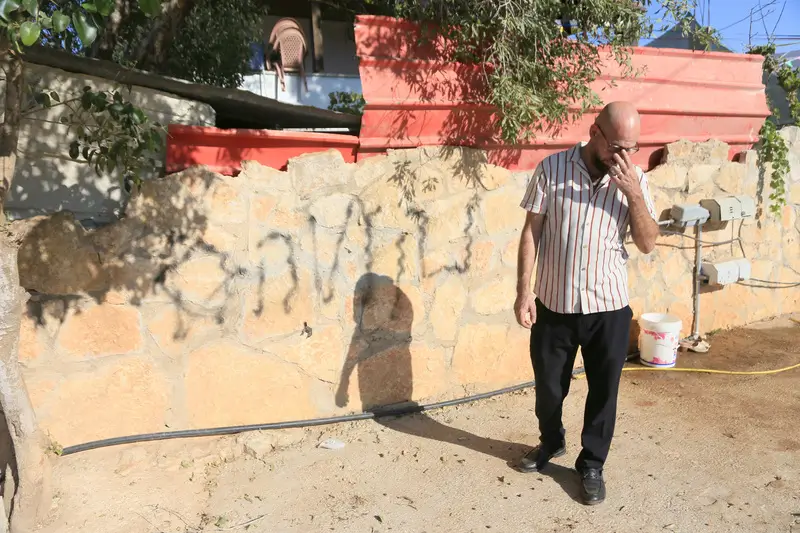
According to Morell, “You have to understand that this is an anarchist environment that believes it holds the absolute truth. When a 12 or 13-year-old kid gets to the hilltop settlements, it is very hard to get him, even at those ages, to leave. When I was 12, I actually lived at home and didn’t hang around the settlements, but when those nine homes in Amona were evacuated, I decided I wanted to be there. My parents wouldn’t let me, so I told them I would run away from home and go alone, and that’s how I dragged my dad there. If I had insisted at that age on hanging around the outposts and leaving home, even a very dedicated social worker – I don’t know what she would have done with that.”
Ronit Haimov Zilberman, from the Social Workers for Democracy organization, believes that she does know what she would have done with that. She believes that the Welfare ministry can and should have done a lot more to deal with the problem. “The moment that minors are involved,” she says, “the Welfare Ministry must be brought in to determine whether they are at-risk youths. These are children who are not part of any framework, are not being supervised and spend many hours in areas that are considered dangerous even for adults. According to eyewitnesses, those who are out in the field do not have enough food or water; they’re neglected. There is a real concern for the wellbeing of these at-risk children. The Welfare Ministry should have been expected to conduct a thorough investigation into these matters.”
.webp)
The State Knows They’re There. What Can It Do?
Social services in the West Bank have been aware of the phenomenon for years. In March 2023, for example, Dani Brodsky, who was an activist with Rabbis for Human Rights at the time, addressed the Special Knesset Committee on Young Israelis, which had convened in the aftermath of settler riots in Hawara. He told the committee about an incident that happened in the Jordan Valley that same year. “We went to accompany a Palestinian shepherd when a settler who owns a nearby farm showed up. He asked if we were Israelis, we said yes, and he just said ‘Okay’ and drove off. Then a kid, I’d guess around 15 years old, came by and said that the settler had sent him to chase off the shepherd (...) I talked to a local social worker, and she told me that kids go to these farms because that is where they finish their high school diplomas. No kid should have to make the choice to chase away Palestinians just to get a high school diploma.”
At a hearing held two years later, in March 2025, when a subcommittee of the Foreign Affairs and Defense Committee convened to discuss the problem of at-risk youth living in the West Bank, it became evident that authorities were well aware of the problem. Reut Lugassi, head of the department for at-risk populations in the Welfare Ministry, told Sorek, who also participated in the discussion that, “I personally get the letters that you send and look into them [...] I check that the Jerusalem District looks into these cases, that social worker with expertise in youth laws is involved, I contact the parents and I take care of it. I can tell you that I do read the letters you send.” Despite those interventions, activists continue to document minors living at the outposts.
At the same hearing, MK Ram Ben-Barak (Yesh Atid) asked Lugassi why the youths are allowed to remain there. “That’s like asking why the Welfare Ministry doesn’t remove minors from ‘Cats’ Square’ in downtown Jerusalem or from other city centers. Youths show up in all kinds of places; we can’t control where they go. As soon as we identify an at-risk youth who is endangering himself, in danger, and causing harm – and the place he is in is harming him – the Welfare Ministry will do everything to provide a response and tailor a treatment plan to his needs.”
Ben-Barak followed up by asking whether Lugassi did not identify any such danger in some of the agricultural outposts. “We see similarities to Cats’ Square, which is also a dangerous place for some; there are a lot of exploited teenagers there and we will do everything we can to treat the youth using the same methods, with slight adaptations, because the farms are not the same as the squares, but we will try to provide answers.”
Later in the hearing, Ben-Barak said: “We have to admit the truth here: some people recognized the potential and turn minors who need care – who really need care – into foot soldiers for these outposts. They are using them like child soldiers.”

Yuval Ben-Ari, an activist who accompanied Palestinian families from the West Bank village of Burin (and who was himself assaulted by a group of settlers in November 2025), has seen the phenomenon with his own two eyes on more than one occasion. Not far from the village in the Nablus area is an outpost called Givat Ronen; according to the testimony of human rights activists, settlers from the outpost conduct regular tours of the adjacent village. “There are patrols happen every Shabbat, sometimes on Fridays and holiday eves too,” Ben-Ari tells Shomrim. “There is a group of 20 to 30 guys there. Sometimes you see two kids, who look about 10 years old, walking through the village looking a bit lost. Activists watch them from the home of the Palestinian family they are accompanying in the village. This group also includes Menachem Ben Shachar, the rabbi who seems to be leading the tour. It’s hard to understand how a rabbi and father takes kids to a place like that. It breaks your heart to see it.”
Some 10 days before the incident in which Ben-Ari was assaulted, Ben Shachar – the former rabbi of the West Bank settlement of Homesh – was arrested on suspicion of incitement to violence. In 2023, he gave an interview to Hakol Heyehudi, in which he called for the Palestinian village of Hawara to be eradicated, explaining that it would be “efficient, moral and acceptable.” He was released under restrictive conditions and, a few days later, petitioned the Jerusalem Magistrates Court for the return of the computers that were confiscated by police when he was arrested. In his appeal, Ben Shachar wrote that he is “an educational advisor with a master’s degree who has worked for many years in schools as an educator and educational advisor, in Samaria and Jerusalem. There is much material about my clients on the confiscated computers.” Shomrim asked Ben Shachar whether, as an educator, he does not believe that these tours are problematic – but he did not respond.
In this context, Sorek also details the conduct of Gabriel Kalish, the security coordinator in the Mevo’ot Jericho settlement, with those children and teenagers at the youth farm who are classified as at-risk youth. “He is very chummy with the children,” Sorek says. “We see his connection with them.” Until July 2025, Kalish worked as a youth coordinator for Jerusalem Municipality, while also working as security coordinator in Mevo’ot Jericho – as confirmed to Shomrim by Laura Wharton, a Jerusalem councilwoman for The Democrats party. In the framework of legal conflicts with several activists from Looking the Occupation in the Eye (stemming from allegations of libel in posts on social media), Kalish said of himself that he works with at-risk youth.
Kalish refused to address the substance of the request, merely responding: “I must ask that you not contact me in any way again, as I find it disturbing. If you publish false information about me, you will expose yourself to a defamation lawsuit. I hope that you publish positive things and help people find hope and light in life.”
The Binyamin Regional Council submitted the following response: “The Social Services Department at the Binyamin Council operates in accordance with the laws of the country and the regulations set by the Welfare and Social Security Ministry, and under the ministry’s supervision. This is how we operate regarding every case referred to us within the framework of the Youth Law and in general. Naturally, we cannot comment or elaborate on individual cases due to the confidentiality we are required to maintain by law.”
The Jordan Valley Regional Council did not respond.