



Seven Legal Battles Await Israel’s New Parliament and Supreme Court
A series of laws passed under Benjamin Netanyahu’s government could reshape Israel’s judiciary, weaken independent oversight and change media regulation. Some are set to take effect soon, while others remain under Supreme Court review. Their fate now depends on the country’s newly elected parliament and the courts.
A series of laws passed under Benjamin Netanyahu’s government could reshape Israel’s judiciary, weaken independent oversight and change media regulation. Some are set to take effect soon, while others remain under Supreme Court review. Their fate now depends on the country’s newly elected parliament and the courts.
A series of laws passed under Benjamin Netanyahu’s government could reshape Israel’s judiciary, weaken independent oversight and change media regulation. Some are set to take effect soon, while others remain under Supreme Court review. Their fate now depends on the country’s newly elected parliament and the courts.
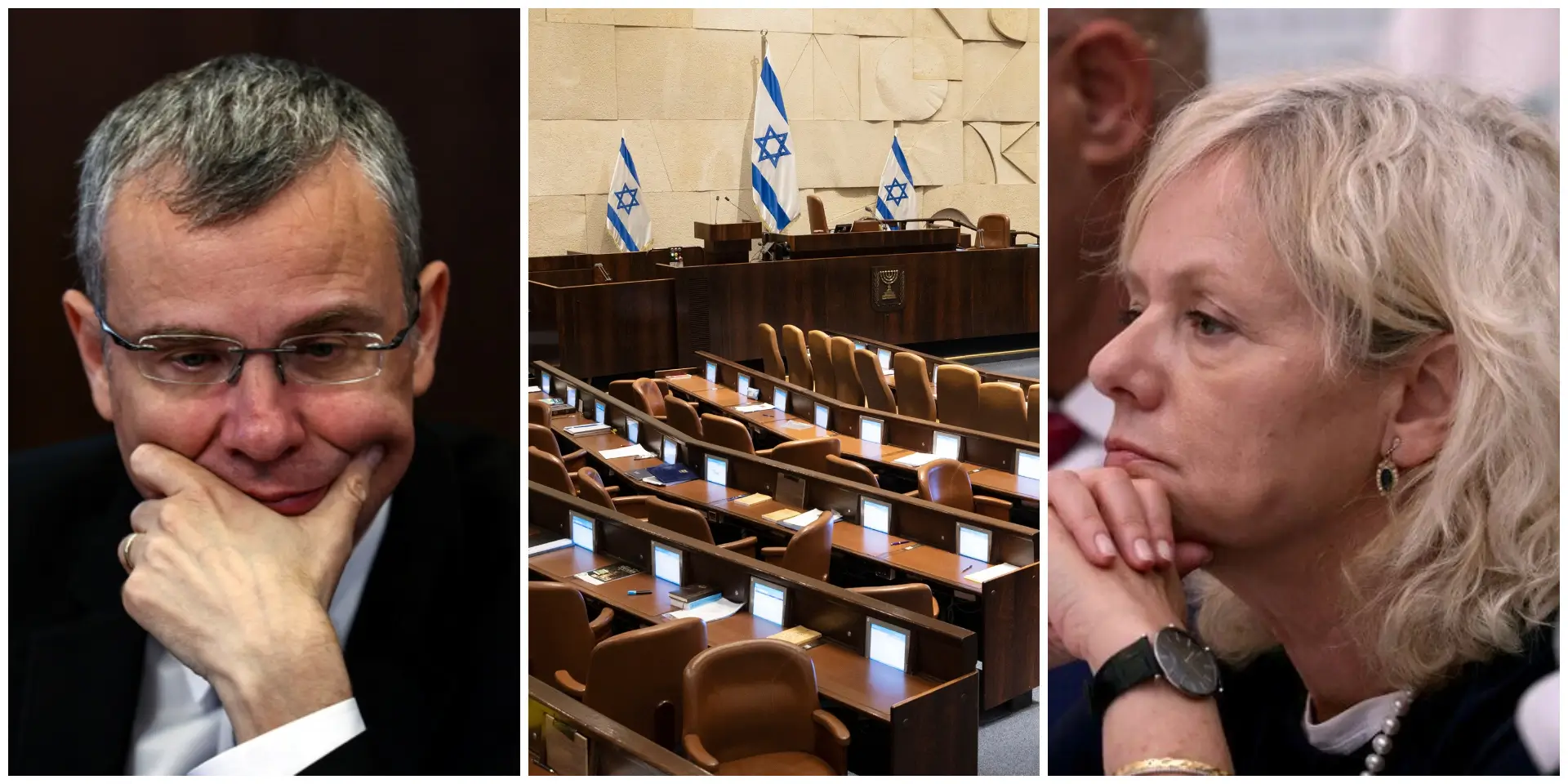
Justice Minister Yariv Levin (left), Attorney General Gali Baharav-Miara, and the Knesset plenum. Photos: Reuters, Shutterstock

Chen Shalita
October 28, 2026

Summary


Listen to a Dynamic Summary of the Article
Created using NotebookLM AI tool
Israel’s election may not have produced a clear victory for either side, but the newly elected parliament, set to be sworn in on November 10, will nevertheless have to confront one of the country’s most contentious issues: the future of the judicial overhaul.
A series of laws passed by the outgoing government are scheduled to take effect in the coming months, while others remain suspended or await rulings from Israel’s Supreme Court. Together, they could reshape the balance of power between the government, the judiciary and independent oversight institutions.
The new Knesset will inherit legislation affecting the independence of the attorney general, the appointment of judges, oversight of police misconduct, media regulation and the authority of religious courts.
The legislation falls into three categories: laws whose implementation was deliberately delayed, to the next convincing Knesset, provisions and amendments temporarily suspended by the Supreme Court, and laws already in force but still facing constitutional challenges.
Laws deferred until the new Knesset convenes:
1.
Limiting the Attorney General’s Independence
The Attorney General Law (Legal Opinions, Representation and Oversight)
The law stipulates that the attorney general’s opinions will be merely a recommendation and that the government will not be bound to accept them (except in criminal matters). It allows the government to be represented by private lawyers in the High Court, which already happens when the attorney general and the government disagree. But under the new law, the attorney general’s position in such petitions will not even be heard without the government’s approval. In addition, the attorney general will be placed under the supervision of the justice minister. The changes would significantly weaken the attorney general’s independence and reduce the office’s ability to act as a check on government power.

Unlike the U.S. attorney general, who is a political appointee serving in the president’s administration, Israel’s attorney general is an independent legal official whose interpretations of the law generally bind the government.
The law takes effect in January 2027 and contains a “hidden” dismissal clause stipulating that within 30 days of it taking effect (that is, by the end of January), the government will set the rules for appointing and dismissing the attorney general.
The question is what happens if a new government has not been formed by January. A transitional government is bound to exercise restraint in senior appointments. Moreover, it is doubtful Israel’s Supreme Court would allow the current government, in its capacity as a transitional government, to make such a dramatic decision.
Several petitions have already been filed against the law, and the Israel’s Supreme Court, sitting as the High Court of Justice ordered that the hearing on them be held by mid-December, on the assumption that an urgent hearing is not necessary and that a hearing after the election would allow the next Knesset and government to respond according to their own views. As of now, no date has been set. In the past, the court clearly intervened on the attorney general issue, unanimously voiding the dismissal.
2.
Changing the composition of the Judicial Selection Committee
Amendment 4 to Basic Law: The Judiciary and Amendment 105 to the Courts Law. This is another law that was frozen until the newly elected Knesset convenes the week after next.
The amendment would change how Israel selects judges, replacing representatives of the Israel Bar Association with two public representatives chosen by lawmakers. The change would give political appointees six of the committee’s nine seats, compared with three seats held by Supreme Court justices.

Until the new committee is seated, the current committee in its old composition will continue to serve, but it will not be able to select judges, and its decisions, if there are any, will have to be unanimous.
An expanded panel of 11 justices has heard a series of petitions against the law but has not yet issued a ruling.
3.
Limiting When a Prime Minister Can Be Declared Unfit to Serve
The law limits the circumstances under which a sitting prime minister can be declared unable to serve, restricting such declarations to medical or mental incapacity and requiring special majorities in the government and parliament.
The legislation was passed while Netanyahu was standing trial on corruption charges, raising questions about whether it was designed to protect him personally.
Following petitions against the law, the Supreme Court delayed its application until the next Knesset. This is the only one of the three deferred-application laws whose legal proceedings have concluded.

4.
Laws in force, or frozen until after the election
Putting Police Misconduct Investigations Under Political Oversight
Israel’s Department of Police Investigations, known by its Hebrew acronym Mahash, investigates suspected criminal misconduct by police officers. The new law turns the Department from a department in the State Attorney’s Office, subordinate to the state attorney and the attorney general, into an independent unit subordinate to the justice minister, who will also control its budget.
Critics warn that placing the unit under the justice minister could expose investigations of police misconduct to political pressure. For example, police officers might fear investigating government corruption, lest the justice minister use the Department to take revenge on those who investigate it.

This is not an unfounded assessment, since under the new law, the appointing committee for a department’s director has a clear majority of representatives appointed by the Justice minister. The committee recommends not only the appointment of the unit’s director but also the director’s dismissal.
In September, Israel’s Supreme Court froze the sections dealing with the appointment of the department’s director and the members of the search committee, because of the immediate implications of these steps, particularly ahead of an election.
Justice Alex Stein decided that a hearing on the law as a whole would be held by the end of 2026, with the Knesset and the government submitting their responses three weeks beforehand, but he has not yet set a date.
5.
Reshaping Media Regulation and Newsroom Independence
The broadcasting reform would dismantle Israel’s existing television regulatory bodies and replace them with a smaller authority. The law also allows news channels to be licensed with almost no regulation and eliminates the structural separation between channel owners and news companies, meaning that political and business interests could influence the newsrooms. The law was approved in an expedited process and the Knesset’s legal adviser warned of numerous serious flaws in the legislative process.
Following a series of petitions filed against the law in Israel's Supreme Court, sections that were meant to take effect immediately have been frozen for the time being. These include the section that eliminates the structural separation between news companies and broadcasters, and the section that cancels the requirement for the Channel 14 and i24 newsrooms to relocate to Jerusalem. Also frozen were the approval to add i24 to cable and satellite, which is problematic because of cross-ownership, and the approval to air advertising on both platforms.
No date has yet been set for a hearing on the law, which is due to take full effect in July 2028, two years after its publication.
6.
Expanding Religious Courts’ Authority Over Civil Disputes
The Religious Courts Jurisdiction (Arbitration) Law. The law allows Israel’s rabbinical and Islamic religious courts to arbitrate certain civil disputes beyond their traditional jurisdiction over personal-status matters. Although arbitration requires the consent of both parties, critics warn that unequal power relations could make it difficult for vulnerable individuals to refuse.
The arbitration is conducted according to religious law and applies only to some of the equal-rights provisions of Israeli law, which raises concern about harm to the rights of women, workers and minorities. The court’s decision is automatically given the force of a judgment.
This is the only one of the six laws surveyed here that has taken full effect. Israel’s Supreme Court. will hear the petitions against it on December 30.
7.
Choosing Israel’s State Comptroller
Israel’s state comptroller is an independent official responsible for auditing government agencies and examining the use of public funds. The state comptroller is elected by secret ballot by members of the Knesset.
In July, the High Court voided the election of attorney Michael Rabello as state comptroller and ordered a new vote, after MKs photographed themselves putting an envelope with the name of Rabello, Netanyahu’s candidate, into the ballot box.
Knesset Speaker Amir Ohana refused to hold the vote, and the court, in what looked like an attempt to avoid a constitutional crisis, stalled and ultimately allowed it to be postponed to the next Knesset.