


Israel Has No Idea How Many Arab Teachers are Looking for Work
While the country’s education system grapples with a shortage of tens of thousands qualified teachers, thousands of Arab teachers struggle to integrate into the system and are forced to settle for part-time positions or wait years for placement. The Ministry of Education admits that it does not have full data on the scope of the phenomenon. A Wasla-Shomrim report

While the country’s education system grapples with a shortage of tens of thousands qualified teachers, thousands of Arab teachers struggle to integrate into the system and are forced to settle for part-time positions or wait years for placement. The Ministry of Education admits that it does not have full data on the scope of the phenomenon. A Wasla-Shomrim report
While the country’s education system grapples with a shortage of tens of thousands qualified teachers, thousands of Arab teachers struggle to integrate into the system and are forced to settle for part-time positions or wait years for placement. The Ministry of Education admits that it does not have full data on the scope of the phenomenon. A Wasla-Shomrim report
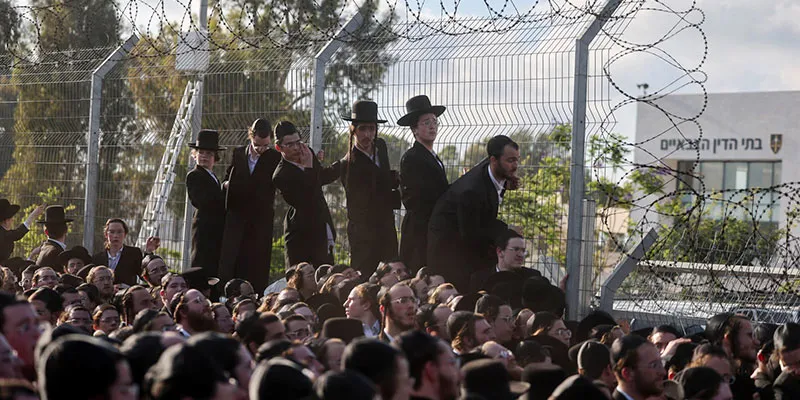
Illustration photo: Shutterstock
Yahya Amal Jabarin
September 2, 2026

Summary


Listen to a Dynamic Summary of the Article
Created using NotebookLM AI tool
Despite graduating with honors from her course in Science and Mathematics Teaching Studies at Oranim Academic College – and despite applying to dozens of Jewish and Arab schools in her home area of Nazareth in northern Israel – Azhar Hayeb was unable to find a school that would take her on for the mandatory one-year internship. She says that, unlike their Jewish counterparts, newly graduated Arab teachers often find themselves falling between the cracks, between the Ministry of Education and the local authorities, which argue that they simply don’t have enough positions – which makes finding a school willing to take them on as interns almost impossible.
Hayeb’s case highlights the paradox in the teaching crisis: fully trained educators are finding it hard to get a foothold in the education system, while there are some teaching disciplines for which they do not have adequate training. According to figures from the Central Bureau of Statistics, as reported by TheMarker, there is currently a shortfall of 30,871 teachers with appropriate training in math, science, English and Hebrew. This figure does not represent the number of unfilled teaching positions, however; rather, the discrepancy between the discipline that the teacher studied and the one they are actually teaching.
How many Arab teachers are really waiting for a job?
At the same time, there is also a reported phenomenon whereby thousands of Arab teachers are not finding work in the Israeli education system or are having to make do with part-time positions. When Wasla asked the Ministry of Education for data about the employment and teaching staff in Arab and Bedouin society, it became apparent that Israel does not have full figures on the extent of the phenomenon. MK Samir bin Said(Hadash-Ta’al) says that there is a double failure: thousands of teachers in Arab society are without work, while Arab schools are suffering from an acute shortage of educational staff and are forced to assign teachers to subjects outside their areas of expertise.
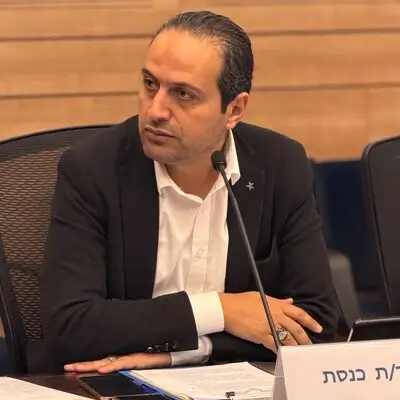
According to estimates presented to the Knesset’s Education Committee, of which bin Said is a member, between 11,000 and 13,000 Arab teachers are out of work. The Ministry of Education is refusing to confirm these figures, saying merely that it is dealing with around 10,000 requests but insisting that this does not mean there are 10,000 unemployed teachers. The figure consists of three different groups: new candidates who want to enter the education system; teachers who already have jobs but want to work more hours; and teachers in full-time employment who want to move to a different school.
The state also admits: No data presents the full picture
Text: After the Ministry of Education told Wasla to submit a Freedom of Information Request, its Freedom of Information unit responded that, “after looking into the matter with the relevant professional unit, it appears that the ministry does not have the data you requested.” The ministry statement added that it is unaware of any other body that has the information in the requested format. The problem, it seems, is not just that the information is not made available to the public. At a meeting of the Knesset’s Education Committee, Ettie Weissblei from the Knesset’s Research and Information Center, admitted that “we do not have a single piece of data” which would present an overall picture of the lack of manpower in Israel’s education system.
In the absence of a central database to collate all the information about teachers and teaching positions, it is impossible to know how many Arabs with teaching certificates are currently looking for work. The state is also unable to determine whether graduates like Hayeb, who was trained to teach math and science, are suited for the schools and positions where the shortages exist.
How the system works – and who gets left behind
A teaching qualification is no guarantee of a job or even of obtaining a license. In order to find work in the official education system, graduates – or anyone who has completed 80 percent of the requirements toward a degree – must submit an online placement application to the Ministry of Education every year, specifying up to five towns or cities where they would prefer to work, which disciplines they teach and which age groups. The ministry gives each candidate points based on their level of education, academic achievements, previous experience, place of residence and performance on evaluation tests. Thereafter, a district placement committee decides which candidates get which vacant positions.
The new candidates are also competing for placements against veteran teachers who have asked for a transfer or for more hours. These veterans often get preferential treatment – even when the new candidates have scored better. A candidate who has not been given a positive response by August 31, just ahead of the new school year, has to submit a fresh application next year.
Even a degree doesn’t guarantee a job
Text: Even finding a job sometimes is not enough. In order to get a teaching license, graduates must complete at least one year of paid internship (of at least one-third time for six months) and then pass a final assessment. In the absence of schools to employ interns, graduates could easily find themselves with a degree and a teaching certificate – but unable to make the final transition into the profession. This was exactly the stage at which Hayeb got stuck: the Ministry of Education demanded that she find an internship herself, while the schools claim that there is no shortage of positions. “The lack of support and having to rely on connections are killing the passion of new teachers,” she says. “We have ideas and pedagogical initiatives, but we are being denied the opportunity to start our teaching careers.”
Hadeel (not her real name) graduated from the Achva Academic College and got a job in schools – but not as a teacher with a steady position. Instead, she was asked to fill in for colleagues during their time off and to work as a substitute teacher, sometimes without even having signed a contract with the school. Even though she has been at the top of the waiting list for a placement for the past three years, Hadeel still has not been offered a full-time job. Her letters to Ministry of Education inspectors have gone unanswered and someone even suggested that she learn a new profession – despite her years of training as a teacher.
For Hadeel, a married mother who lives in rented accommodation, this impasse and the lack of certainty are not just an exhausting professional crisis – they have directly impacted on her ability to plan her future and to deal with the ever-rising cost of living. Her case exemplifies the assertion that being defined as “employed” can be misleading: a graduate can be considered an employed teacher even when surviving on just a few hours of work, substituting or temporary work – without job security and with no prospect of tenure.
Thousands of candidates and years of waiting. Mainly for women
The most recent official data on unplaced Arab teaching candidates refers to the 2020/21 school year. During that period, 9,370 candidates submitted placement requests, with about 6,600 failing to secure placements through the Ministry of Education system. A closer examination of the figures reveals that roughly 1,100 of those unplaced candidates found employment in schools operated by external entities, such as local municipalities and nonprofit organizations. Meanwhile, approximately 5,500 were not employed as teaching staff in any framework recognized by the ministry. It remains impossible to verify whether all 5,500 were entirely unemployed, as some may have pursued work outside the education sector. The numbers also highlight long waits for placement, with 37 percent of unplaced candidates waiting between six and 10 years. More than 90 percent of these waiting candidates are women, placing a disproportionate economic and professional burden on young Arab women. Dr. Nihaya Wishahy – a prospective Knesset candidate on behalf of the Hadash party and a teacher at Oranim Academic College – says that excellent teachers often have to wait many years for a placement – or find employment in a different field altogether. She says that the price of waiting such a long time is not just financial: graduates become less familiar with the subjects they studied, lose confidence and sometimes even turn their backs on the profession entirely.


Too many graduates or not enough positions?
In contrast, MK Akram Hasson (New Hope-United Right), who is also a member of the Knesset’s Education Committee, argues that teacher-training colleges are badly suited to the job market. He says that the drop in the birthrate and the reduction in the number of classrooms means that young people should be channeled toward in-demand professions. “The education system cannot give jobs to everybody who completed teaching studies and the colleges that offer education courses – especially to women – cannot continue to accept students as if nothing has changed.” He adds that waiting long periods for a position creates massive frustration for future teachers and means a lot of lost knowledge.
Dr. Nisreen Morqus, a lecturer at Oranim and general secretary of the Movement of Democratic Women in Israel – argues that there is not a surplus of education graduates. Rather, she says, there is a crisis in national priorities, neglect and a lack of coordination between the Ministry of Education and the local authorities. “On the ground, especially in Arab communities, there is a very real need for teachers and for new forces – but there are no positions and not enough money to employ them.”
The Follow Up Committee on Arab Education blames the excess of graduates in certain fields on a lack of long-term coordination between the Ministry of Education and the teacher-training colleges. According to the committee, the solution is not just to create more positions, but establishing an updated national database, aligning training tracks with school needs and changing the method for selecting and placing teaching staff.
Whether one views this as too many education graduates or as a lack of positions and/or investment, there is still no current data showing which disciplines graduates have been trained in, where they live and for which disciplines, towns and age groups there will be future demand. There is also no publicly available information showing whether the number of students accepted to the various educational channels is determined by any sort of prediction as to the future needs of the system – and whether people considering studying to be a teacher are given reliable information about their chances of actually finding a job.
As a result, each part of the Israeli education system sees part of the picture: the Ministry of Education deals with requests and placements in schools; the Council for Higher Education in Israel and the colleges have information about students and graduates; local authorities and school operators have information about the positions under their responsibility; the Central Bureau of Statistics and the Employment Service know whether the graduates are working, but their jobs might not always be related to their field of study. The data cannot be synthesized into a cohesive picture to allow for proper planning.
When racism also enters the classroom
Apart from the bureaucratic impediments, Arab teachers – both male and female – also face unbridled political and public opposition from some quarters. In February, the Knesset’s Education Committee held a hearing, called by MK Tzvi Succot (Religious Zionism) and attended by far-right organization Meirim, in which criticism was leveled against a government plan to integrate more Arab teachers in Jewish schools – even though an Ministry of Education internal panel found nothing wrong with the project. Bowing to political pressure, the Ministry of Education announced that the budget for the program was being slashed, along with the cancellation of about 1,000 supplemental hours for schools that hire Arab teachers - a move which demonstrates that their non-absorption sometimes stems from an overtly racist policy that views Arab teachers as nothing less than a threat to Jewish identity, intentionally hindering their integration.
The Israel Teachers' Union refused to respond to questions and said that responsibility lies with the Ministry of Education . In turn, the Ministry of Education responded that it does not have the requested data.