


In East Jerusalem, Drugs Are Close to Home. Treatment Isn't
Treatment providers estimate that 15,000 to 20,000 people use drugs in East Jerusalem, where distribution points operate next to schools and kindergartens. Yet there is no licensed rehabilitation center in the city's Palestinian neighborhoods, and Health Ministry data show that only about 100 East Jerusalem residents received treatment at addiction clinics over the past three years. An investigation by Wasla and Shomrim
Treatment providers estimate that 15,000 to 20,000 people use drugs in East Jerusalem, where distribution points operate next to schools and kindergartens. Yet there is no licensed rehabilitation center in the city's Palestinian neighborhoods, and Health Ministry data show that only about 100 East Jerusalem residents received treatment at addiction clinics over the past three years. An investigation by Wasla and Shomrim
Treatment providers estimate that 15,000 to 20,000 people use drugs in East Jerusalem, where distribution points operate next to schools and kindergartens. Yet there is no licensed rehabilitation center in the city's Palestinian neighborhoods, and Health Ministry data show that only about 100 East Jerusalem residents received treatment at addiction clinics over the past three years. An investigation by Wasla and Shomrim
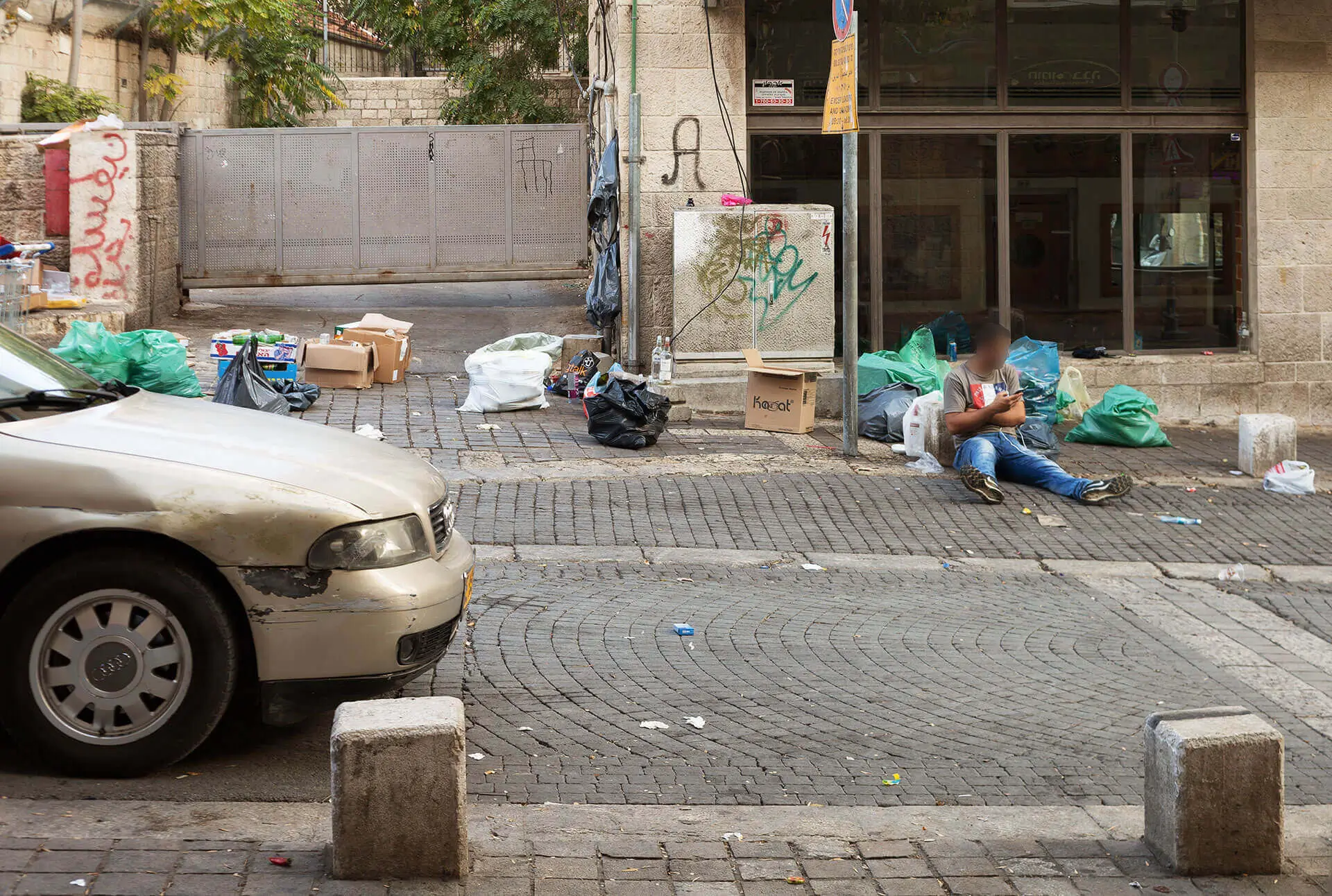
Illustration photo: Shutterstock
Rahma Ali, Wasla
July 30, 2026

Summary


Listen to a Dynamic Summary of the Article
Created using NotebookLM AI tool
Samaher Hassouna knew her husband was addicted to drugs. He would disappear for days, spend the family's limited income on drugs and sometimes become violent. But the moment that finally drove her to leave came when their young son reached into his father's coat, found a plastic-wrapped packet of drugs and, thinking it was candy, tried to eat it. “I thought that my son was going to die,” she says. “That’s when I decided to leave.”
Hassouna's experience reflects a much broader crisis in East Jerusalem, where treatment providers estimate that thousands of residents struggle with addiction, but where not a single licensed residential rehabilitation center operates.
This is not an unusual story in East Jerusalem. Therapists working in the city believe that there are between 15,000 and 20,000 people who use drugs in Jerusalem’s Palestinian neighborhoods, including some 6,000 people with substance-use disorders – out of a population of around 400,000.
While these are estimates and not official figures, they indicate that the use of drugs and substance abuse are widespread phenomena, and have changed in recent years: users are now much younger, the use of cheaper chemical-based drugs and opioids is becoming more prevalent and the distribution points are operating more openly, with residents reporting that drugs are being sold near their homes, their schools and their kindergartens.
Therapists who work in East Jerusalem say that the drug blight in the city is tearing families apart. “In recent years, there has been a very clear increase in the number of drug traffickers in East Jerusalem,” says Alaa Kharoub, an addiction therapist who runs group therapy sessions for people in recovery. He says that drugs are sold “almost openly” and that distribution points are a lot more accessible than in the past. Issam Jweihan, the former director of the Al-Maqdese for Society Development’s mental health program, warns that the circle of drug users is expanding to include groups that previously were not considered at risk: children, who start using at an earlier age, women – and also people who who developed an addiction to prescription drugs.

From a doctor’s prescription to the black market
For Ahmad Odeh, a 25-year-old from the Shuafat refugee camp, the road to addiction began in the doctor’s clinic. He broke bones in his arms and legs in a motorcycle accident, and his doctor prescribed him Percocet, a painkiller that contains the opioid oxycodone. “It didn’t just relieve the pain,” Ahmad says, “it gave me a sense of confidence and calmness during a period when I had just started studies at the Hebrew University.” Odeh says that by the time his prescription ran out, he had become dependent on the drug. “At first, I bought pills on the black market next to a bus station. Pretty soon, I was spending 3,000 or 4,000 shekels ($1,000-$1,340) on drugs every three days.”
From the window of her home in Beit Hanina, Huda can see exactly what the therapists are talking about almost every day. Directly outside the building she lives in, she says, which is adjacent to a kindergarten, there has been an active drug distribution point operating for the past three years from a parked car. “This isn’t something that you hear about happening far away. It’s right outside my house. People show up at all times of the day and night, sometimes even in the very early hours. There’s noise, there’s traffic – and we’re constantly afraid for our children’s safety.” Residents’ efforts to talk to the people involved did not solve the issue. “We spoke to the police. They send a patrol car over, but they don’t do anything.”

The estimates presented by professional therapists working with addicts are not far from the data presented in an academic paper published in 2023. According to the study, which was based in part on United Nations estimates from official sources, there were 15,000 registered drug users living in East Jerusalem. The study also looked at a representative sample from the Shuafat refugee camp and found a high proportion of men had used cocaine, amphetamine, methamphetamine and Tramadol. The study also found that only around a quarter of drug users in Shuafat reported seeking help from the rehabilitation services.
While the road to addiction starts very close to home, the path to rehabilitation begins far from East Jerusalem. Those people who do seek help weaning themselves off drugs discover that there is not a single residential rehab center anywhere in East Jerusalem, that there is no continuous treatment in their neighborhood from the moment they decide to get clean to the moment they are fully rehabilitated and sometimes there isn’t even a facility available that suits the language, culture and social space of East Jerusalem residents. For many addicts, seeking help is not the end of the crisis, but merely the start of a complex journey.
The path for anyone receiving addiction treatment is supposed to include several stations: the initial diagnosis; physical withdrawal in an inpatient facility, if necessary; continued treatment with replacement drugs; and, after that, rehabilitation, including emotional and social therapy and continued preventive treatment. In East Jerusalem, however, that critical first ring in the chain does not exist within the community itself: there are no licensed inpatient rehab centers and patients are sent to facilities in the west of the city or elsewhere in Israel.

This disparity is especially striking compared to the scope of the phenomenon indicated by treatment providers. According to the Health Ministry, over the past three years around 100 patients from East Jerusalem have received treatment at addiction clinics, most of them at the Dror MAT Clinic in the western part of the city. Even without official figures on the number of addicts in the eastern part of the city, the disparity between field estimates of thousands and the number of patients who have entered treatment programs brings the depth of the crisis into sharp focus.
Wissam Karaki is in his 40s and lives in East Jerusalem. He has been to no fewer than six different rehab clinics over the past four years but has resumed drug use each time. “I was very successful,” he says. “People loved me and I lived for my work.”
Karaki was introduced to crystal meth by a customer at the garage where he worked and was soon addicted. On one of the occasions that he left rehab, he sold all of his possessions to buy more drugs.
Karaki ultimately sought treatment at his own expense at a Palestinian-run facility outside Jerusalem. Today, he is a resident of the al-Huda addiction treatment and rehabilitation facility in Jaba, which is operated by the Palestinian Authority. He says that, for the first time, he feels that he has arrived somewhere capable of helping him kick the habit. “Over the past four years, I have lost my job, my wife’s trust and the trust of my entire family. Even my faith in myself.”
Karaki's experience illustrates the lengths some East Jerusalem residents must go to find residential addiction treatment. They are caught between an Israeli system that offers services outside the east of the city and an urgent need for treatment that begins within the neighborhood, inside the home and sometimes even in a child’s bedroom.

The responses: ‘The municipality runs a variety of preventive and education programs’
Jerusalem Municipality said in response: “The municipality operates a wide range of prevention, education and intervention programs in the eastern part of the city addressing violence, dangerous behaviors and the use of alcohol and drugs among children and youth, through the Community Security Program within the Education Administration. Parent patrols are active, it hosts group sessions and parenting workshops, and prevention and education activities are conducted in schools and the community.
“The program operates in collaboration with schools, the Israel Police and professionals to bolster support systems, reduce risky behaviors and promote a safe environment for youth. The Jerusalem Municipality’s Welfare Department operates programs, services and targeted responses in the eastern part of the city for young people and adults dealing with at-risk situations and addictions. Within this framework, the municipality invests about 16 million shekels annually, through the Welfare Department and in collaboration with government ministries, in the fight against addictions and invests in the fields of prevention, detection, education, treatment and rehabilitation.
“The services are provided across all neighborhoods in the eastern part of the city and include programs for at-risk youth and young adults, identifying at-risk populations, individual and group therapy, parental guidance, family support and referrals to treatment facilities. The Welfare Department operates more than 25 programs and support services for youth and young adults in various at-risk situations, including situations related to substance abuse. Furthermore, the municipality works in collaboration with the education system, the Health Ministry, civil society organizations and other professionals to strengthen prevention, education and treatment efforts.
“Around 60 social workers and professionals who specialize in addiction treatment and at-risk youth operate within the Welfare Department. Over the past three years, approximately 2,500 families have received guidance, counseling and treatment, as part of a broad municipal policy to strengthen the personal, family and community resilience of East Jerusalem residents. The municipality will continue to work alongside all relevant stakeholders to prevent risk behaviors for the well-being of children and youth in the eastern part of the city, driven by a commitment to creating a safe, inclusive and supportive environment.”
The Health Ministry responded: “Over the past three years, approximately 100 patients from East Jerusalem have been treated for addictions, 97 of whom were at the Dror MAT Clinic in Jerusalem. The Health Ministry will continue to monitor the population. The ministry is working to transfer early addiction treatment to the health maintenance organizations, while reducing stigmas, improving early detection and community-based treatment and culturally adapting treatment services to the population.”