


How Israel Uses Police Files and Travel Permits to Keep Foreign Critics Out
Foreign journalists, American Jewish activists and even a sign language interpreter have found themselves targeted by Israeli authorities over their activities and statements concerning the West Bank. Police documents, court filings and official testimony reveal how Israel is using immigration rules, travel authorizations and police intelligence to restrict the entry of foreign critics - raising questions about freedom of expression and the growing reach of the country's security apparatus. A Shomrim investigation

Foreign journalists, American Jewish activists and even a sign language interpreter have found themselves targeted by Israeli authorities over their activities and statements concerning the West Bank. Police documents, court filings and official testimony reveal how Israel is using immigration rules, travel authorizations and police intelligence to restrict the entry of foreign critics - raising questions about freedom of expression and the growing reach of the country's security apparatus. A Shomrim investigation
Foreign journalists, American Jewish activists and even a sign language interpreter have found themselves targeted by Israeli authorities over their activities and statements concerning the West Bank. Police documents, court filings and official testimony reveal how Israel is using immigration rules, travel authorizations and police intelligence to restrict the entry of foreign critics - raising questions about freedom of expression and the growing reach of the country's security apparatus. A Shomrim investigation
Activists who arrived with the organization "Rabbis for Human Rights" - including dozens of American Jews - are being taken for questioning at the Etzion Regional Brigade headquarters. Photo from the Twitter account of MK Gilad Kariv

Shuki Sadeh
November 5, 2026

Summary


Listen to a Dynamic Summary of the Article
Created using NotebookLM AI tool
Leila Stillman-Utterback, a 19-year-old Jewish American from Vermont, had visited Israel several times before. But during a trip to the West Bank last year, her participation in an olive harvest alongside Israeli human rights activists ended with her detention, deportation and a 10-year ban on entering the country.
Stillman-Utterback was accompanying volunteers from Rabbis for Human Rights near the Palestinian village of Burin when Israeli forces ordered the group to leave an area designated as a closed military zone. Israeli participants were barred from the West Bank for 15 days. Stillman-Utterback and another American activist were taken into police custody, transferred to an immigration detention facility and eventually deported to the United States.
Her case is part of a broader pattern documented by Shomrim: Israeli authorities are increasingly using police reports, immigration regulations and electronic travel authorizations to restrict the entry of foreign nationals whose activities or statements are critical of Israeli policies.
The measures have affected journalists, academics, human rights activists and American Jews. Police documents and testimony before parliamentary committees reveal how information about foreign critics is collected, shared among government agencies and used to recommend entry bans — sometimes without allegations of criminal wrongdoing.
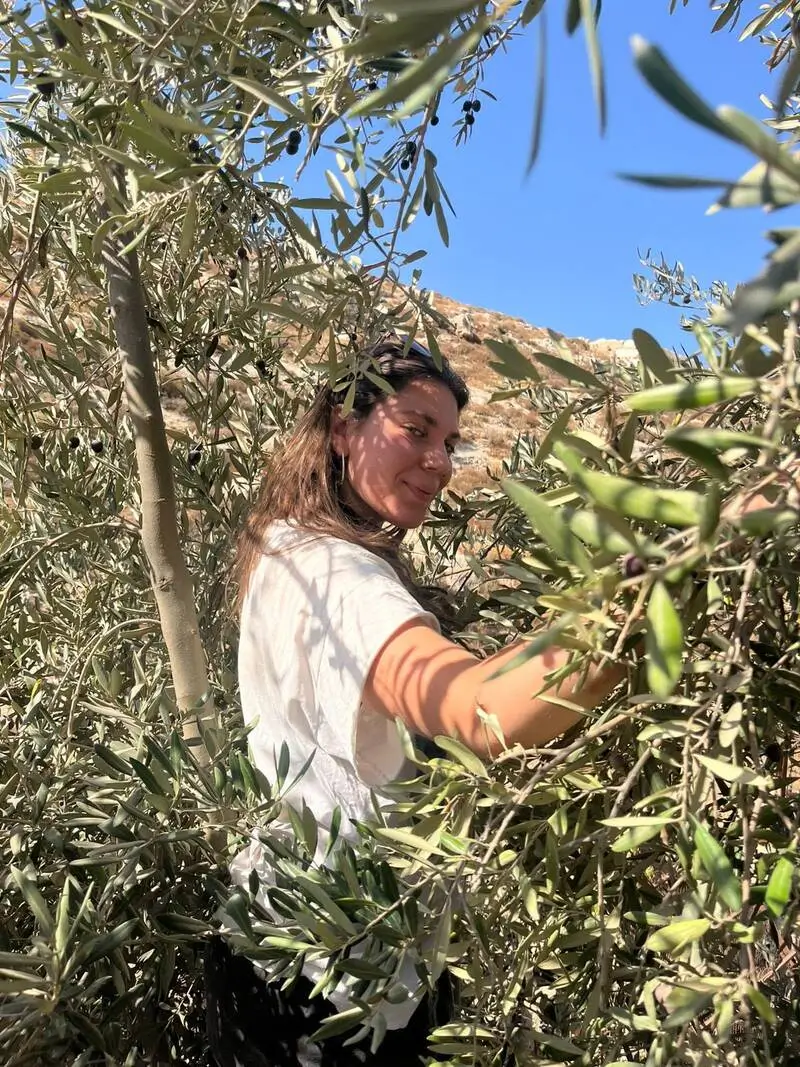
The case drew considerable attention in Jewish communities abroad, particularly among American Jews. This past May, Stillman-Utterback appealed the removal order to the District Court, which rejected the appeal two months later. In October, she filed a motion for leave to appeal to the Supreme Court, through her lawyer, Michal Pomerantz. The motion, which also cites other cases of human rights activists who were deported from Israel, argues that “this proceeding raises a question of principle … Is the respondent [the Population and Immigration Authority] … entitled to deport tourists on the basis of an alleged violation of a closed military zone order, without examining the legality of the order and of the police detention that followed it, and without exercising independent judgment?”
The motion goes on to say that “this situation, in which international activists are deported from Israel without any substantive allegation that they violated the terms of their visas or any suspicion of criminal activity, but only because the police seek to deport them because of their political views, is patently unreasonable.”
Stillman-Utterback’s case is one of the most extreme expressions of the Netanyahu government’s policy in recent years. Various arms of the government have been denying entry to people who criticize its policies, among them journalists, academics, human rights activists and employees of international aid organizations. “The various restrictions and prohibitions come from the same place,” says Prof. Adam Shinar, an expert on constitutional law and human rights at Reichman University. “The legal context may be different for each one, but the underlying ideology is to purge criticism of Israel from the public sphere. You can’t do that to Israelis, because they have a right to be here, so it’s done to human rights activists and others who come from abroad.”
This policy does not spare Jews, as Stillman-Utterback’s case demonstrates, or those who seek to immigrate to Israel under the Law of Return. Recently, for example, the state halted the immigration applications of two people in their 20s, a young man from England and a young woman from the United States, who had taken part in protecting Palestinians from settlers in the West Bank, as reported in Haaretz.
Similar cases occurred during the Second Intifada as well, but whereas 20 years ago they were isolated incidents, today there are scores of them. An indication of the scale emerged during a discussion held by the Knesset Immigration and Absorption Committee in November 2025, which was convened by the committee’s chair, MK Gilad Kariv, in the wake of Stillman-Utterback’s case. At the meeting, a police representative reported that in that year, 150 foreign nationals were denied entry to Israel and 43 were deported. Since then, say professionals who work in this field, foreign journalists have been added to those being denied entry.
In the two weeks before the recent Knesset election, at least five such cases were reported. The Association for Civil Rights in Israel appealed on this issue to the Population and Immigration Authority, noting in its letter that the practice harms not only journalists but also the freedom of expression of the Israeli public. In response, the authority claimed that without identifying details it could not address the matter. “Our firm has been working in the field of immigration and human rights for many years,” attorney Tamir Blank, who represents foreign journalists who were denied entry to Israel, told Shomrim. “Until a year ago, we never had a case of journalists coming to us. Now, every few weeks, either someone calls asking me to represent them or I hear about someone else who has been denied entry. This is a new phenomenon that didn’t exist before.”
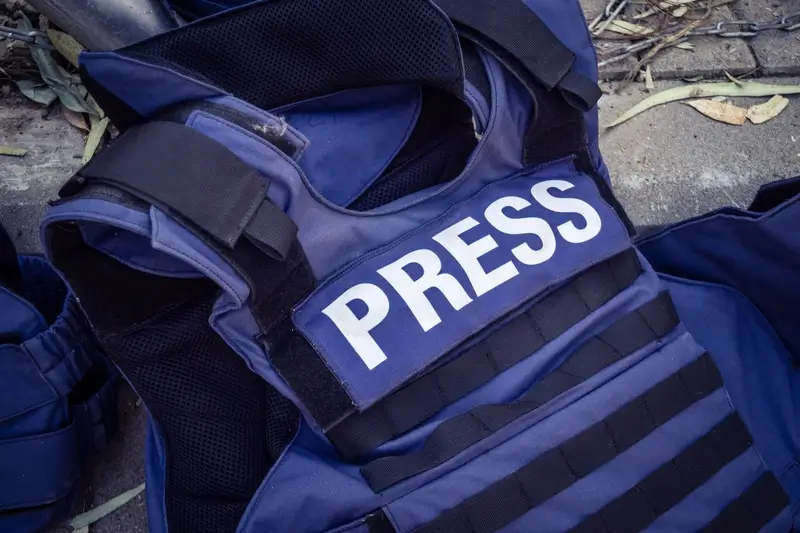
According to an official with the Foreign Press Association in Israel (the association represents journalists who are based in Israel and has no official information on ad hoc visitors), an estimated 12 to 15 foreign journalists have been denied entry over the past year. The association does not maintain comprehensive records of journalists visiting Israel on short assignments. The official says that in some cases, journalists had their authorization to enter Israel revoked while they were abroad, but there were also cases in which they were refused entry when they landed at Ben-Gurion Airport. “These people have to stay at the airport; they’re held in cells overnight, like criminals,” he tells Shomrim. “They also don’t know why they’re being refused entry. It’s especially hard for freelancers, because they don’t have the backing of a big organization that can pay for lawyers and fight.”
‘We have intelligence information, or something along those lines’
Over the past decade, Israel has built a legal and bureaucratic infrastructure that makes it easier to deny entry to the country. In 2017, Amendment 28 to the Entry into Israel Law was enacted, stipulating that entry would be denied to anyone who calls for a boycott of Israel. In February 2025, Amendment 40 was added, establishing that Holocaust denial, denial of the October 7 massacre, and support for prosecuting Israeli statesmen or officers in courts abroad would also lead to denial of entry. A petition against the last clause, which deals with support for prosecution abroad, was filed with the High Court of Justice by the nonprofits “Bashaar - Academic Community for Israeli Society” and “Academia for Democratic Israel,” together with 54 other academics. They argue that the clause harms the freedom of expression of all Israeli citizens, as well as their freedom to pursue their profession, as people who organize international conferences in Israel that are attended by guests from abroad.
During the Knesset Interior Committee’s deliberations on the law, a representative of the attorney general’s office also opposed it. “True, the proposal deals with foreigners, but it could indirectly create a chilling effect on statements at the core of freedom of expression,” said Nadav Golani, the attorney general’s representative, at a hearing held in February 2025. “This proposal could harm Israelis who want to hold various kinds of meetings in Israel, academic, cultural, political and others, with foreigners who express certain kinds of opinions that are protected by freedom of expression in the State of Israel.”
In addition, in January 2025 a new bureaucratic dimension was added: the Population and Immigration Authority’s Electronic Travel Authorization, or ETA, form. On its face, this is a procedure that is also used in many Western countries, in which citizens of countries that are exempt from visa requirements fill in their details on an online form before entering the country. Applications are usually approved automatically within minutes or hours, allowing authorities to screen travelers before they arrive. In Israel, however, where the authorization is valid for two years, this tool has made denying entry on political grounds much more commonplace.
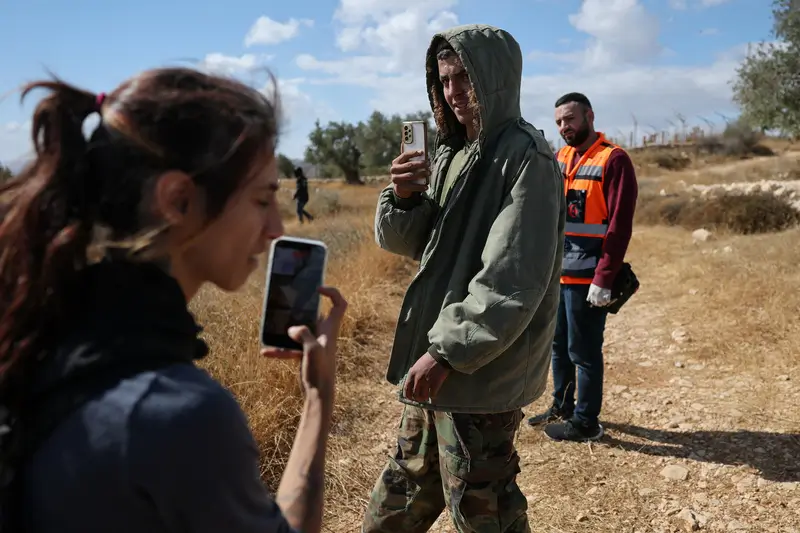
Here’s how it works: Foreign activists who arrive in the West Bank show their IDs to a police officer or soldier, and then receive a notice that their ETA has been revoked, so that the next time they apply to come to Israel, they will not be allowed in. That is what happened about two weeks ago, when some 80 activists from Rabbis for Human Rights accompanied an olive harvest in the Nahalin area of Gush Etzion. The activists were taken for questioning at the Etzion Regional Brigade headquarters. The group included several dozen American Jews, most of whom have since returned to the United States and then received notice that their authorization had been revoked. Two weeks earlier, the same thing happened to two foreign women who took part in similar activity and showed their passports to the security forces.
According to Prof. Yael Berda of the Department of Sociology at the Hebrew University, author of the book “The Bureaucracy of the Occupation,” the ETA has become a very convenient tool for the authorities. “Instead of refusing entry at Ben-Gurion Airport, you can do it online, while the person is abroad. The ETA works well for the authorities because it turns the process into a bureaucratic matter. They say, okay, we have intelligence information, or something along those lines, so they cancel the authorization. That’s different from a situation in which a professor arrives at Ben-Gurion Airport, waits eight hours, and it becomes a New York Times headline. The point of this bureaucratic approach is to make the practice seem routine, largely invisible, and apolitical.”
Police representative: “The Judea and Samaria District has a policy”
A different infrastructure was built within the police, under National Security Minister Itamar Ben-Gvir, who is in charge of the force. In April 2024, it was reported on Ynet that the minister had set up a police team to act against the presence of left-wing activists in the West Bank. After the report, attorney Itay Mack, who defends human rights activists, tried to find out from the police the circumstances under which the team was established. “Setting up this team was beyond the authority of both the minister and the police,” he tells Shomrim. “Only the commander of IDF forces in the West Bank has the authority to issue a removal order on security grounds. That means that in order for the team to fulfill its function, it had to encourage arrests of left-wing activists and intervene in their interrogations as a matter of policy, so that all of them would be automatically barred from the West Bank.”
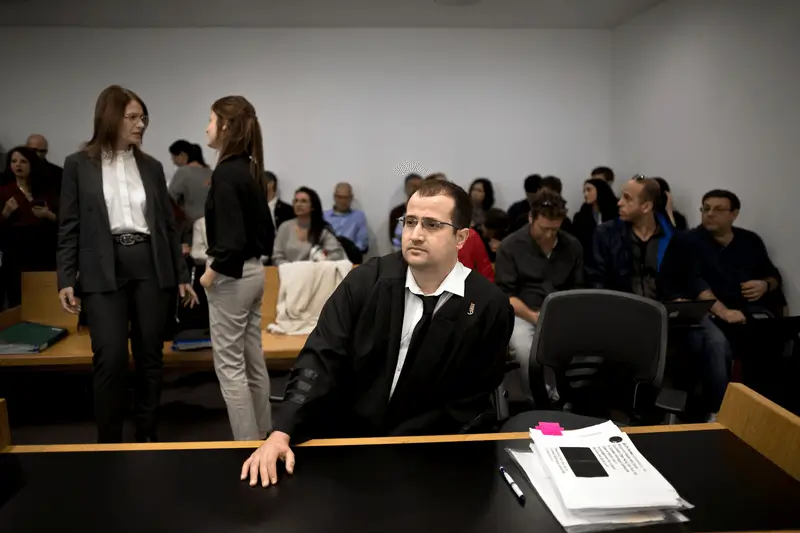
The answer Mack received was that no such team had been established. “Contrary to what has been claimed, no dedicated team of any kind, whose entire purpose is this, was established” [regarding the removal of foreign nationals - S.S.], Eliran Amsalem, an aide to the Judea and Samaria District commander, Maj. Gen. Moshe Pinchi, replied in a letter. But a year later, at a Knesset hearing of the Foreign Affairs and Defense Committee’s Subcommittee on Judea and Samaria, Lt. Col. Shmulik Cohen, an operations officer in Central Command, said the opposite. “In the past two years, a desk has been set up in the Judea and Samaria District’s Central Unit that is intended solely for dealing with foreigners, and that is its function,” he said. “We see effectiveness in recent months, both in prevention and in the arrest of those who both violate order and cause harm to security forces.”
A fuller picture emerges from comments made by Chief Inspector Merav Ettinger, the Judea and Samaria District’s legal adviser, at the Immigration and Absorption Committee meeting mentioned earlier. “The Judea and Samaria District has a policy,” she said. “Whenever foreign nationals commit an offense, threaten public safety or security, or otherwise violate the law, we refer their cases to the Population Authority, and that’s what we did in this case.” She then added that this is the policy of the district commander, Maj. Gen. Pinchi. The latter, it should be noted, was Ben-Gvir’s security secretary at the National Security Ministry before being appointed to his current post.

The influence of the Judea and Samaria District on the removal of activists from Israel can also be learned from public statements made in the Knesset by representatives of the Population Authority. Here is what Amnon Shmueli, the Population Authority’s director of border control, said at the same meeting of the Judea and Samaria subcommittee mentioned earlier: “Today we are connected to the Judea and Samaria Central Unit and to COGAT [Coordinator of Government Activities in the Territories, the Israeli military body responsible for coordinating civilian affairs in the West Bank and Gaza] … They transmit data on people who are due to arrive or who are already on the ground. “For those already in the area, we flag them for possible denial of entry in the future.”
The ministry that provides the Population Authority with recommendations about foreigners seeking to enter Israel who have spoken in favor of boycotting Israel is the Diaspora Affairs Ministry. Minister Amichai Chikli has boasted several times in recent years of blocking various people from entering Israel, including journalists. But it emerges from what Shmueli said later that the authority denies entry not only on the basis of police recommendations but also on the basis of information coming from civil society organizations. One of them is DMU, a right-wing organization that monitors the activity of human rights activists in the West Bank.
During the meeting, Shmueli said: “We denied entry to everyone on the latest lists we received from the Judea and Samaria Central Unit and Amit's team [Amit Barak, a DMU representative who was present at the Knesset hearing - S.S.]. We didn’t let them board the flights.” At the same meeting, activists from organizations and right-wing MKs presented the position that taking part in demonstrations is a violation of the tourist visa. “The moment he gets involved in political activity, that’s already a violation of the visa. He comes to a demonstration, is part of a demonstration. On its face, that would constitute a violation of the visa conditions,” said the subcommittee chair, MK Zvi Sukkot.
Shmueli tried to present a more nuanced position, according to which passive participation in demonstrations is not grounds for denying entry, because political demonstrations are “gray areas” that the authority does not deal with. However, participating in what he called disturbances of public order is grounds for denial of entry or deportation. “Photographing is allowed,” Shmueli clarified at the hearing.
Last weekend, the policy could be seen in action on the ground. On Sunday, November 1, the Population and Immigration Authority announced the start of deportation proceedings against 14 foreign nationals from various countries, on the grounds that they had “violated their tourist visas,” in the words of the announcement. The case was not reported in the media; in a video posted on X, the activists can be seen being detained by people in semi-civilian clothing, and it is not at all clear whether they are soldiers. According to a report by the journalist Nurit Yohanan, one of those being deported is a journalist from Portugal.
In response, the IDF Spokesperson’s Unit said: “On October 29, IDF troops were dispatched to the area of the village of al-Lubban al-Gharbi, in the Binyamin Brigade’s sector, following a report of unfamiliar people present on grazing lands belonging to Israeli civilians. When they reached the spot, the troops noticed friction in the area and acted to restore order. As part of this, the people who are not local residents were presented with a closed military zone order.”
An Italian journalist and a sign language interpreter from the U.S.
The way the policy is implemented is illustrated by the case of Italian journalist Alessandro Stefanelli, who is barred from entering Israel. His attorney, Tamir Blank, filed an administrative petition a month ago against the decision to deny his entry. Attached to the petition are two documents from the Judea and Samaria District. The first is a 16-page report from July 2025, titled “Review of Foreign Nationals Who Promote Criminal Activity.” Stefanelli is described in it as a “journalist and photographer who reports one-sidedly against Israel.” The evidence, according to the police: an article on the Bedouin in the Negev, which claims that there are no bomb shelters in the Negev, even though there are improvised shelters there; an article in which Stefanelli accuses Israel of creating apartheid in the West Bank after October 7; and another article critical of environmental pollution caused by Israel in the Tulkarem area.
In May 2026, officers of the Judea and Samaria District police sent a four-page letter to the Population and Immigration Authority regarding Stefanelli. The letter stated that there was no basis for allowing him to enter Israel because he engages in propaganda aimed at delegitimizing Israel. The letter included findings from the district’s July report, to which were added a post that Stefanelli published on Instagram, in which the journalist calls for international intervention against “settler violence” (the quotation marks appear in the police letter), as well as an article of his on the occupation and settler violence.
According to attorney Blank, “This isn’t a crime, so the police have no authority, but the heading ‘People deemed likely to incite or contribute to unlawful activity’ is their excuse for getting involved. In other words, the journalist didn’t commit a criminal offense, but his article might lead to crime. We argued lack of authority before the Appeals Tribunal [a judicial instance that deals with entry to Israel - S.S.], but the judge didn’t really address it. The Population Authority’s conduct is also problematic. The moment the police say there’s someone in the report, the Population Authority simply cancels the ETA, effectively preventing entry, without conducting an independent review. So, there’s overreach of authority on the one hand, and abdication of authority on the other.”
The Judea and Samaria District’s July 2025 report also included information on other foreign nationals. One of them is the Argentine filmmaker and photographer Cristian Pirovano. According to the report, he is a member of a BDS group in Lausanne, Switzerland, and entered Israel in violation of Amendment 28. The report notes that he used his entry to film “Yallah! Yallah!,” which it says calls Israel an apartheid state, and was released in 2017. Later in the report, posts by Pirovano are cited that express criticism of the IDF’s policy in the West Bank, along with statements such as “Hebron, one of the centers of the Israeli occupation in the West Bank.”
What may best illustrate how lightly these powers are used is the story of a woman named Claudia Kienholz, whose identification document appears in the police report, which suggests that it was presented to a police officer or soldier and thus reached officers of the Judea and Samaria District’s Central Unit. Kienholz is the secretary of the Washington State Registry of Interpreters for the Deaf, an association of sign language interpreters in Washington State, where she lives. The police report includes a very long statement by community members, educators and public leaders from Washington State calling for an immediate ceasefire in Gaza, issued while the war was still going on.
The statement criticizes Hamas’ October 7 attack and Israel’s subsequent actions in Gaza. It is not clear why Kienholz’s name in particular appears so prominently in the police report, but it may be because she translated the content of the statement into sign language. Among other things, the statement also includes an explicit call against antisemitism and Islamophobia, but even that did not help Kienholz, because at the end of the report there is an explicit recommendation to bar her from entering the country, pursuant to Amendment 40 to the Entry into Israel Law.
Responses
The Population and Immigration Authority said: “As a rule, a foreign national who comes to Israel and enters on a tourist visa declares thereby that the purpose of the visit is tourism. Any other activity, including volunteering, studies, work and so on, that has not been regulated with an appropriate visa, is not defined as tourism in Israel, and in such a case the activity constitutes a violation of the terms of the visa.
“The Population and Immigration Authority recognizes the important role of foreign journalists and often affords them additional consideration. In exceptional cases in which official, well-founded recommendations are received, the circumstances are reviewed and a decision is made based on the facts of the case: revocation of a stay visa, revocation of an ETA. In recent weeks, activists who are not journalists were indeed deported, after flagrantly violating the terms of their tourist visas. Cooperation between the bodies is important and necessary; at the same time, the Population and Immigration Authority exercises the discretion granted to it by law.
“Contrary to claims that this is a blanket policy, each case is considered on its own merits.”
The Israel Police said in response: “The Israel Police operates in accordance with the law, the division of responsibilities and powers among the relevant authorities, and in cooperation with those authorities, with the aim of preventing foreign nationals who belong to anti-Israel organizations or support terrorist organizations, and who operate around the world against Israel and seek to harm it, from entering the country.
“In 2024, a Foreign Nationals Unit was established within the Extreme Violence Division of the Judea and Samaria District Police’s Central Unit, in response to increased activity by extremist foreign organizations and activists at flashpoints across the West Bank. As part of its work, the unit collects and reviews information concerning foreign nationals involved in criminal offenses or violations of the terms of their entry visas and permits to stay in Israel. Based on the findings and materials collected, professional assessments are prepared and forwarded to government ministries and other competent authorities for consideration of measures against the individuals concerned, including deportation from Israel, in accordance with the law.
“It should be emphasized that the role of the Israel Police is to gather information, investigate offenses, formulate professional recommendations and submit them to the relevant authorities. Decisions on denying entry to Israel or deporting individuals are made by the authorities legally empowered to do so, following an examination of the circumstances of each case on its own merits.”