


Haredi Women Can Vote. Their Parties Still Won’t Let Them Run
A new campaign is pressing Israel’s ultra-Orthodox parties to nominate women for the first time. But while some Haredi women support greater representation, others reject the campaign — and even supporters may be unwilling to withhold their votes from parties that exclude them. A Shomrim report
A new campaign is pressing Israel’s ultra-Orthodox parties to nominate women for the first time. But while some Haredi women support greater representation, others reject the campaign — and even supporters may be unwilling to withhold their votes from parties that exclude them. A Shomrim report
A new campaign is pressing Israel’s ultra-Orthodox parties to nominate women for the first time. But while some Haredi women support greater representation, others reject the campaign — and even supporters may be unwilling to withhold their votes from parties that exclude them. A Shomrim report
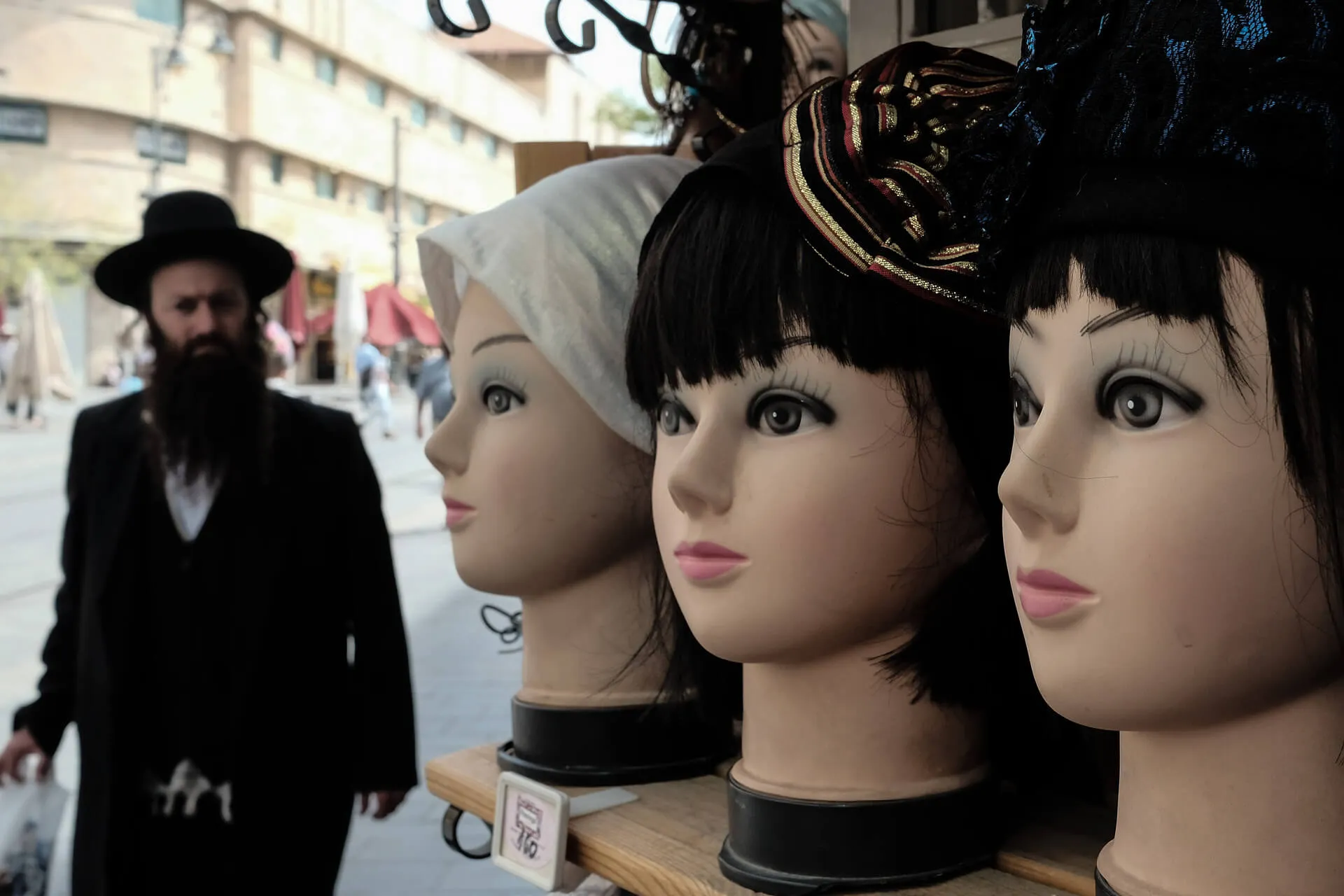
A wig shop in Jerusalem. The shop and the person pictured are not connected to the story. Photo: Reuters

Lir Spiriton
August 25, 2026

Summary


Listen to a Dynamic Summary of the Article
Created using NotebookLM AI tool
Israel’s two main ultra-Orthodox parties, Shas and United Torah Judaism, do not include women on their electoral slates. No woman has ever served in the Knesset on behalf of either party.
In recent weeks, a campaign calling for female representation among the ultra-Orthodox factions in the Knesset has been gaining traction. The campaign organized what it calls “open primaries”, an unofficial vote asking Haredi women to nominate women they believe would make suitable Knesset candidates. The vote has no formal role in selecting any party’s slate. The goal, according to organizers, is to highlight the fact that ultra-Orthodox women want female representatives in Israel’s parliament – as well as to present potential candidates. Organizers claim that tens of thousands of women took part, following which a list of candidates was drawn up.
Dr. Malkali Blau Hanuka is a well-known figure in the ultra-Orthodox world, she is head of the lobby for Haredi and religious women in the Knesset. She learned that she was a candidate in the unofficial primary when phone calls and text messages started arriving. There was just one problem: She had never agreed to run. In fact, she opposed the campaign. In a conversation with Shomrim, she said that she sees the whole campaign as something provocative that goes against the worldview of the Haredi public. The campaign, according to Blau Hanuka, created the false impression that women like her who were included on the list identify with its message or are even interested in being part of it. “They created an apparatus that allows them to use somebody’s name without getting their permission and, in the same breath, to absolve themselves of responsibility by claiming that they were selected by the public. This is an infuriating situation in which I have had to expend my energy distancing myself from a political marketing campaign that was forced on me without my consent.”
Blau Hanuka says that she is not flattered by the fact that she was included in the campaign. “The word ‘primaries’ has a very clear meaning – it’s a vote to determine a party’s slate of candidates for an election. The very fact that they tried to pull the wool over people’s eyes is evidence of the more profound deception at the heart of the campaign.”
The organizers of the initiative, for their part, argue that they did not vote for themselves or the women on the list; rather, they said that they collected suggestions from the public. They believe that the fact that Blau Hanuka is on the list testifies to the fact that there are ultra-Orthodox women who see her as a worthy candidate for the Knesset. “We included her name as a candidate because women recommended her,” a representative of the campaign told Shomrim. “We genuinely wanted it to come from the street, from the people.”
The episode captures a central tension in a growing campaign to bring women into Israel’s ultra-Orthodox political parties for the first time. The movement is led by Haredi women, yet some of the very women it seeks to represent want nothing to do with it. Opposition from rabbis and political leaders remains perhaps the most obvious barrier to female representation. But there are others: Women have traditionally been excluded from positions of political and communal leadership, and those who publicly challenge that norm can face significant social consequences — not only for themselves, but for their families. Together, these forces help explain why, even as some Haredi women push for political representation, others remain reluctant to challenge the status quo ahead of Israel’s October 2026 election.

The Argument That There Are No Women to Run
A handful of Haredi women have served in parliament before, through non-Haredi parties, including Tzvia Greenfield in 2008 as part of Meretz party in the 17th Knesset and Omer Yankelevich in 2019 for the Blue and White party. However, none has ever represented one of the established Haredi parties.
Public calls for women to be included on the lists of ultra-Orthodox parties have been common for the past two decades at least. In 2015, Haredi women went further, forming their own party and urging women not to vote for parties that excluded them. The party won just 1,802 votes, far short of the threshold for entering the Knesset.
More than a decade has passed since then, but the overall picture remains the same: the Haredi parties are not even considering a woman’s candidacy, even as a campaign is being organized by women. Tzipi Lavie, an ultra-Orthodox feminist activist and one of the leaders of the campaign, says that, when they started organizing, the activists recognized that the discourse on social media was not reaching large parts of the ultra-Orthodox public. “We started by writing posts on Facebook, but we quickly understood that it wasn’t enough,” she says. The next stage was to place booths in the heart of Haredi communities, along with a large sign asking passersby: “Tell us why there are no ultra-Orthodox women in the Knesset.” Lavie says that the goal was not to convince anyone, but merely to raise the question in the very places where it had not even reached people’s consciousness. Some of the passersby were quick to distance themselves from the booth, Lavie says, while others stopped for long conversations. “I didn’t think we’d manage to convince anyone,” she adds, “but a lot of people – especially women – were persuaded within just a few minutes.”

During these conversations, which can often turn into heated arguments or even religious discussions, the activists try to move things away from the religious norms of tzniut, or modesty, which in Haredi communities can govern interactions between men and women and expectations about their public roles, to the practical price that the Haredi community is paying by keeping women away from the decision-making process. “Women will come up to me and say that the reason is because it’s immodest,” says Lavie. “So, I ask them: What exactly is not modest? Is it immodest for men and women to work together? If so, why do male ultra-Orthodox politicians work alongside women as a matter of routine?” Then, they present the participants with cases of violence against women or arguments about the rights of kindergarten teachers in Haredi educational networks – a painful issue in the Haredi sector – and ask how the lack of female representation affects how these matters are handled. According to Lavie, for many of the women she interacts with this is the first time that the issue of female representation has been directly linked to their living conditions.
Support, Lavie insists, is not limited to members of the modern ultra-Orthodox community. “This isn’t something I believe,” she says when asked about support from more conservative women, “it’s something I know. The only difference is that we [modern ultra-Orthodox] are working and talking out loud, while they are only thinking these things to themselves. The difference is not in the belief, it’s in the action.”
The booths and unofficial primaries are intended, among other things, to counter two excuses that Lavie receives from Haredi members of parliament when they are asked why there are no women on the list. The first of these is, “When the rabbis say it’s okay.” Lavie says that this is “nonsense” and argues that, in many cases, the situation is exactly the other way round: Knesset members and party activists are influencing the messages coming from the leading rabbis and are promoting the positions they want to hear.
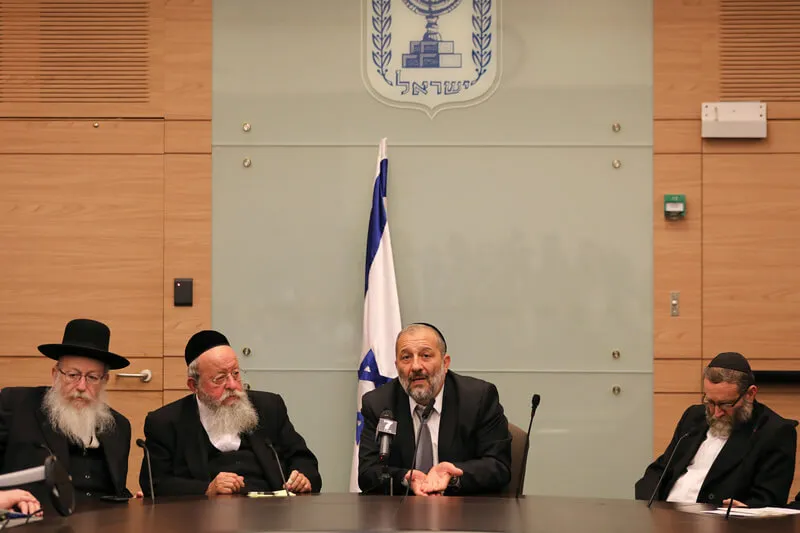
The second excuse is that “there are no ultra-Orthodox women who want to run for the Knesset.” Sometimes, the even blunter version of this is that “there are no ultra-Orthodox women capable of serving in the Knesset.” The voting in the unofficial primary campaign was meant to disprove this through the names, faces and public track records of Haredi women, and later, the level of support they received. “Blocks and blocks of names and faces. Female Haredi leaders – we want to show they exist,” Lavie says. “We are going to show how many supporters each of them has. I want to be able to take that to the leaders of the parties.”
Lavie says that even placing a woman so low on the list that she won't realistically end up getting elected to the Knesset could open the door. She also believes it is important for there to be ultra-Orthodox women on secular parties’ lists, which she believes would get the public used to seeing ultra-Orthodox women in political life. Greenfield and Yankelevich did not achieve enough during their tenures, she says, that could be shown to ultra-Orthodox women as proof of the value of female representation in Haredi politics. “We absolutely didn’t prove any points there,” she says. “We don’t have a wealth of experience and proof with which we can reach out to Haredi women and tell them: this is what representation can do for you.”
The Price of Speaking Out
Even if this primary campaign managed to present an impressive list of potential candidates and secured them thousands of “votes,” it still has not resolved a very fundamental problem: ultra-Orthodox women are not united behind the issue. Some of them oppose the very idea of demanding representation, others could support the idea but are not prepared to pay the price of joining a public campaign. And, in any case, they all still plan to vote for an ultra-Orthodox party – even one that does not have a single woman on its list.
Blau Hanuka tells Shomrim that “the problem with these mock primaries is the obsessive attempt to put pressure on an entire population in order to change its social and political structure, even if that means using the names of women who do not identify with the move.” She says that women’s representation can be advanced through public activity and cooperation with elected officials. “I do not think that you have to be a member of the Knesset to spearhead that change. There are a lot of ways and collaborations through which this can be achieved.”
As far as Blau Hanuka is concerned, the struggle for ultra-Orthodox women’s representation did not stem from any internal need of Haredi society; rather, it was forced upon them by external forces. “There are left-wing organizations that want to come along and shake things up within the ultra-Orthodox sector,” she says. According to her, it is important to examine who is behind the activity and who is funding it. “Where does their budget come from? Who are the people running them? It’s not innocent. It didn’t come along out of nowhere.” The argument over female representation in the Knesset has become, she believes, a front designed to tear Haredi society apart from within, following the massive internal rift over mandatory enlistment into the IDF. “Yes to women, no to women. Enough with it. Don’t get involved in our society.” She also rejects calls to come out against the current structure. “The argument is not about what makes for a good life, but about our right to choose to belong to a community with its customs and ways of life. We want to preserve our society as it is, with the same customs, with the same glorious tradition of 3,000 years.”
.jpg)
Hava – not her real name – is 55 years old and works as a supervisor in high-tech. She is part of a community of ultra-Orthodox women working in related fields. When she was interviewed for this article, she was happy to have her real name published, but later – fearing negative reactions – she asked to be referred to by a pseudonym. Her approach is different to that of Blau Hanuka. “If the rabbis are against it, it probably won’t happen,” she says. “That isn’t to say whether I am for or against. It just means that I am being realistic.”
Hava also doubts that change will come from the ground, dragging the leadership along with it. She says that previous changes in Haredi society – like women joining the workforce in new fields of employment – happened mainly because of economic constraints and practical needs. She believes that no public campaign to pressure the rabbis has ever led to change. Even a successful campaign, she believes, will find it hard to become a mainstream movement as long as it works against the position espoused by the traditional leadership.
The problem, it is important to point out, is not just religious or ideological. An ultra-Orthodox woman considering coming out in support of a controversial campaign must take into account the price that she, her children and the rest of her family could pay – in educational institutions, in terms of social standing and even in their children’s prospects of shidduch (the the community’s arranged-marriage system). “Our first concern is our children,” Hava says. “So, even before the question of whether a woman agrees with the demand in principle, she has to ask herself what it will cost her.”
This price explains the discrepancy between tacit support and openly joining the campaign. Women may believe that there should be female representation in the ultra-Orthodox party’s Knesset list – but may refrain from saying so in public, from being an active part of the campaign or even from identifying with one of the candidates. Lavie says that a well-known Haredi woman withdrew her candidacy from the mock primaries after she was subjected to some very negative feedback. According to Lavie, the women that activists spoke to on the street described this woman as a leader and said that they would be willing to vote for her. “She felt that she had too much to lose, however,” Lavie adds.
Even support in principle for an ultra-Orthodox woman does not automatically translate into a vote for whichever party that woman is with. “I do not vote for a woman. I vote for a party,” Hava explains. As far as she is concerned, one female candidate cannot bridge the ideological gaps between her and the party. So, a trap is created: the ultra-Orthodox parties do not allow women into their ranks, but a secular party that includes an ultra-Orthodox woman, it seems, will not get any votes from the Haredi sector.
That leaves the campaign with a fundamental strategic problem: Unlike the activists of 2015, its organizers are not threatening to withhold their votes from parties that exclude women. Without such a threat, Haredi parties face little immediate electoral pressure to change.
It Starts With Girls’ Education
The discrepancy between the lack of female representation and voting patterns stems not only from the price that women will pay for trying to change things. It is also connected to the way that Haredi women are raised to understand their role and the limits of their legitimate aspirations.
Shahar Ilan, a commentator and journalist for Calcalist and an expert on Haredi society, argues that the exclusion of women is not simply a matter of religious law or modesty, but a mechanism for preserving the existing distribution of authority and resources within Haredi society. He defines the exclusion of women from Haredi parties as “a holy principle in the value system that seeks to safeguard the power of Haredi men.” He adds that the key question is not what is permissible from a Halachic viewpoint, but what changes would allow ultra-Orthodox society to maintain its structure. “Nothing runs ultra-Orthodox society more than sociology,” he claims. “Haredi society does not operate to preserve Halachic principles. It operates to preserve Haredi society.” If Haredi women are allowed onto the political stage, they will start to influence their society’s priorities and the division of its resources – something that Ilan believes will have a significant impact on the character of that society as a whole.

Over the past two decades, Haredi women have Joined in increasing numbers the Israeli workforce, including in professional and technology jobs. But their growing economic role has not translated into formal political power within their own community. Referring to a study by Prof. Tamar El Or, which showed how Haredi society needed to train women to join the workforce and, at the same time, continued to teach them to know their place, Ilan says: “Now, a Haredi woman can be completely conservative but also have a career.”
The issue of women’s employment is also relevant to the question of political representation, since exposure to the world outside the community has created new demands. “So many ultra-Orthodox women are working, some of them even have careers, and when they are so exposed to social media, a Haredi feminism will necessarily develop,” Ilan says. He defines the current mock primaries campaign as “a clear example of Haredi feminism.”
Ilan believes Haredi women are more likely to gain political representation first through non-Haredi parties. He also believes that this could force Shas and United Torah Judaism to amend their list of candidates. Real change within the Haredi parties, he argues, will come only when excluding women begins to carry an electoral cost. He points out that voting itself was once considered an alien role for Haredi women. That changed when the parties realized they needed women’s ballots. Representation, he believes, will follow the same logic. “It will only happen when the rabbis realize that excluding women means losing their votes,” he says. “We’re still a long way from that, though. A very long way.”