


Can the Ultra-Orthodox Political Establishment Be Challenged? A New Generation Is Trying
Long dominated by two political parties, Israel's ultra-Orthodox electorate is seeing a new wave of new political initiatives fueled by frustration over military conscription, education and everyday economic concerns. Few are expected to win seats, but even small shifts in support could reshape the country's political balance. A special report by Shomrim
Long dominated by two political parties, Israel's ultra-Orthodox electorate is seeing a new wave of new political initiatives fueled by frustration over military conscription, education and everyday economic concerns. Few are expected to win seats, but even small shifts in support could reshape the country's political balance. A special report by Shomrim
Long dominated by two political parties, Israel's ultra-Orthodox electorate is seeing a new wave of new political initiatives fueled by frustration over military conscription, education and everyday economic concerns. Few are expected to win seats, but even small shifts in support could reshape the country's political balance. A special report by Shomrim
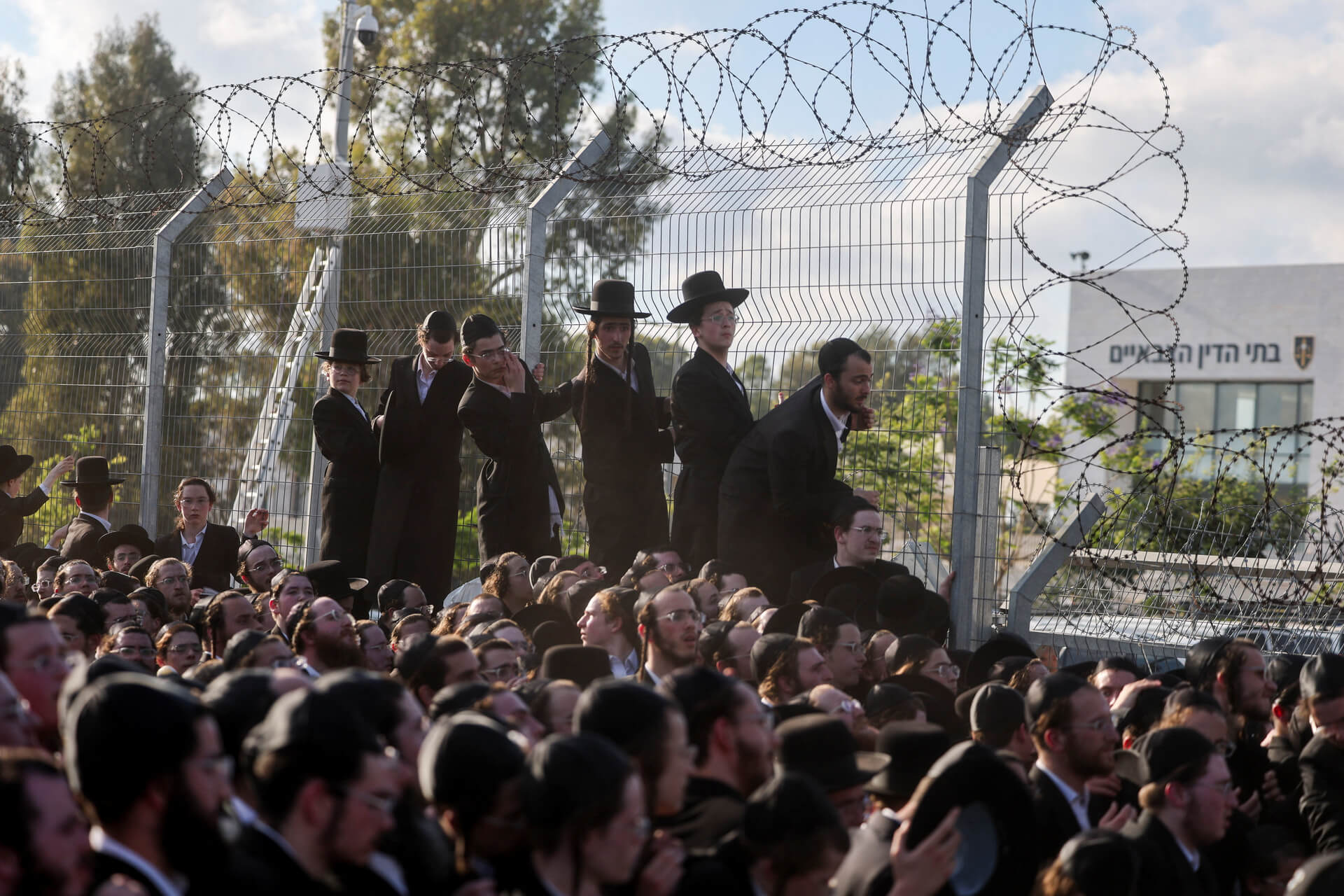
An ultra-Orthodox protest outside the military court near Netanya some two weeks ago. Photo: Reuters
Lir Spiriton
July 26, 2026

Summary


Listen to a Dynamic Summary of the Article
Created using NotebookLM AI tool
For decades, Israel's ultra-Orthodox political landscape has been dominated by just two parties: Shas and Unite Torah Judaism. Now, a growing number of activists, rabbis and local politicians are attempting something once considered almost impossible: challenging that duopoly from within.
“Everyone takes into account the possibility that their children will be discriminated against and will be booted out of their schools and yeshivas,” says one person involved in a new political initiative in the ultra-Orthodox community. “I can unequivocally say that it is taken into account. But what can you do? Revolutions are seldom quiet.”
These comments are a powerful manifestation of the anger and frustration that many members of Haredi society are feeling toward their political leadership, in light of what is seen as their failure to deliver the goods during the last Knesset. Now that the election campaign is well and truly underway, the unrest that Shomrim has been reporting on in a series of articles on the Haredi street has taken on a new form: initiatives that openly call for the replacement of the political leadership. Some of these initiatives seek to form independent political parties, while others want representation within the existing ultra-Orthodox parties. Others are trying to get into the Knesset through mainstream parties. The target audiences are varied: working Haredim, modern Haredim, communities that do not feel represented and traditional voters, too.
These initiatives represent the most significant challenge in years to the established ultra-Orthodox political leadership. But their promise of change extends only so far. Although calm to address explosive issues like representation for modern Haredim, the military draft and teaching the core curriculum in ultra-Orthodox schools – they continue to embrace traditional power structure: rabbis will retain ultimate authority over key decisions, and none of the new groups plans to include women among its candidates or leadership.
Behind the initiatives are activists, rabbis and politicians, some of whom have experience in local politics and are now trying to scale the move nationwide. Their joint claim is that the establishment ultra-Orthodox parties have been looking out for their own interests and the interests of their activists for long enough – and have neglected the daily lives of their public. The issue of the IDF draft and its accompanying financial ramifications is the headline when it comes to the messaging of these initiatives, but they also talk about education, employment and discrimination within the ultra-Orthodox community.
According to most estimates, none of the initiatives have enough support to cross the electoral threshold alone. But under certain circumstances, all it takes is for a few thousand voters to move away from Shas or United Torah Judaism for them to lose one of their seats in the Knesset. There are even circumstances – albeit extreme – when that could determine the outcome of the entire election.
New parties: New forces from Bnei Brak and Netivot
Hakahal ("The Public") presents itself as a grassroots alternative to the traditional Haredi parties, promising greater transparency and internal democracy through primary elections. The target audience of this new party is only vaguely defined. A video on its website, introduces some of the people who are planning to compete in the party’s primary. They belong to varying streams, including Lithuanian, Ashkenazi and Sephardi Haredim. In so doing, Hakahal wants to portray itself not as a party belonging to any single ultra-Orthodox stream, but as an all-Haredi movement that wants to change the way that the sector elects its representatives. But despite its reformist rhetoric, the movement has yet to present a detailed platform, says key decisions will remain under rabbinical authority, and has not endorsed women's representation. It also takes a cautious position on military service, arguing that full-time Torah students should remain exempt while acknowledging that others may eventually need to serve.
Attorney Shlomo Elbaum, the head of the opposition on the Bnei Brak city council, has already announced that he plans to run for the Knesset as part of the initiative. Elbaum and several other figures told Shomrim that they do not want to discuss running for the Knesset at this stage.
The effort to bring a new model of political engagement to the ultra-Orthodox public immediately ran afoul of the mainstream Haredi world, according to those involved in the initiative, who claimed that representatives of the established parties quickly interfered. According to a report from News 1, the party’s website was added to the list of sites blocked by the ultra-Orthodox internet filter. This incident amply illustrates the difficulty a new party faces in even reaching its potential voters while seeking to change the mechanisms of Haredi representation.
.webp)
Unlike Hakahal, “Achi” is built around an existing religious community centered on the late Rabbi Yoram Abergel, and the main rabbinical force behind it is his son and successor, Rabbi Haim Yosef David Abergel. Being affiliated with Abergel gives the movement a community basis that other initiatives lack. The extent of the connection is not entirely clear. Sources within the movement claim that, based on research they have conducted among the supporters of the late Rabbi Yoram Abergel, it could amount to about one and a half Knesset seats – even before they engage in outreach to additional audiences. Shomrim could not independently verify these claims.
On the issues facing the ultra-Orthodox community and the state of Israel, the movement argues that the traditional ultra-Orthodox parties have become disconnected from voters' daily concerns. It advocates more pragmatic positions on military service and education, including support for drafting ultra-Orthodox men who are not studying full-time and teaching core subjects in Haredi schools. At the same time, it combines those positions with a firmly right-wing nationalist platform that could appeal to Ben-Gvir voters.
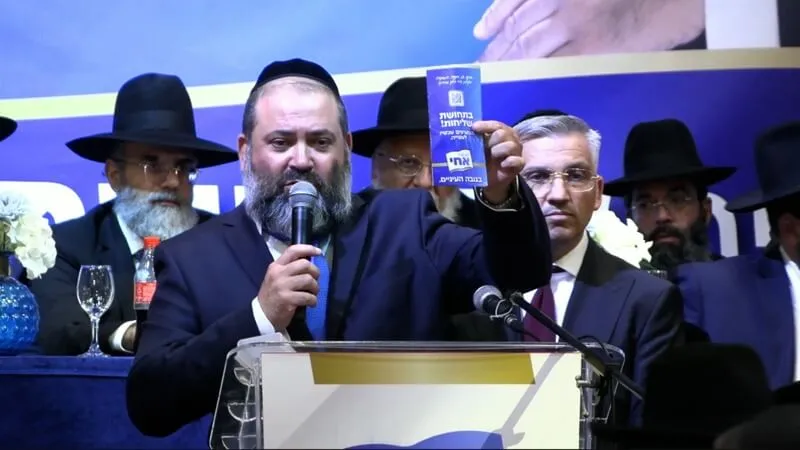
The chairman of the “Achi” movement, Rabbi Yuval Elimelech, 53, is a former deputy CEO of Rabbi Abergel’s educational institutions in Netivot. In a conversation with Shomrim Elimelech, when asked whether he expects to get into the Knesset at the upcoming election, he immediately jumps in: “What do you mean ‘expect’? We will get in,” he says adamantly. “We will be the surprise of the election.” When asked which voters he hopes to attract, Elimelech’s initial response is laconic: “Everyday Israelis.” When pressed to expand, he says “religious people, married yeshiva students, soldiers, people from villages, simple people.” He also specified “people who want to reconnect to their roots.”
Elimelech, who was born in Yeruham, talks often about traditional Jewish Israelis living in the peripheries and living in mixed Jewish-Arab neighborhoods. As far as he is concerned, “Achi” is not just another Haredi political party seeking to grab a few thousand votes from the existing parties in the same sector; rather, he sees it as an attempt to establish a broader Sephardi party that can bring together yeshiva students, soldiers, religious and traditional Israelis.
Integration: A new face on a familiar ballot
In Israeli elections, each party is assigned a letter or combination of letters, which appear on all of its campaign material, as well as the ballot used on Election Day. And yet, election billboards in Bnei Brak promoting the newly formed Haredi Public faction are not adorned with a new letter; instead, they carry the letter gimmel, which represents United Torah Judaism on the ballot. The tagline of the campaign, which was launched last week, is: “We need the Haredi faction’s reps on the gimmel ticket.” Unlike the two previous initiatives, Haredi Public is not trying – for the time being, at least – to convince voters to pick a new party on Election Day. Rather, it wants to get its representatives elected to the Knesset on an existing party’s slate.
.jpeg)
The new initiative is headed by 33-year-old Motti Leitner, who is also deputy mayor of Beit Shemesh. The initiative came about when a group of independent ultra-Orthodox local politicians noticed that, during the most recent local elections, there was a groundswell of support for parties and lists that are not directly subordinate to either Shas or UTJ. The local politicians started to reach out to voters who are not represented by the traditional ultra-Orthodox parties, with the goal of forming a new political base. According to sources involved in the initiative, they have been joined by people from various Hasidic sects, including Lithuanian, Chabad and Sephardim – in addition to working Haredim, new immigrants and newly religious Jews. These communities may not share a political worldview, but what they have in common is a feeling that they are not represented by the existing Haredi parties.
The main complaint raised by members of Haredi Public is that the established parties deal primarily with the bigger, institutional issues – at the expense of their voters’ day-to-day problems. In conversations with Shomrim, they talk about parents who want their children to be taught English and math, about girls who are not accepted into educational institutions and Haredi women with professional training who earn less than other women in the same field. When it comes to the IDF draft, Haredi Public takes a similar line to the other newly formed initiatives: protecting those yeshiva students who do study Torah while trying to reach a solution for drafting those who do not.
.jpeg)
Integration into existing parties, however, may not be the ultimate demand of this initiative. Sources inside Haredi Public say that they expect Shas and UTJ to reject their demand and insist that almost a year of organization and fundraising will not end with a billboard campaign. One of them predicts that there will be at least two Haredi Knesset members in the next parliament who are not members of either of the established parties. He did not say exactly how they will be elected, but said that “any path is legitimate.”
Other figures have given up in advance on efforts to convince the established ultra-Orthodox parties to open up their slates to them and are looking for representation in non Haredi parties. Take, for instance, attorney Moshe Turgeman, a representative of the Haredi Forum under the leadership of the Fourth Quarter, who seeks to secure the integration of a Haredi candidate into a general Israeli party. Turgeman does not present his own personal integration as the goal of the initiative. As far as he is concerned, the very election of a Haredi representative who does not answer to Shas or UTJ could open a political channel for groups of people who have established educational institutions, communities and civil society organizations – but who are still not represented in parliament.
Dr. Aliza Bloch, a former mayor of Beit Shemesh, is considering a similar move. Bloch is not talking about setting up a new Haredi list. Instead, she is looking to join a political framework in which Haredi politicians can be part of a mainstream Israeli party. “I want to create a new Israeli discourse for Haredim who say: I want to be both Haredi and a part of Israel,” she explains. She also wants to include a Haredi woman on the slate – something that none of the existing or new Haredi parties are offering at this stage.
The basis of power: the unrepresented

The fact that there are so many initiatives could create the impression that Shas and UTJ are facing a new Haredi camp, but the picture is more complicated than that. The new initiatives are appealing to audiences whose worldviews are not represented (the Haredi public) or who have become alienated from the original party (“Achi”). In the past, the polarization among the various Haredi factions was less noticeable, but as the population and communities grew, it turned into a complex issue that the parties preferred to ignore.
Dr. Gilad Malach, director of the Ultra-Orthodox in Israel program at the Israel Democracy Institute, says that this polarization is particularly prominent around Shas, which has always relied on a more diverse constituency than United Torah Judaism. “Shas caters to a variety of audiences,” he explains. “Unlike the Ashkenazi Haredi public, which is more homogeneous, the Shas electorate is more heterogeneous. It is no coincidence that in many election campaigns, there are attempts to run against Shas.” The party’s traditional voters, he adds, are less loyal, making it easier for rivals to chip away at their support.

%20(1).webp)
Efforts by “Achi” to expand beyond Rabbi Yoram Abergel’s student base to the broader traditional public fits right into this space. But even if the party succeeds in attracting thousands of voters, it remains a massive distance from the electoral threshold. Malach is unequivocal on this point: “It has zero electoral viability. A new Haredi party cannot pass the threshold, which is expected to be around 165,000 votes [the equivalent of about 4 seats in the Knesset - L.S]; it is simply impossible.”
The math is just as tight when you look past Shas to the modern Haredi community, where some of the other initiatives are trying to build a base. According to estimates presented by Malach, modern Haredim account for about 10 percent of the Haredi public. “If we cast a very wide net with Shas voters, we are talking about 12 seats. 10 percent of that is one seat, maybe a seat and a half,” he says. Yet even this calculation is highly theoretical: “It is not as if every modern Haredi will vote for a party like that. Just because I am a modern Haredi, it does not automatically mean I support that particular vision.”
The inability to clear the electoral threshold does not make these political initiatives meaningless. Their more likely impact is chipping away enough votes from existing parties to alter the distribution of seats. “10,000 votes, 20,000 votes, or even 5,000 votes can mean the loss of a seat,” Malach says of the threat to Shas. The same applies to UTJ, which could be close to its eighth seat. This in turn could change the balance between the two camps in the next Knesset. “A minor blow from here or a minor blow from there could cost them a seat,” says Malach. Given all this, “the more realistic initiative is to integrate a modern Haredi representative into an existing slate.”
Women also excluded from the new parties
‘It’s always at the expense of women. They always ask women to make concessions when it comes to what’s important for men’
Women do not exist in Haredi politics, something that is not likely to change during the current election campaign. Sari Kroizer, a long-time social activist in the Haredi world, is part of a growing group of ultra-Orthodox women – and some ultra-Orthodox men – who have been working for women’s representation in Haredi politics. “Even the parties that are currently being formed do not plan on including women,” she says. As far as her group is concerned, a party that promises changes in the areas of education, employment or relations with the state but which is not willing to include a woman on its slate is not offering a viable alternative to Shas and UTJ.
Those behind the new initiatives argue that including a woman on the slate would alienate the conservative voters they are trying to win over. Kroizer rejects this argument. “Anyone who is mainstream but is bothered by a woman being on the slate will not vote for them in any case,” she says. She argues that voters who intend to follow rabbinical orders and stick with the traditional Haredi parties will not switch to a new slate just because it excludes women. On the other hand, shutting women out is exactly what could alienate the very people looking for a genuine alternative.
Kroizer points to the gap between the independence that the people behind these new initiatives show in other areas and their willingness to back down specifically on the question of female representation. “They are trying to prove they are still Haredi,” she says. “On this issue, they say, ‘It is not important enough, so let’s compromise’.” For Kroizer, the decision is not just an electoral compromise: “It is always at the expense of women; women are always asked to sacrifice for the things that matter to men.” If the new parties preserve the exact same ground rule as the parties they are challenging, she asks, “In what way are they actually any different?”