


Jerusalem Demands Years of Back Taxes From Palestinians Who Say They Received Few City Services
Families in East Jerusalem’s Shoafat refugee camp are being ordered to pay thousands of dollars in property taxes dating back years, despite receiving few municipal services and relying instead on UNRWA for education, healthcare, trash collection and infrastructure. Some have had their bank accounts frozen or wages garnished, while the city says its tax policies apply equally to all residents. Published also in Wasla
Families in East Jerusalem’s Shoafat refugee camp are being ordered to pay thousands of dollars in property taxes dating back years, despite receiving few municipal services and relying instead on UNRWA for education, healthcare, trash collection and infrastructure. Some have had their bank accounts frozen or wages garnished, while the city says its tax policies apply equally to all residents. Published also in Wasla
Families in East Jerusalem’s Shoafat refugee camp are being ordered to pay thousands of dollars in property taxes dating back years, despite receiving few municipal services and relying instead on UNRWA for education, healthcare, trash collection and infrastructure. Some have had their bank accounts frozen or wages garnished, while the city says its tax policies apply equally to all residents. Published also in Wasla
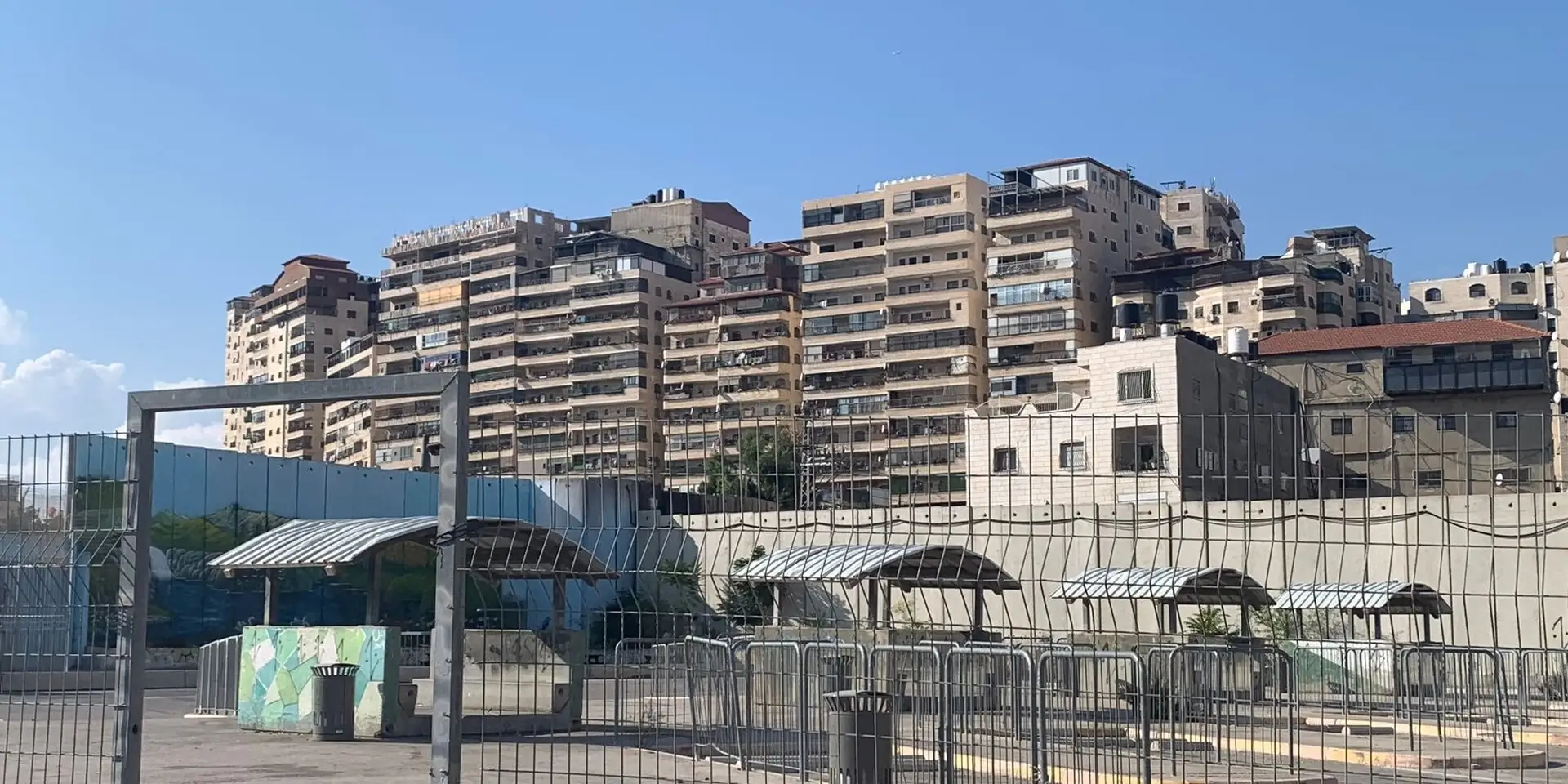
Shoafat refugee camp. Photo: Rahma Ali.

Rahma Ali, Wasla
October 12, 2026

Summary


Listen to a Dynamic Summary of the Article
Created using NotebookLM AI tool
In 2024, Jerusalem Municipality sent Sahar al-Tawil’s family a bill for 74,000 shekels (about $24,000) in unpaid property taxes. The debt, the city said, had accumulated over a decade. Soon afterward, authorities placed a lien on her husband’s bank account and withdrew tens of thousands of shekels.
The family, which lives in the Shoafat refugee camp in East Jerusalem, hired a lawyer and eventually reached an agreement to repay the debt in installments - payments that now consume a significant portion of the household budget for al-Tawil, her husband and their three children.
Shoafat is a Palestinian refugee camp that lies within Jerusalem’s municipal boundaries but has been separated from the rest of the city by Israel’s security barrier. For decades, residents have relied heavily on the United Nations rather than the municipality for basic services, including education, healthcare, garbage collection and infrastructure maintenance.
Now, families in the camp are being ordered to pay years of accumulated municipal property taxes, even for periods when the city provided few services. Some have had bank accounts frozen and wages or pensions garnished.
Amal Mohammed Ali and her family live in the same refugee camp. They pay 610 shekels ($203) a month from the meager pension belonging to her aged mother to pay off a property tax debt of around 42,000 shekels ($14,000), after a lien was placed on her mother’s bank account. Iman Tartir, a homemaker who owes Jerusalem Municipality around 16,000 shekels ($5,300), also reached an agreement whereby she would repay the debt incrementally. According to local residents and human rights organizations, dozens of families in the Shoafat refugee camp are being made to pay hundreds of thousands of shekels in property tax for years during which Jerusalem Municipality barely provided any services. This is despite the fact that, during the years in question, payment demands were frozen at the residents’ request.
The debt ballooned – even though there were no services
The Shoafat refugee camp was built in 1965 by UNRWA at the request of Jordan, to house around 500 families who had fled the Old City of Jerusalem. After the Six-Day War in 1967, Israel annexed the territory and put it under the jurisdiction of Jerusalem Municipality. Decades later, the Israeli separation barrier severed the camp from the rest of Jerusalem, but it remains under municipal jurisdiction.
For decades, residents of the refugee camp relied to a very large extent on UNRWA for their basic needs: the United Nations agency operated schools and clinics, collected garbage and carried out maintenance work to the sewage and drainage systems. In 2018, Jerusalem Municipality announced that it would start sending its own sanitation workers into the camp for the first time. Then-mayor Nir Barkat portrayed the decision as the first step in City Hall’s efforts to get UNRWA out of Jerusalem entirely. He also promised that, as part of the move, City Hall, in conjunction with the Israeli government, would also provide education, healthcare and welfare services.
Four years later, a report published by UNRWA described the services that Jerusalem Municipality was providing to the camp as “extremely limited.” Following the approval of two new laws by the Knesset in 2024, Israel moved to close UNRWA facilities in the camp, accusing the organization of ties to Hamas and its employees of participation in the October 7 massacre. The new laws barred all UNRWA activity on Israeli soil and prohibited Israeli officials from having any contact with the United Nations body. The laws also applied to annexed East Jerusalem.

The laws took effect in early 2025 and were subsequently also imposed on the refugee camp: In May 2025, Israeli authorities closed the three schools that UNRWA was operating in Shoafat and in 2026 the UN-run medical center was also forced to close its doors.
The unique circumstances of Shoafat refugee camp are also evident when it comes to the water and sewage services. The Jerusalem Water and Wastewater Works Ltd – which is known informally as Hagihon and is responsible for these services in the whole of Jerusalem – told Wasla that it provides water up to the entrance of the refugee camp and that waste is removed via a sewage pipeline that runs underground. As for the water supply pipes inside the camp, the corporation is at pains to point out that they had never been under its responsibility and remain outside its responsibility today, adding that, over the years, UNRWA has provided these services. Hagihon added that it occasionally assists with sewage problems, but in its view, this does not constitute recognition of any responsibility for the infrastructure.
This is not the first time that, despite the almost total lack of municipal services in the camp, Jerusalem Municipality’s collections department has tried to demand that residents pay property tax. In practice, however, these demands were frozen. “My husband has been getting notices demanding property tax payments since 2004,” Sahar al-Tawil tells Wasla. “Each time he got one, he contacted City Hall – and the file was closed.” Presenting camp residency papers from the neighborhood mukhtar allowed locals to temporarily halt municipal billing notices. But what people believed meant that their files had been closed did not necessarily mean the debt had been forgiven.

City Hall froze debts – and residents thought they’d been canceled
In recent years, Jerusalem Municipality changed its policy and started to demand the payment of previously frozen debts. “Garnishment proceedings would be canceled, but the debts remained on record and frozen. Now, the municipality is demanding that residents pay property tax for the previous seven years,” says Rami Saleh, director of the Jerusalem Center for Human Rights. According to Saleh, his organization dealt with one case where a resident was being asked to pay around 154,000 shekels ($51,000).
These financial demands are an unwelcome additional burden on families that are in any case facing severe economic hardships. The population of the Shoafat refugee camp is around 24,000. According to the Central Bureau of Statistics’ annual rankings map for 2021, the camp is located in the lowest of the 10 socioeconomic clusters.
According to aid groups and representatives of camp residents, since the start of this year Jerusalem Municipality has adopted a new policy of systemic collection, with around 100 payment demands having been sent out recently – some of them for debts that are more than 20 years old, to which City Hall has added interest and nonpayment fines. “What has been happening since the start of this year appears to be a switch to a new policy of systemic collection,” says Shahar Alqam, a member of the camp’s popular committee.

For the families, these payment demands often lead to bank liens and garnishments on salaries and pensions, compromising their ability to afford daily necessities and leaving them buried under debts that have accumulated over many years.
The low cost of living in Shoafat – which was effectively turned into an urban township in the early 2000s – has made it a highly attractive alternative for Jerusalemites who can no longer afford to live elsewhere in the city. A survey carried out in late 2022 and early 2023 by the Jerusalem Institute for Policy Research presents a clearer picture of the economic pressure on Arab neighborhoods of Jerusalem which are located on the other side of the separation barrier, including Shoafat and the nearby Kafr Aqab: Only a quarter of respondents reported that their families manage to cover essential expenses without difficulty.
According to that survey, around 70 percent of families encountered difficulties meeting essential expenses or did not manage to meet them at all. Likewise, there was a major gap between male and female employment: 91 percent of men had jobs, most of them in manual labor or the service industries, while just 24 percent of women were employed. In the broader context, around 60 percent of Arab residents of Jerusalem lived below the poverty line in 2024 – a figure that relates to the total Arab population of the city and not just the Shoafat camp.
Why are some made to pay and others not?
In addition to a lack of municipal services, it also appears, based on residents’ testimony, that the payment demands are being sent out in an arbitrary and inexplicable manner. Sahar al-Tawil says that, to the best of her knowledge, hers is the only family in their seven-story apartment building that was sent a payment request for previous years. Amal Mohammed lives with her mother in the same building as her married brothers. And yet, she says, hers is the only family that pays property tax. These testimonies raise questions about the collection criteria, which pass over certain apartments and focus on others.
Jerusalem Municipality responded by saying that it pursues a uniform policy in property tax collection and the provision of services throughout the city, regardless of geographical location. According to City Hall, property classifications, tax rates and collection procedures are determined in accordance with the laws and regulations applicable to all residents of Jerusalem. When security circumstances or safety considerations restrict fieldwork, property measurements and enforcement procedures are carried out in accordance with the directives of security officials.
The city’s response did not explain the recent shift in property tax debt collection, nor did it detail the services provided by the municipality during the years to which the payment demands refer. Trapped between official statements and years of municipal neglect, families in the camp are left with no choice but to pay these back debts now.