


Victims Reported Organized Child Sexual Abuse. Israeli Police Struggled to Investigate It
A Shomrim investigation has obtained dozens of current and historical testimonies, case files, internal correspondence identifying repeated cases in which authorities received allegations of organized child sexual abuse but failed to establish whether broader networks existed. Some of the families eventually moved to the United States, where American trauma specialists documented similar accounts and sent their findings to Israeli police. A former Coordinator of Interpol’s Crimes Against Children Unit says there is a total lack of understanding combined with a lack of motivation.
A Shomrim investigation has obtained dozens of current and historical testimonies, case files, internal correspondence identifying repeated cases in which authorities received allegations of organized child sexual abuse but failed to establish whether broader networks existed. Some of the families eventually moved to the United States, where American trauma specialists documented similar accounts and sent their findings to Israeli police. A former Coordinator of Interpol’s Crimes Against Children Unit says there is a total lack of understanding combined with a lack of motivation.
A Shomrim investigation has obtained dozens of current and historical testimonies, case files, internal correspondence identifying repeated cases in which authorities received allegations of organized child sexual abuse but failed to establish whether broader networks existed. Some of the families eventually moved to the United States, where American trauma specialists documented similar accounts and sent their findings to Israeli police. A former Coordinator of Interpol’s Crimes Against Children Unit says there is a total lack of understanding combined with a lack of motivation.
Illustration photo: Shutterstock
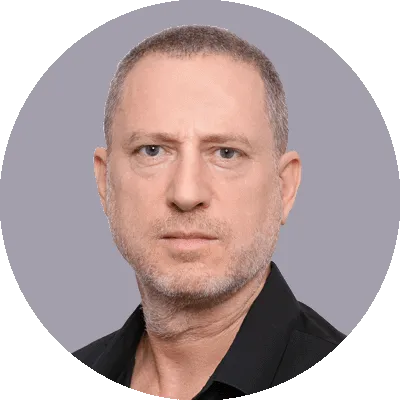
Haim Rivlin
August 13, 2026

Summary


Listen to a Dynamic Summary of the Article
Created using NotebookLM AI tool
Rivka (not her real name), 28 years old, says that beginning in early childhood, she was abused by a group of adults that included her father. She described multiple children being brought together, adults exchanging money and the abuse being photographed and filmed.
“I remember that hand gesture, when they would count out the money and give it to my father. We were a group of 20 to 25 children, from kindergarten age up to the age of 12. Not all the children were together every time." She tells Shomrim, as she recollects the severe sexual, emotional and physical abuse she suffered from childhood until just a few years ago. She goes on to say that there were five assailants, including her father – an organized group that employed sadistic methods, including drugging their victims into a dissociative state, rape, keeping children locked in cages and forcing their victims to fight naked for an audience of adults.
Rivka grew up in a prestigious and well-connected ultra-Orthodox family in Jerusalem, the daughter of a familiar, strong and influential figure in the community. In her testimony, she talks about falling pregnant to her father in seventh and eighth grade – pregnancies that ended with dangerous illegal abortions. “One of the members of the group was a doctor and he carried out the abortions,” she says.
Some two years ago, in June 2024, Rivka took her testimony to the police station in Zichron Yaakov (a town in northern Israel). That was around 18 months after she fled her parents’ home and found a place in a shelter for abused women. Accompanied by one of the shelter’s social workers, she told police investigators the whole story of her abuse. The officers listened and promised that they would take immediate action.”
“We waited a long time for that ‘immediate action’ to happen,” Rivka tells Shomrim with evident frustration. “After a year went by, they called me in again and told me that they had asked my brothers [about the allegation] and they had denied them. [The investigators] started to tell me, ‘So, it looks like none of it ever happened.’ Do you think I invented it all? Like, wow. Like, do you really think I’d invent a story like that?”
Some three months ago, in April, Rivka got a laconic letter from the Jerusalem District of the State Prosecution Service, saying that the case had been closed and that the state had decided not to file any indictments.
Rivka, for her part, has no intention of accepting the decision which puts more children at risk. To support her appeal against the decision, Rivka waived her doctor-patient privilege with Dr. Sharon Levy – the psychiatrist who has been treating her in recent years – and asked her to put into writing all of the information she had.
Rivka shared with Shomrim that document, parts of which are being published here. They raise serious questions about the decision not to prosecute. Dr. Levy, deputy head of mental health services for Meuhedet in the Jerusalem district, documented in the medical file, in real time, how Rivka was still being abused as an adult. She detailed serious burn marks, bruises and evidence of the use of chemicals – all the result of severe violence. In addition, the psychiatrist detailed in the document the existence of consistent medical records from 2006 onward indicating severe iron deficiency, to the point of requiring an intravenous infusion, along with a series of other medical complications that, according to her, may point to extreme abuse and deliberate starvation. Rivka herself says that she suffered damage to her nervous system that still affects her physical capabilities – something that is also well documented in her medical records.
Dr. Levy, who testified to the police and even shared with investigators medical records, concluded her letter with the following request: “I want to know why my testimony is not considered sufficient evidentiary basis to support the complaint that Rivka filed.”
The State Prosecution Service submitted the following response: “The State Prosecution reviewed the case thoroughly at every stage. In reviewing the matter, all investigative materials, findings and leads raised throughout were examined, including claims regarding the involvement of additional parties. Where necessary, supplementary investigative actions were carried out. Upon completing the review of the totality of the evidentiary foundation, it was determined that there is no evidentiary basis justifying the continuation of criminal proceedings, and the case was therefore closed.” The full response appears below.
Former Interpol official:
Israeli Police are falling behind in investigating child sexual abuse
Rivka’s account is not an isolated one. Shomrim reviewed several cases spanning years in which victims who did not know one another described similar patterns of alleged organized abuse. Shomrim also examined internal police correspondence and assessments by senior experts in Israel and the US. Taken together, the testimonies and records reveal significant shortcomings in how Israeli law enforcement have investigated allegations of organized child sexual abuse.
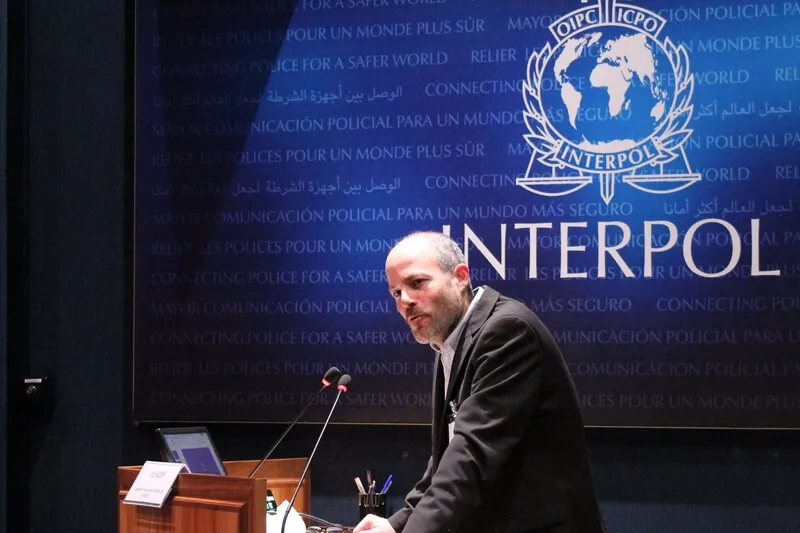
In an exclusive interview with Shomrim, Uri Sadeh, who served until recently as the Coordinator of Interpol’s Crimes Against Children Unit, sharply criticizes the police for failing to expose abusive organized child sexual abuse network . “In Israel,” he says, “there is a total lack of understanding of the subject – coupled with a lack of motivation. I can tell you that police forces across the world – and Interpol brings together forces from 196 different countries – have developed expertise and invest a lot of resources and manpower in this issue. There are international collaborations between the relevant police forces and Interpol; sometimes Europol also provides equipment, communication and management. But the Israel Police is almost totally invisible on the international scene when it comes to this issue.”
Sadeh, who worked for the Israel Police prior to joining Interpol and who retired with the rank of superintendent, was one of the founders of the police’s 105 unit, dedicated to protecting children online. In a conversation with Shomrim, he says that the biggest failing of all is the fact that the Israel Police is not present on the International Child Sexual Exploitation database (ICSE), the largest and most important resource in the global battle against online sex crimes against children.
The ICSE database allows investigators in participating countries to compare millions of images and videos, identify victims and determine whether material seized in one country is connected to investigations elsewhere. Sadeh says Israel is effectively absent from that system. Police dispute his characterization and say they maintain full cooperation with international authorities. “When police in Israel confiscate a computer and find child sexual abuse material on it, they should be putting that information into an international database so that other forces know that it is being dealt with,” he says. “That isn’t happening. The Israel Police is not uploading material.”
According to Sadeh, the Israeli officers are also not making use of Interpol’s database for investigations inside Israel, which could give them additional intelligence and help analyze material in their possession. “They barely train people to deal with the issue and there is a high turnover of investigators,” he says. “I am not even certain that police in Israel have users with database access.”
Are you aware of any request from the Israeli police to be updated if photographs of children from Israel are uploaded to the database?
“I am not. Not at Interpol, at least. Obviously, if anybody in the world recognizes Hebrew, they will flag it. The question is whether there is anybody in Israel to talk to; if the Israel Police has any officer willing to pick up the gauntlet. That is why it is so important for there to be an Israeli presence in the database. Investigators who deal with it say that they use the database on a daily basis. There are forums and discussion boards, but Israeli officers simply do not use it.”
The Israel Police submitted the following response: “The individual [Sadeh] served in the Israel Police for a limited period and has not served in either the police or Interpol for a long time; he is therefore not up to date on current developments or procedures. Contrary to his claims, full and successful cooperation with international authorities is ongoing.” The full response appears below.
Attorney Rotem Aloni Davidov, who specializes in representing victims of sex crimes, is not convinced. “For years, there was a clear pattern evident with the police. When it comes to sex crimes committed against children – and especially very young children – there is almost zero enforcement,” she claims. “The police do not pursue investigations fully and allow the culprits to evade responsibility.”
According to Davidov, this is because “the police and the prosecution put most of the weight on their interrogation of children, in which interviewees only rarely provide details about the abuse – making it very difficult to determine credibility. Over the years, there have been numerous cases where, if the police had investigated the information that did reach them, cross-referenced it with additional sources, and summoned relevant individuals for questioning, many more offenders could have been brought to justice.”

The Nahlaot Affair:
Computers disappeared, material wasn’t investigated and most of the suspects were released
The shortcomings in law enforcement’s handling of such allegations are perhaps most evident in the 2012 “Nahlaot affair,” a child sexual abuse case in Jerusalem that was described at the time as one of the largest of its kind in Israel.
The allegations bore many of the hallmarks associated with organized child sexual abuse: the systematic targeting of children between the ages of five and 10, extreme violence, intimidation, drugging, deliberate efforts to confuse the victims, ritualistic acts and the photographing or filming of the abuse.
Following a police investigation, indictments were filed against three suspects in the Jerusalem District Court. One of them was acquitted and the other two – Zalman Cohen and Binyamin Satz – were convicted of indecently assaulting several children over a prolonged period. Satz was sentenced to 15 years in prison, while Cohen received a nine-year sentence, which was later reduced to six and a half.
While this may seem like the successful conclusion of a case, a deeper dive into the details reveals a very different picture. “Based on the testimony of the children, it appears that other adults who were present at the time were actively involved in these crimes, abetted the defendant and perhaps even directed him,” the District Court judges who convicted Satz wrote in their verdict. “His actions were not isolated incidents involving a single victim but were committed against several children in a systematic manner.”
Addressing the fact that there were photographs, the judges wrote: “The defendant was the one who instructed two other adults present at the scene to film the children while they were naked. Those individuals, whose identities are unknown to the court, watched the children while the defendant inserted sticks into their anuses.” Even though the filming of abuse is mentioned in several other incidents listed in the two convictions, police were unable to obtain the footage.

Two computers belonging to Zalman Cohen mysteriously disappeared shortly before a police search. The judges ruled that the reason for their disappearance was to conceal the incriminating evidence stored on them. Remarkably, about 20 other suspects in the case were released without a search ever being conducted for what is known as a digital fingerprint—on computers and cell phones. Additionally, a cyber investigation into their possible involvement in trading child sexual abuse and exploitation material never took place.
The Nahlaot Affair was widely referred to as the largest organized child sexual abuse network in Israeli history because of the large number of child victims. More than 100 children testified to special police investigators about organized abuse. However, the closed nature of that society, coupled with the panic that struck parents, contaminated the testimony to such an extent that much of it was disqualified as admissible evidence. So, suspects that the children had identified were freed from police custody and hugely valuable information that could have been used to analyze intelligence and to deepen the police’s understanding of how organized child sexual abuse network work, was lost.
“You talk about inadmissible evidence – and the court’s hands are indeed tied – but there are a lot fewer restrictions on the police,” says Dr. Michal Gilad, a former attorney with the State Prosecution Service’s Central District who now investigates online child sexual abuse network and heads the Multidisciplinary Center for Childhood, Public Policy and Sustainable Society, operating out of New York.
“Even if the statute of limitations has expired on the evidence, even if it is hearsay and even if the witness has been influenced somewhat – it doesn’t matter,” Gilad says. “The police are not bound by such things; they can use them as intelligence and look for other information that comes to light as a result. And if that other information is reliable and credible, they can use that, too. There's something negligent going on here, unless they have some highly credible information showing that someone is sending these people to testify and make up stories.”
She named alleged abusers and gave police an address. The case was closed
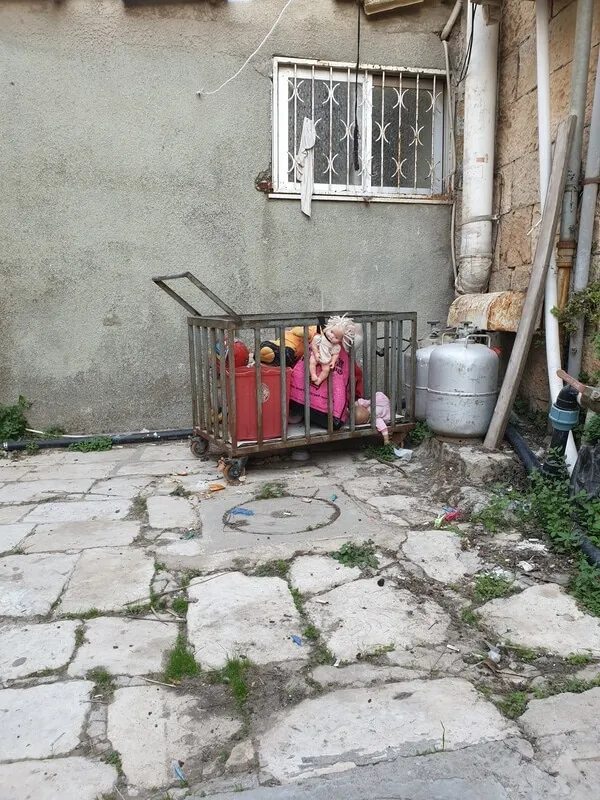
At the same time as the Nahlaot Affair was hitting the headlines, around 2012, Miriam (not her real name) walked into the Israeli embassy in Washington D.C. There she met with representatives of the Israel Police, to whom she related the story of what happened to her in a Jerusalem neighborhood in the early 1990s. It was one of the earliest complaints reviewed by Shomrim in which an alleged victim explicitly described multiple adults abusing multiple children and photographing the abuse. The main thing that stood out in Miriam’s testimony was the fact that there were multiple assailants abusing multiple children.
Extracts from Miriam’s five-page testimony are being reprinted here for the first time. We have chosen to omit some of the more disturbing descriptions. Miriam provided investigators with a detailed description of what happened in a residential building in Jerusalem when she was just five years old. She provided them with an exact address, with the names of the assailants and their victims – kindergarteners and schoolchildren who went through the same abuse, including being tied down, electrocuted, raped by multiple men, strange rituals and the constant presence of a camera. “I remember at least six men [...] They photographed me naked [...] They raped me and filmed me while they were doing it [...] I remember a polaroid photo; I remember that they argued about whether it was a good photo or not.”
Around a year later, Miriam visited Israel and the police asked her to come to the Moriah station in Jerusalem to complete her testimony. In addition to a coherent complaint, vivid and clear memories about group rape and abuse, Miriam also provided forensic evidence to back up her testimony.
The police did not follow up on Miriam’s complaint. No officer visited the building in question, and no background checks were done on the people whom Miriam named. “The file was closed – and rightly so – because of the statute of limitations,” a senior attorney who examined the case file confirmed to Shomrim. “This was indeed shocking – but complicated,” she added.
Former prosecution attorney Michal Gilad refused to accept this. “If there was no investigation,” she says, “then that’s negligence. When dealing with child sexual abuse network, when you have even a shred of evidence, even if it’s decades old, it is in the interest of the law-enforcement system to continue to investigate, to see if there are any other victims. I simply cannot defend it. Something is odd there.”
The Sanhedria Affair
The same passive approach would also characterize Israeli law enforcement bodies when it came to the next major case: on July 9, 2015 – exactly a year to the day after a verdict was handed down in the Nahlaot Affair – Dr. Fortunato Benarroch, a psychiatrist working at Hadassah Medical Center in Jerusalem where he is director of the Service for Traumatized Children and Adolescents, sent an extraordinary and urgent letter to the police. Under the headline “The Need for a Comprehensive Systemic Investigation into the Phenomenon of Child Abuse,” Benarroch described serious concerns over the existence of organized networks that were abusing children – similar to those documented in Nahlaot.
“I encounter numerous cases related to this issue,” he wrote to the police, “both through families seeking treatment at our clinic and in professional consultations with fellow practitioners in the field [...] The fact is that a very large number of children have been harmed, a number far too large to be explained by lone, uncoordinated perpetrators. Added to this is the fact that abuse involving this many children was successfully hidden for so long. Furthermore, we are observing similar, strikingly unusual symptoms among many children who have no connection to one another or to each other’s families. These include strange facial expressions inconsistent with the child’s age or situation, peculiar difficulties with speech or writing and a preoccupation with strange figures whom the child keeps partially or fully secret – people about whom they feel absolute terror when revealing details. The fact that all of these phenomena are emerging once again in more neighborhoods only heightens the concern.”
The unusual letter from the head of a department at Hadassah came against the backdrop of new reports from ultra-Orthodox neighborhoods of northern Jerusalem – Sanhedria, Ramot, Ramat Shlomo and others – about children coming for treatment because of strange behaviors and dissociative states that had developed. During treatment, allegations of severe sexual abuse, abduction and child trafficking emerged. In the police files that Shomrim obtained, those allegations would be referred to collectively as the Sanhedria Affair and the investigation would be led by Superintendent Gilad Bahat, who is now a senior official in the police legal advisory division.

Three months after he sent the letter, Benarroch was invited to meet with Bahat at a Jerusalem police station. There, he tried to explain to the officer that he and other therapists had identified extreme patterns. “This does not sound like typical adult-on-child abuse; there are signs that these children underwent manipulation involving animals and adults who terrify children,” reads the protocol from the police meeting, revealed here for the first time. Benarroch singled out the “fantastical” accounts given by the children, with some describing being taken into tunnels that led to the Old City, alongside descriptions of crosses and strange rituals. He assessed that all of these are components of the manipulation techniques deployed by the perpetrators.
Four months later, another expert was invited to testify to the police: Dr. Danny Brom, a clinical psychologist and expert in complex post-trauma. Brom met with and trained the therapists who treated those children who were most severely abused. He told Bahat, the lead police investigator, about children as young as three or four who were displaying behavior that was not appropriate for their age. The following is a quote from the police memorandum obtained by Shomrim: “The children suddenly undress and ask their parents to perform a sexual act on them, while also responding in bizarre ways to ordinary events like Friday night dinner. Examples include fits of rage, tearing prayer books and sacred texts, violence toward siblings and the like. During clinical supervision, I viewed videotaped treatment sessions showing children with severe dissociative phenomena. Dissociation is recognized as a post-traumatic phenomenon.”
At the same time as these testimonies, most of which came from professional therapists, there was also a trickle of parents turning up at police stations to file complaints. A tiny number of children testified to dedicated police investigators trained to talk to children.
The following minutes were provided to Shomrim with the parents’ permission and are being published here for the first time: “An eight-and-a-half-year-old boy began, about a month ago, to express severe and violent themes incessantly during play at home,” the summary of one session states. “His accounts are inconsistent but contain descriptions of an adult who takes children from the Talmud Torah to an undisclosed location. He describes how these individuals inflict physical violence on others and how he strips others of their clothes. He uses terms like ‘tzaddikim’ [righteous ones] and ‘rashaim’ [wicked ones] and describes violent acts. During the child assessment, which was conducted over two sessions, a clearer picture failed to emerge. While he brought up violent and disturbing themes, he struggled to provide a coherent description or explanation for his statements. Furthermore, his descriptions sounded bizarre, and therefore no conclusions can be drawn from them.”
Dozens of families have left Israel to the US
According to estimates, around 40 families who came from English-speaking countries and who lived in the Sanhedria neighborhood of Jerusalem left Israel for the United States because of the abuse their children suffered.
In 2017, a group of American psychotherapists sent letters addressed to the Israel Police in which they documented their conclusions based on treatment of the alleged victims. “I am an expert in trauma and dissociation who has worked in this field since the 1980s. Over the course of my long career, I have treated many children and adults who experienced horrific abuse as part of organized crime, including sex trafficking,” wrote Frances S. Waters, an international expert on child abuse and former president of the International Society for the Study of Trauma and Dissociation, in a letter addressed that same year to the Israel Police and published here for the first time.
Dr. Sara Schwartz-Gluck, who is the clinical director of a New York health center, testified that she treated seven children whose families left Israel for the United States after they were abused. The youngest of them was just two-and-a-half years old and the oldest was eight. In a letter being published here for the first time, which was also sent to the police in Israel, she wrote about verbal disclosures that she heard from children “about being taken from school and taken to a place where they were tortured and severely abused. There were also disclosures about being photographed naked,” she wrote. She also wrote that the children told her that “their private parts were scalded with hot wax,” that “they were forced to watch other children being sexually abused” and that “they were penetrated with needles and attacked by animals.”
Schwartz-Gluck wrote that “all of the children described a ‘king’ or ‘pharaoh’ who organized the torture and it seemed to them that he had supernatural powers, like making water boiling hot or freezing while the children were bathing. They display moments of dissociative responses during the session, in which they appear to lose control over their bodies and their eyes glaze over.”
Her assessment was that the children had undergone severe and organized abuse and that the symptoms they displayed “are not similar to the symptoms of any other case of sexual or physical abuse that I have treated in over a decade of specializing in trauma therapy.”
These letters were included in a report sent to the Israel Police by Dr. Joyanna Silberg, a world-renowned clinical psychologist who also specialized in child abuse. Silberg was exposed to the findings after she was called in to advise and train the therapists who were treating the children in question; she also visited Israel to conduct in-person professional assessments and met with some of the victims first in Israel and later in the U.S. She testified to officers investigating the Sanhedria Affair and later appeared before various Knesset committees that dealt with the issue of organized child abuse. According to Silberg, the findings she collated indicate that at least 100 children were abused in Sanhedria and some of the adjacent neighborhoods of Jerusalem.
A report published by the Knesset’s Research and Information Center in November 2025 references the article written by Silberg back in 2021, in which she wrote that, “the children were harmed by a group of abusers who acted systematically to abuse children, including photographing these incidents.” Silberg described online exploitation and child trafficking via live-streamed abuse. In another document she submitted to the police and shown to this correspondent at the time, she attached copies of photographs allegedly taken during the abuse, which were sent to one of the victims years later as part of an extortion attempt. The information provided to the police contained the phone numbers used to send the photos, as well as a wealth of additional details.
Despite all this, the police investigation into the Sanhedria Affair failed to yield any results. A handful of suspects were questioned but quickly released without any restrictions being placed on them; parents and children were called in to testify, welfare teams were questioned and investigators tried to find the places that the children claimed they were taken during school hours, via forests, monasteries and private homes. “Upon our arrival, I knocked on the door under some pretext to observe whether there were crosses or anything else in the home that could raise suspicion regarding the investigation of the case,” wrote a detective from the Jerusalem Police Crime Fighting Unit in a December 2017 memorandum obtained by Shomrim, reflecting frustration at the gap between the “fantastic” descriptions and the findings on the ground.
One of the police’s explanations for the gap between the children’s descriptions and the fact that no evidence of organized child abuse was uncovered despite extensive investigations was that some of the incidents were exaggerated. At a certain stage, an emotional therapist was even arrested on suspicion of improperly influencing the children through suggestion – that is, generating community hysteria and collecting donations to help pay for treatment. She was soon released and no proof was ever offered to substantiate the suspicion against her.
The investigation was not approved
Uri Sadeh is only too familiar with the affairs that were investigated in Jerusalem. He took a sabbatical from Interpol between 2014 and 2018, after the Israel Police recruited him to set up a dedicated anti-pedophilia unit – originally called the Maor Unit and later Unit 105. Sadeh reveals that he asked to examine the Jerusalem files but his request was turned down. “At a certain stage, I asked that my team be allowed to breathe new life into the Jerusalem investigations that did not lead to anything and which no one seemed interested in pursuing any more. I was not given permission, and I have no information about what happened thereafter.”
Sadeh adds: “It is evident that the Sanhedria Affair is something that should have been handled very differently and a much greater effort should have been made. They may try to tell you that they did, but the only measure is the measure of success. Closing the case and saying that all the allegations were fabrications is just a way of making life easier for yourself. Clearly it is a network and it is extreme; even if 70 percent of the descriptions were exaggerated, that is still extreme and extraordinary. If this were to happen in the United States, they would be allocated all the necessary experts and resources.”

Sadeh believes that the evidence documenting the abuse necessitated the involvement of a unit specializing in child sexual abuse crimes: “In the Sanhedria Affair, there should have been a combination of traditional investigation, field work, intelligence gathering and the like, in close cooperation with Unit 105. Any technological asset or computer material seized should have been transferred to them for analysis tailored to our field. That synthesis simply did not exist at the time.” He adds that “Israel has units equipped with advanced technological tools; had there been a desire to direct them toward pedophilia, a great deal could have been achieved. The fact that the abuse described in Jerusalem spanned years and that adult victims are testifying to what they endured is extraordinary. How can they ignore this?”
Israel Police said in response: “Without referencing any specific case, we note that all complaints received are processed and closely monitored by professional authorities who, beyond evaluating the claims, convene roundtables with all relevant entities – including the justice, education, welfare and health ministries, the State Attorney’s Office, and others – and maintain close contact with support organizations to reach every victim.
“We stress that the length of time that has passed complicates the progress of these investigations due to the absence of immediate evidence, the specifics of which naturally cannot be detailed for privacy reasons.”
The State Attorney’s Office said in response: “Citing the Sanhedria and Nahlaot affairs does not substantiate the conclusions presented in your inquiry. Contrary to what has been claimed, both affairs were investigated thoroughly and in depth. In the Sanhedria Affair, the State Attorney’s Office accompanied the investigation, and there is no basis to the claim that law enforcement authorities possessed testimony from dozens of children. In the Nahlaot Affair, in cases where a sufficient evidentiary basis was found, three indictments were filed and tried in the Jerusalem District Court. These affairs do not substantiate allegations about the existence of an organized network, nor can conclusions be drawn from them regarding other cases. Every case is examined on its own merits and on the basis of its existing evidentiary foundation.
“Regarding the general allegation raised in your inquiry concerning the existence of organized networks targeting children, your inquiry alleges the existence of various testimonies, correspondence and information that allegedly substantiate these claims. Should admissible evidence, direct testimony or concrete information demonstrating the commission of offenses or the existence of such an organized network be submitted to Israel Police, it will be evaluated by investigative authorities. Should such material subsequently be forwarded to the State Attorney’s Office, it will be evaluated in accordance with the law.
“It is important to stress that the State Attorney’s Office continuously addresses these matters, details of which naturally cannot be elaborated upon. Following the issue being raised in the Knesset, several complaints were filed, which are now being overseen by two branches of the State Attorney’s Office. To evaluate potential connections between the files, if any, and to examine whether they indicate the existence of a broader phenomenon, a senior attorney has been appointed to coordinate the handling of these cases.
“All questions regarding the conduct, actions and decisions of the investigation fall under the authority and responsibility of Israel Police, and questions on these matters should therefore be directed to them.”
How Other Countries Investigate Organized Child Sexual Abuse Networks
1998
Authorities uncovered the Wonderland Club network, where members produced and streamed live sexual abuse of children while viewers issued instructions in chat rooms. An operation spearheaded by British police, in cooperation with 1,500 police officers from 13 countries, led to the simultaneous arrests of 104 suspects from Britain, Australia, Belgium, France, Germany, Sweden and the United States.
2002
Authorities uncovered The Club, a network spanning the U.S., Denmark, Britain, and other countries, where members exchanged “requests” to abuse children and post the images online. Exposing the network rescued 45 children aged 2 to 14 from their abusers – most of whom were the victims’ own parents.
2009
Norwegian police uncovered Lost Boy, a secret encrypted forum that functioned as a global social network for pedophiles. Members traded thousands of explicit photos and videos of minors while swapping advice on how to groom children without alerting law enforcement.