


Palestinian Workers Describe Low Pay, Dangerous Conditions and Little Oversight in West Bank Settlements
A joint investigation by Wasla and Shomrim found that thousands of Palestinians who lost access to jobs inside Israel after Oct. 7 have become increasingly dependent on work in Israeli settlements, where many describe wages below the legal minimum, unsafe conditions and weak enforcement of labor laws and the use of work permits as a tool of control. This article is also published on Ynet
A joint investigation by Wasla and Shomrim found that thousands of Palestinians who lost access to jobs inside Israel after Oct. 7 have become increasingly dependent on work in Israeli settlements, where many describe wages below the legal minimum, unsafe conditions and weak enforcement of labor laws and the use of work permits as a tool of control. This article is also published on Ynet
A joint investigation by Wasla and Shomrim found that thousands of Palestinians who lost access to jobs inside Israel after Oct. 7 have become increasingly dependent on work in Israeli settlements, where many describe wages below the legal minimum, unsafe conditions and weak enforcement of labor laws and the use of work permits as a tool of control. This article is also published on Ynet
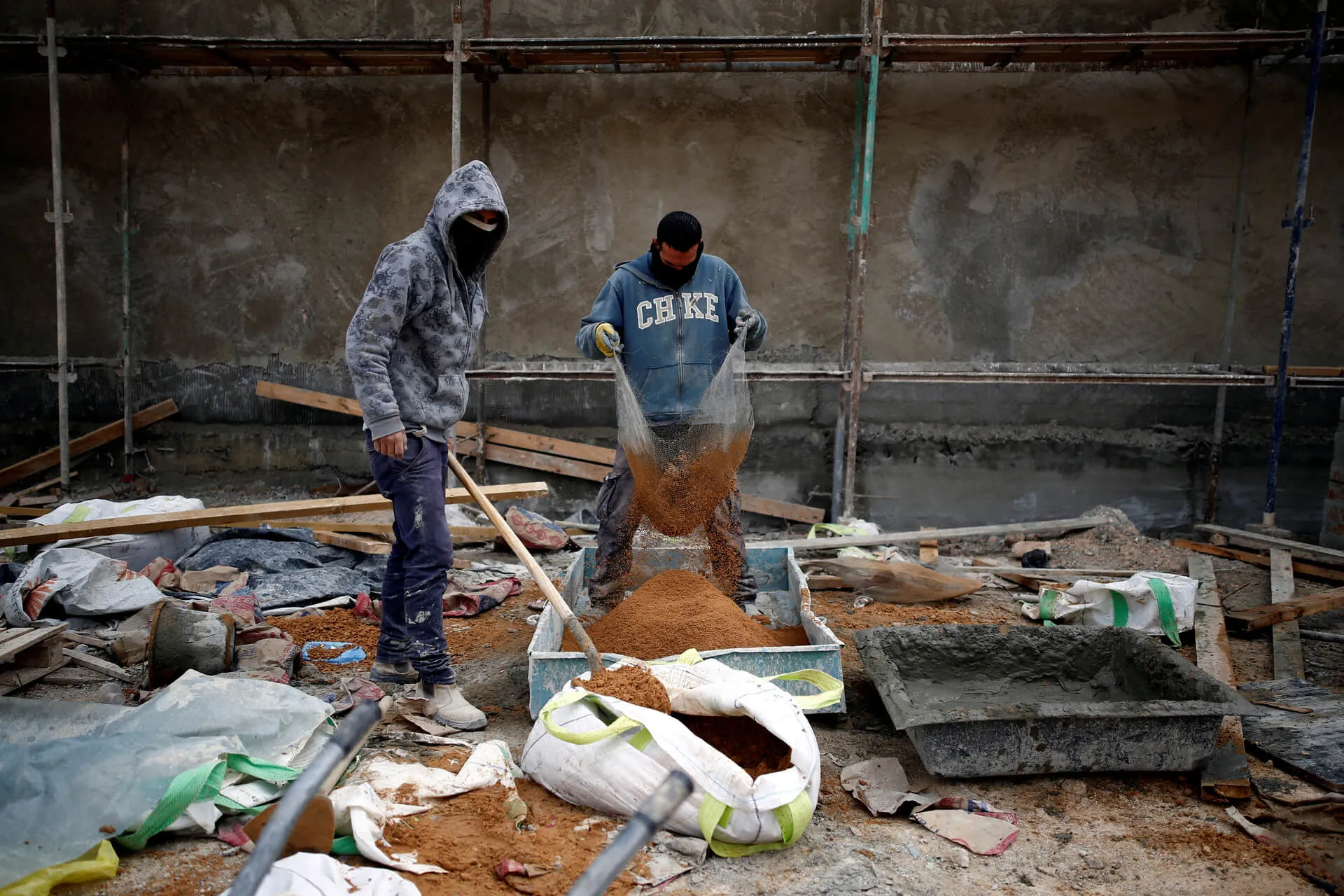
Palestinian workers in the West Bank. The people pictured have no connection to the story. Archive photo: Reuters
Majd Daniel, Wasla
July 22, 2026

Summary


Listen to a Dynamic Summary of the Article
Created using NotebookLM AI tool
When Israel barred most Palestinian workers from the West Bank from entering the country after the Oct. 7 attacks, tens of thousands lost their livelihoods almost overnight. For many, jobs in Israeli settlements became the only remaining source of income, despite widespread allegations of labor abuses.
At four o’clock in the morning Wafa – not her real name – had already left home. She lives in one of the Palestinian villages in the West Bank and is on her way to somewhere she has been very familiar with for more than 10 years: the date groves and vineyards located in Israeli settlements in the Jordan Valley. There, she spends her days picking, sorting and packing fruit until the early evening hours, when she returns to her home nearby at sunset with her daily wages of 80 or 90 shekels (around $30).
She has no contract and does not get a salary slip. She has no insurance, no paid sick days and there is not a single document to testify to the fact that she spent the day working there. “On days when we don’t work, we don’t get paid anything,” she says. Sometimes, she sees Jewish employees working nearby, mostly in supervisory or managerial roles. She knows that they are paid at least 35 shekels an hour (approximately $11) and that they get national insurance and full workers’ rights. In contrast, she is paid in cash through an intermediary. “There’s nothing I can do about it,” she says. “There’s no work in the areas controlled by the Palestinian Authority and we are not allowed to enter Israel. That’s just the way it is.”
Wafa’s experience is not unusual. Testimonies from Palestinian workers, male and female alike, at various workplaces in the West Bank reveal repeated allegations of wages below the legal minimum, missing pay records, lack of insurance and deductions controlled by labor contractors.
Since the October 7 attacks, tens of thousands of Palestinian laborers have been denied access to the Israeli labor market. As a result, they are left with only the option of working in Israeli settlements, under conditions that are determined by either the employer or the labor contractor.
Ever since the 1970s, Palestinian laborers have been an integral part of the economy of Israeli settlements in the West Bank. Along with tens of thousands of Palestinians who worked inside Israel proper, thousands more were employed in the settlements – in construction, industry, agriculture and services. On the eve of the war, during the third quarter of 2023, the Palestinian Central Bureau of Statistics estimated that some 25,000 Palestinians were working in West Bank settlements.
After the October 7 massacre, around 115,000 Palestinian laborers with work permits were denied entry into Israel. Later, some were allowed to resume working in the settlements. According to Gisha, an Israeli human rights organization that advocates for Palestinians' freedom of movement, about 32,000 of the 48,000 Palestinians employed in West Bank settlements before the war have been allowed to return to work.
The law guarantees rights – but enforcement is almost nonexistent
According to Israeli law, a Palestinian worker in a settlement is supposed to enjoy the same rights and benefits granted to an Israeli employee at the same establishment. In 2007, Israel's High Court of Justice ruled, in response to a petition filed by Kav LaOved, a workers' rights organization, that Palestinian employees working in West Bank settlements are entitled to the protections of Israeli labor law. Those protections include the minimum wage, overtime pay, paid sick leave, paid vacation and compensation for workplace injuries. However, many Palestinian workers are hired through labor contractors rather than directly by employers, making it harder to enforce labor protections.
According to Assaf Adiv, Executive Director of the MAAN Workers Association, the problem is the lack of supervision and enforcement. “The settlements have attracted businesses ever since the 1980s,” he says, “because they are beyond the scope of supervision.” Adiv compares the move of factories to the settlements to the relocation of textile factories to Bangladesh: “No one asks what happens to the worker.” He adds that the High Court ruling was, to a certain extent, a turning point, and says that some of the larger factories in the occupied territories have slowly begun to fall into line with the law. At the same time, he believes that between 30 and 40 percent of employers still refuse to give their workers basic labor rights.
Even when Palestinian workers do get everything that the law says they should, Adiv believes that the discrimination continues in a different form: Palestinian employees have almost no prospects for promotion or advancement. “A Palestinian who has worked in the same factory for 10 years is paid the same as an Israeli who just started working there. That in itself is humiliating – and it is a genuine expression of apartheid in the labor market.” According to Adiv, “paying minimum wage is not true equality – as long as Palestinian workers are kept at the bottom of the ladder.”
.webp)
Testimony from the ground: ‘They treat us like dogs’
Mahmoud – not his real name – is a 28-year-old laborer from the South Hebron Hills. He is only too aware of this discrimination. He worked for a year and a half at a factory in the Ma’ale Adumim Industrial Zone. He says that the factory employs around 400 Palestinians and that it operates around the clock. Mahmoud does not beat around the bush when talking about his place of work: “We call it the workers’ cemetery,” he tells Shomrim.
His day begins at 7 A.M., when he leaves the small room in the a-Ram area of the West Bank that he shares with another laborer – for which he pays 700 shekels a month (approximately $230) . From there, he travels through checkpoints and back roads to the factory, arriving at 8:30 A.M. He works until at least 8 P.M. – sometimes even until 10 P.M. He gets back to his room at around midnight. “Sometimes, I don’t even have time to shower or eat dinner,” he says. He is paid just 250 shekels ($83) for a day’s work.
Before the war, he worked in Israel, with an official permit, at a slaughterhouse in the south of the country. He says that the lowest-paid worker there earned 45 shekels ($15) an hour and that workers would be paid around 60 shekels ($20) an hour for overtime. Therefore, he thought that moving to work in a settlement would improve his situation. He sums up the past 18 months in a single sentence: “The worst experience I have ever had.”
Mahmoud is not just talking about the salary, however. He is referring to the humiliations, the bans on prayer breaks during the holy month of Ramadan and the constant threat that he will be replaced: “They treat us like dogs. Nobody checks on us.” But what sticks in his memory more than anything else was the day that his brother was injured while working at the factory. He was unable to call for an ambulance, since employees are barred from using their cell phones while they are on shift.
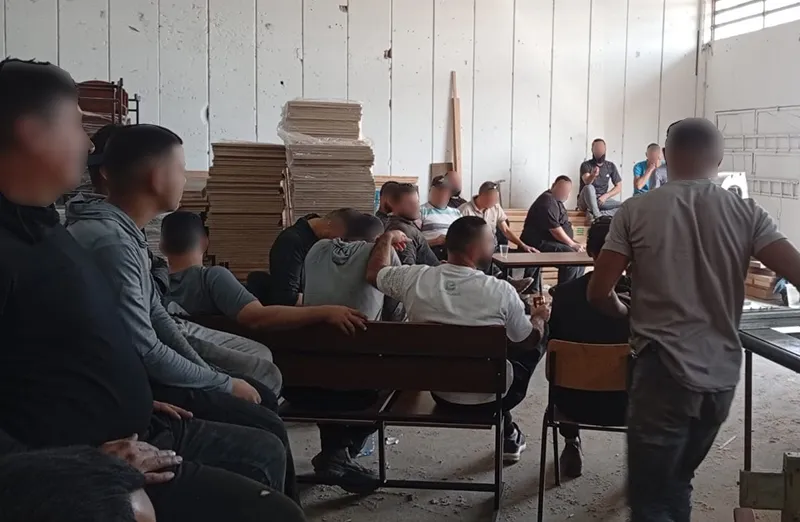
According to Mahmoud, the business owner arrived at the factory, and gave some money to the labor contractor who mediates between the workers and the boss to pay for his injured brother’s medical treatment. However, that sum was later deducted from his brother’s salary. Mahmoud adds that his brother never received compensation for his injury or for the time he spent in hospital recovering from his injuries. A week before his brother’s accident, another worker had lost a finger and Mahmoud believes that he, too, did not receive any compensation. Not even travel expenses. “There is no pay slip and we don’t even get to see the check that we are paid at the end of each month,” Mahmoud explains. “The labor contractor deposits it and gives us cash – after deducting about 600 ($200) shekels for transportation.”
At another site, in one of the settlements, it took Ahmed – also not his real name – just three days of work to realize that life-threatening danger was not just an extreme scenario, but part of the work routine. He had worked in several settlements in the past, so that world was not unfamiliar to him. And still, he says, what he saw at that site was “tougher than anything I had seen before.” Ahmed worked in the construction industry, mainly building bomb shelters and saferooms. From the moment he arrived on the site, his day began with the pressure of security checks and waiting. “Sometimes, we had to wait for half an hour at the gate and then we were allowed onto the building site as if we were arriving at a detention camp.”
In contrast to the strict security measures, he says, there was no supervision of safety standards or worker safety on the site itself. Around 120 laborers were working on a site no larger than 400 or 500 square meters. “One person is cutting bricks with a circular saw; someone else is carrying wooden planks on his head; another worker is lifting heavy boards; and somebody else walks by with a load that isn’t properly secured. Everyone is afraid of each other. There were red signs that said ‘Caution’ and ‘Danger,’ but on the ground there was nothing. No helmet, no vest, no work shoes. If you asked, they told you: I don’t have any. If it suits you – great. If it doesn’t suit you – may God help you.”
Ahmed worked there for just three days. The working day started at 6 A.M. and was supposed to end at 3 P.M. Some days, however, they would work until the evening. “We worked overtime, but no one counted how many hours. They treated our time as if it belonged to them.” After he quit, he was paid for three days of work: around 700 shekels ($233). “Construction work, danger, physical exertion – and in the end I got less than I deserved for a regular day’s work.”
The meager pay and the lack of safety measures are just part of the picture. The laborers’ testimonies repeatedly mentioned tactics that make their demands for workers’ rights almost impossible to achieve: work permits that can be cancelled at a moment’s notice, labor contractors who control salaries, deductions that the workers have no idea how they were calculated and blank promissory notes that workers are required to sign and which could be used to pressure them if they think about turning to the courts.
Jawad – whose full name is being withheld to safeguard his privacy – quickly recognized the pattern. After just three days working at the Meitarim settlement, he realized that the problem is also who holds the power to remove you from the premises before you even have a chance to raise your voice. On the third day, his employers learned that he was in contact with a labor union and his work permit was rescinded. “They don’t want people who understand workers’ rights. The moment they realize you’re asking questions – they finish with you,” he tells Shomrim.
Jawad was paid 220 shekels ($73) for nine hours’ work. One hour of overtime, he says, was priced at 20 shekels ($6.5). After deductions for food and travel, he was left with 150 shekels ($50) per day. “You work hard and, at the end of the day, when you do the calculations, you find that most of your daily pay is eaten up by travel, food and deductions. You work, but you can’t earn a living wage.” The journey to work is also unsafe. Jawad says that he and other workers are cursed at by settlers and he has even heard of cases where Israelis throw stones at Palestinian laborers. “It’s not safe there; not at work and not on the way to work.”
Jawad believes, however, that the greatest danger is the use of the work permits themselves as a tool of control. He says that he has heard from workers about companies that freeze a worker’s permit after a few months of work and then reinstate it later – simply to ensure that the worker does not accrue a continuous period of employment, which could entitle him to additional rights. “The permit is in their hands. If they want to employ you – they employ you. If they want to stop you – they stop you. And there is nothing you can do.”
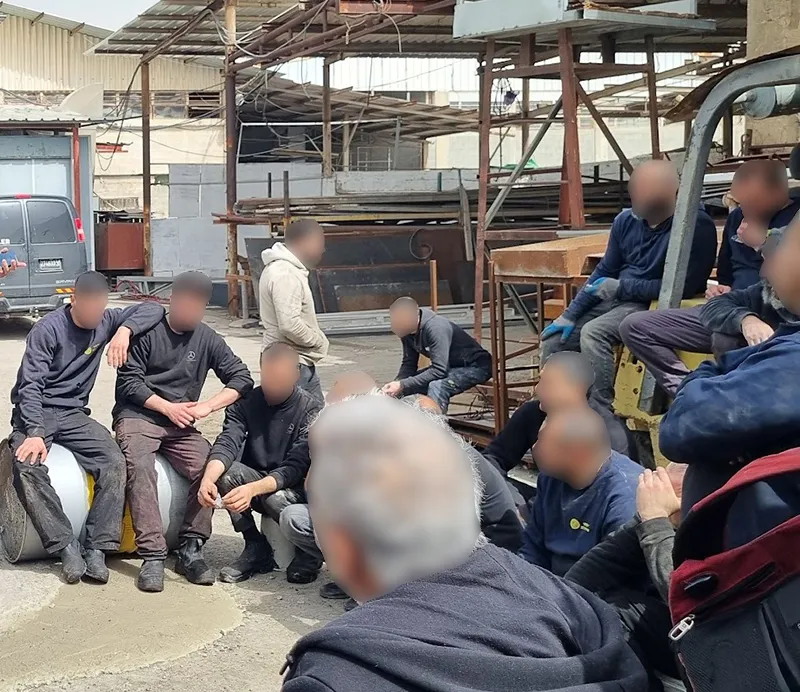
No permit, no proof: Reality in Jordan Valley vineyards
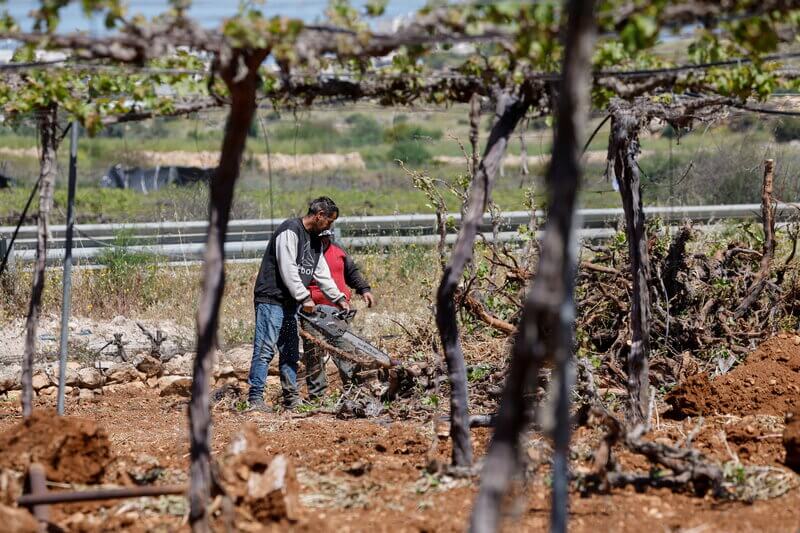
In the vineyards, fields and groves of the Jordan Valley, the situation is even harsher. There, according to a workers’ rights activist who has been documenting the conditions endured by Palestinian laborers in the Jordan Valley for years and who asked to remain anonymous, the problems are not just related to employer violations of rights once the worker is hired – but with the very denial of the existence of an employer-employee relationship.
According to the activist, some 35 agricultural settlements rely on the work of thousands of Palestinian laborers, mainly in date groves, vineyards and picking vegetables. “Around 4,000 workers all year round. During the grape and date harvesting season, that number can be as high as 10,000.” The activist adds that around a quarter of the workers are women and, during some parts of the year, children can make up around 20 percent of the workforce.
The difference, he explains, is that workers in the Jordan Valley generally do not have work permits and are not given any documentation proving that they work there. “There’s no roadblock, no permit, no record,” he says. “The worker arrives alongside the labor contractor, works on the land and is paid at the end of the day. If there’s a problem, the landowners – in other words, the settlers – can say: I don’t know this person.”
In this arrangement, the Palestinian mediator becomes a key link in the chain. He collects the workers, drives them to the groves, gets money from the Israeli employer and then pays the workers in cash. “The worker doesn’t know how much the Israeli farmer actually paid,” the activist explains. “He only knows that, at the end of the day, he gets 110 or 120 ($36 or $40) shekels in his hand.”

This system not only denies the workers their rights, but also means that it is almost impossible for them to sue an employer. “If a worker goes to the courts and says that he worked on this farm or that settlement, the owner can simply turn around and say that he’s never seen him before. There’s nothing to prove he ever worked there. And that’s the end of the story.”
According to the activist, women and children are the most vulnerable in this system: they are paid less, are less protected and have almost no ability to say no. During the busy agricultural seasons, especially during the summer vacation, children as young as 12 or 13 are sent to the fields to pick, sort and carry produce for many hours a day – without permits, without documents and without any legal protection. “Parents don’t send their children there because they want to,” he says. “A family that can’t find a source of income and whose father or brothers can’t enter Israel to work, looks for any possible income. Children work because there is no choice.”
Many women work in greenhouses or packing houses under harsh conditions, in intense heat and humidity, and sometimes near pesticides and fertilizers – without gloves, masks or protective clothing. According to the activist, his organization documented cases of chronic skin and eyelid inflammation among female workers who were exposed to chemical materials with bare hands. “Simple gloves, which cost almost nothing, could have been enough,” he says. “But nobody bought gloves.”
Israel controls the settlements, manages the issuing of permits and has the necessary tools for supervision and enforcement, but does not exercise sufficient actual oversight over the workplaces that benefit from Palestinian labor. The Palestinian Authority, even though its powers inside the settlements are limited, should still act against the contractors who deduct money from workers’ wages or use promissory notes and coercive social practices. The worker is left alone to deal with a system from which many people profit – but no one appears willing to bear responsibility for what happens within it.
The Civil Administration and the Palestinian Labor Ministry did not submit responses to this article by publication time.