



Ruling Coalition Is Trying to Eliminate Polling Places for Thousands of Elderly Voters
Israel’s ruling coalition wants to rescind an emergency order that allows tens of thousands of elderly citizens to vote in their assisted-living facilities, ignoring objections from the Central Elections Committee and relevant experts. Opposition politicians say that the aim is to suppress anti-government voters and to influence the outcome of the election. Four questions about the latest political storm
Israel’s ruling coalition wants to rescind an emergency order that allows tens of thousands of elderly citizens to vote in their assisted-living facilities, ignoring objections from the Central Elections Committee and relevant experts. Opposition politicians say that the aim is to suppress anti-government voters and to influence the outcome of the election. Four questions about the latest political storm
Israel’s ruling coalition wants to rescind an emergency order that allows tens of thousands of elderly citizens to vote in their assisted-living facilities, ignoring objections from the Central Elections Committee and relevant experts. Opposition politicians say that the aim is to suppress anti-government voters and to influence the outcome of the election. Four questions about the latest political storm
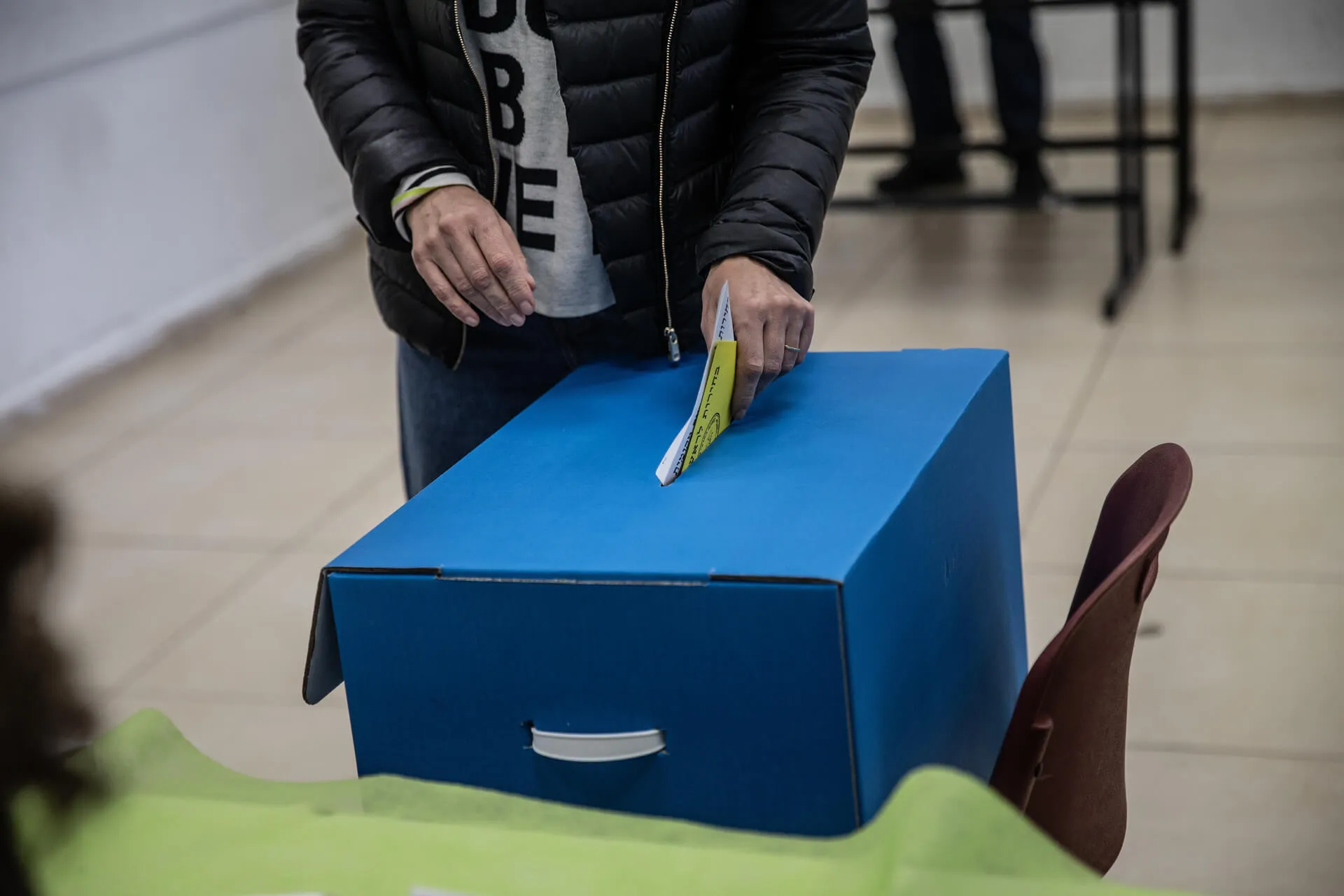
Illustration photo: Reuters

Daniel Dolev
July 15, 2026

Summary


Listen to a Dynamic Summary of the Article
Created using NotebookLM AI tool
Some two weeks ago, the Knesset’s Constitution, Law and Justice Committee held a discussion to weigh several amendments to the Election Law. The main point under discussion was whether to place polling stations in assisted-living facilities that do not provide nursing care. Committee Chair, MK Simcha Rothman (Religious Zionism), announced that, since the law in question governed the conduct of elections, it would only include issues on which there is a broad agreement. At first glance, all of the elements needed for a boring discussion were in place. In practice, however, this became one of the most contentious issues ahead of Israel’s next election, which is to be held on October 27.
1.
What arrangement is in place today and why is there a danger of it being annulled?
Like hospitals, assisted-living facilities that provide nursing care have polling stations, so these institutions will not be affected by the current controversy. In the last two elections, following the COVID-19 pandemic, Israel temporarily allowed polling stations inside assisted-living facilities with more than 75 residents. The coalition now wants to let that measure expire, against the recommendations of both the Central Elections Committee, which is a nonpolitical body, and experts in the field.
Some 37,000 registered voters live in assisted-living facilities without nursing care – the equivalent of one seat in the 120-member Knesset, a potentially decisive margin in a closely divided election. In the last election, around 27,000 of them cast a vote, which means that the voter turnout at these assisted-living facilities was around 80 percent, above the national rate of 70.63 percent.
2.
Who supported polling stations in non-nursing assisted-living facilities and what reasons did they cite?
“This is an important proposal for ensuring that residents of assisted living facilities get to exercise their right to vote,” said attorney Dean Livne, the Acting Director-General of the Central Elections Committee. According to Livne, the voters in question often belong to the weaker sectors of society and, in addition, they do not tend to update their address to the institution where they are now resident, meaning they often have to vote at polling stations that may be inaccessible or far from their homes. In Israel, voters are assigned to polling stations based on the address registered with the Interior Ministry’s Population Registry.
The chairman of the Association of Assisted Living in Israel, along with representatives of the Tel Aviv University Clinic for Holocaust Survivors and the Elderly, the Holocaust Survivors Rights Authority and the Kedem organization, which represents more than 200 assisted-living facilities, all also support stationing the ballot boxes at non-nursing assisted-living facilities. Some of them even requested to find solutions to make voting easier for mobility-impaired seniors who do not reside in nursing homes.
3.
Why is the coalition opposed to the proposal?
The Likud-led ruling coalition, on the other hand, refuses to extend the emergency order. MK Amit Halevi (Likud) argued during the hearing that the proposal would discriminate against elderly people with limited mobility who live at home. A representative from the Ministry of Welfare replied by describing the proposal as an adjustment that stems from the very nature of the facility – a large concentration of elderly voters facing mobility and accessibility challenges – and that not every distinction designed to enable the effective exercise of the right to vote constitutes discrimination.
Nonetheless, Halevi remained adamant in his opposition. Opposition lawmakers claimed that the real reason Halevi and the coalition objected to extending the emergency measure was their assumption that most elderly citizens would vote for opposition parties. “That’s a lie!” Halevi shouted back.
4.
Are electoral considerations part of the argument?
There is some validity to this claim. Of the 37,000 residents who could potentially be affected by the change, around 25,000 live in facilities operated by the Ministry of Immigration and the Ministry of Construction and Housing – effectively making them public housing facilities for the elderly. “In the housing clusters, which until recently were operated by the Ministry of Immigration, the residents are all from the former Soviet Union. And in the sheltered housing complexes run by the Ministry of Construction and Housing, 90 percent are from the former Soviet Union,” an attorney who specializes in working with the elderly population told Shomrim.
From a political perspective, this population has, for many years, been associated with the Yisrael Beiteinu party – a party founded by and for immigrants from the former Soviet Union. Before the previous election, this was being said out loud. At a similar hearing of the Knesset’s Constitution, Law and Justice Committee at the time, MK David Biton (Likud) argued that in the housing clusters where more than 11,000 voters reside, “they are all Yisrael Beiteinu,” explaining that in a political system where every single seat counts, even a few thousand votes can swing the outcome.
.webp)
MK Oded Forer (Yisrael Beiteinu) rejects this claim. “It’s utter nonsense to argue that all those votes would go to [Yisrael Beiteinu head Avigdor] Lieberman,” Forer tells Shomrim. “If you check how the immigrant vote splits in Israel, you will see that roughly a third of immigrants vote for Likud. Trust my ground game; I will make sure the immigrants voting for me actually get out to the polls. That is what you do on Election Day, and I know how to organize and get my supporters out.”
Forer adds: “But how is that relevant? Just because someone votes for Likud, Yisrael Beiteinu or Labor – does that mean I get to decide whether or not they’re allowed to vote?” He also says that, since this is an elderly and vulnerable population concentrated in large facilities, placing ballot boxes onsite makes sense. “As a state, you have the opportunity to make things easier for a population like this – so why not? Why should these folks have to go through all that hassle, sometimes with walkers?”
In the previous election, the debate centered on the number of residents needed to justify a polling station; some argued for 30, others for 75, and still others proposed different thresholds. In the end, it was agreed that 75 registered voters would be enough for a polling station to be deployed. This time, the coalition is refusing to erect any polling stations at all and, as things currently stand, they are not part of the amendments to the Election Law. The opposition plans to submit an objection ahead of the second and third readings of the bill in the Knesset – but the coalition still has a majority.



.webp)