


Videos on social media, public comments and testimony from Arab citizens shine a light on a phenomenon in ultra-Orthodox society that is not being talked about: since October 7, the political and rabbinical leadership has given a free rein to racism, which was previously kept under control. The outcome is evident. A Shomrim report
.webp)
Racism Runs Rampant in Haredi Society
Videos on social media, public comments and testimony from Arab citizens shine a light on a phenomenon in ultra-Orthodox society that is not being talked about: since October 7, the political and rabbinical leadership has given a free rein to racism, which was previously kept under control. The outcome is evident. A Shomrim report
Videos on social media, public comments and testimony from Arab citizens shine a light on a phenomenon in ultra-Orthodox society that is not being talked about: since October 7, the political and rabbinical leadership has given a free rein to racism, which was previously kept under control. The outcome is evident. A Shomrim report
Ahmed al-Mughrabi, a bus driver from East Jerusalem who was attacked in the city’s Neveh Yaakov neighborhood in July 2025. Photo: Courtesy of Hapargod

Lir Spiriton
April 23, 2026

Summary


Listen to a Dynamic Summary of the Article
Created using NotebookLM AI tool
It will take many more years before we understand the full impact of the October 7 massacre and the long war that followed on Israeli society as a whole. In this context, ultra-Orthodox society is no different, yet there is already one issue where the change is already very evident: the upsurge in overt and blatant racism toward Arabs. Comments in the public sphere, posts and videos on social media platforms, singing “May your village burn down” at public events and, worst of all, physical violence - have all become more prevalent than ever. For their own reasons, the ultra-Orthodox leaders – the rabbis and the politicians – have said nothing about the phenomenon.
One of the most frequent points of friction between young ultra-Orthodox men and Arabs is on public transport. In Jerusalem, for example, many of the city’s bus drivers are Palestinians from the eastern part of the city and they have reported a significant increase in verbal and physical abuse. “In one case, there were five young Haredi lads on my bus who stayed on until the last stop and refused to get off. They cursed at me, said things like ‘Arab, you work for us,’ and only left after filming a few clips for TikTok,” says Mohammed (who asked to be identified by his first name alone) in a conversation with Shomrim about one of the many incidents he has experienced.
“There have always been issues with the Haredim, but recently it’s gotten a lot worse,” Mohammed adds, describing the daily reality he faces. “Sometimes they throw things at the bus as we go past a stop – bottles of water and stones. When they want to get off the bus, they sling racial insults at you. And when I call the police, they turn up half an hour later – and sometimes they don’t turn up at all. I have filed complaints, but each time they tell me that the case has been closed due to lack of public interest. I have friends who are bus drivers and some of them even ended up in hospital – and still no one was arrested.”
None of this comes as any surprise to Dr. Asaf Malchi, a senior researcher into ultra-Orthodox society at the Israel Democracy Institute. He says that, beyond the reasons for this outbreak of racism (which will be detailed below), the Haredi leadership – like the leadership of the National Religious camp – has lost much of its ability to supervise or police the street and the results are there for all to see.
What is it leading to? For the time being, at least, it does not appear that anyone in any official capacity wants to curb this outbreak of racism. And that’s before we ask whether that’s even possible.
‘We used to sing about Arabs being killed’
The outburst of increased racism among the ultra-Orthodox community isn’t necessarily surprising. Like in other religious and conservative societies, Haredi society in Israel has always seen the outsider as someone to be suspicious of but, at the same time, the Haredi leadership made some effort to curb racist expressions. Shmuel (who also asked to be identified by his first name alone), for example, who grew up in a Hassidic family in Jerusalem, tells Shomrim that he remembers how, as a child, he and his friend would sing racist songs – but also that he would be reprimanded for doing so. “I remember that during one of the [military] operations, we were told how, during the parting of the Red Sea, God was angry when the angels wanted to rejoice. He told them, ‘My own creations are drowning in the sea, and you want to sing songs of praise?’ There were some hateful expressions, but they were very limited.”
“In order to win more votes, the leadership went with the extreme Israeli right. We are now seeing the results”
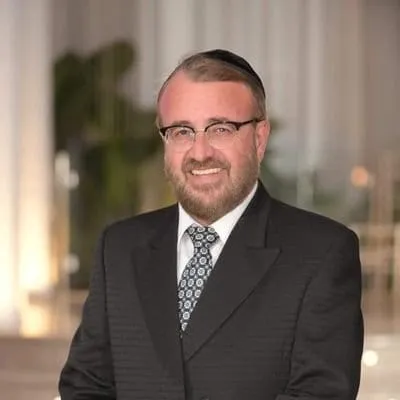
Yehiel, a member of the Lithuanian stream, grew up in Jerusalem a decade before Shmuel and he describes a similar situation. “I remember myself as a young child at the time of the Oslo Accords; my friends and I planned to go and puncture the tires on Arabs’ cars. I believe that the ultra-Orthodox public was already very right-wing at the time, but the leadership was much more moderate. It didn’t just manifest itself in treatment of Arabs, but of secular Israelis, too. For example, I studied in a Talmud Torah in the Geula neighborhood of Jerusalem, where there was also an IDF base with male and female soldiers coming and going all day – and no one was bothered by that. Now, after two female soldiers were attacked in Bnei Brak, that would be inconceivable. And if that’s what happened with soldiers, you can only imagine what happened with xenophobia in general.”
Ultra-Orthodox journalist Benny Rabinowitz says that he was shocked by a video recently circulated in social media, showing young Haredi men dancing at a wedding with knives and a gun. He says that the Haredi leadership is clearly to blame for the outbreak of racism. “In order to win more votes, the leadership went with the extreme Israeli right. The Haredi media followed suit and was then dragged along after the young generation, which isn’t interested in Torah study or anything else. We are now seeing the results.”
Here are some examples posted on social media:
100 incidents on buses in Jerusalem alone
The manifestations of racism are not limited to social media or events such as weddings; as previously noted, they also extend to actual physical violence. Public transport seems to be one of the main points of friction. In 2025, there was a 30 percent increase in the number of incidents of violence against public transport workers – drivers and inspectors – across Israel as a whole, according to a survey by the labor union “Koah LaOvdim”
While there is no record against whom the violence was directed in each of these cases, or the reason for the incident, the fact that Jerusalem – with its large ultra-Orthodox population and many Arab bus drivers from the eastern city – is top of the list can give some kind of indication. In Israel’s capital city alone, there were more than 100 incidents of public transport workers being assaulted last year alone.
Here is an example posted on social media:
Yaniv Bar-Ilan is spokesperson for Koach LaOvdim, the union which represents public transport workers. In a conversation with Shomrim, he explains that Arab drivers are suffering not only because of the violence and racism, but also because the police are failing to deal with offenders. In general, he says, the police close 90 percent of investigations, infuriatingly claiming that it is not in the public interest to pursue charges. As a result, he adds, many drivers no longer even bother to file complaints. He adds that the nationalist element behind these attacks is not even taken into account. Police, he says, prefer to treat such incidents as arguments between civilians – and not racist attacks.
Amal Oraby – a lawyer, columnist and social activist focusing on Arab society, describes an identical situation in a conversation with Shomrim. “Bus drivers – in the north and in the center – are subjected to a lot of racist taunts; they are spat at and treated with no respect. In this context, it’s interesting to note that employees of the bus companies have been told by their bosses not to cooperate with the media on this subject.”
"The leaders of the Haredi community are worried that there is seepage and are trying to work out what attracts young Haredim to Otzma Yehudit and to tap into the same thing"
.webp)
Oraby describes at length what he defines as distancing between the ultra-Orthodox and Arab populations of Israel, against the backdrop of increased polarization in society as a whole, and says there are several reasons for this. “On the political level, over the past decade the ultra-Orthodox public has tied its future to Netanyahu in a quid-pro-quo relationship. That bond has taken the Haredim more and more to the right. Another political consideration was born of the struggle between the Zionist religious camp and the Haredim. The leaders of the Haredi community are worried that there is seepage and are trying to work out what attracts young Haredim to Otzma Yehudit and to tap into the same thing.” A third and less familiar element, he says, is the ongoing discourse over Haredi recruitment into the IDF. “One of the arguments in that debate is, ‘What about the Arabs?’ A number of Haredi Knesset members have made that argument. This issue naturally sparked hostile discourse toward the Arab public because they are suddenly being presented as beneficiaries of the Haredi draft.”
And after all this, he concludes, came the October 7 massacre, which pushed Israel “toward more militarism, which is a connecting anchor and a crowning achievement that grants honor, prestige and public sympathy.” The Haredim, he argues, are not part of that and need to find their own indirect and alternative way of connecting to Israeliness. Hatred toward Arabs, he argues, does just that.
‘Connecting to Israeliness’ in the aftermath of the October 7
Malchi, who has been studying ultra-Orthodox society for almost 20 years, is aware of Oraby’s theory and says that this may indeed be the Haredi community’s way of connecting to its Israeliness in the aftermath of the October 7 massacre.
“It’s rather sad to think that this is part of the Israeli identity; it is absolutely not part of the common good that I would like to develop with the Haredi public. But given the absence of civics education, history lessons and the inculcation of values like tolerance and pluralism [in the Haredi education system], it’s pretty obvious why the Haredi public is being pulled in that direction – toward the lowest common denominator of racism and hatred toward the other.”
"The phenomena that we are currently witnessing are, in part, the result of the leadership losing its path”
.webp)
Malchi says that the state is responsible for the failings of the Haredi educational system and the resultant increase in racism. “The state didn’t give a damn about the Haredi public. It really doesn’t care. All that matters for the political establishment is self-preservation; political wheeling and dealing does not leave any room for reform. Over the past two and half years, it has become abundantly and painfully clear that the Ministry of Education is totally uninvolved in what’s going on in the Haredi education system. The state gives massive budgets to the ultra-Orthodox education system but doesn’t supervise it in any way, shape or form. In other words, we have absolutely no idea what is going on with their curriculums. This whole story is actually leading certain segments of Haredi society to identify with racist elements in Israeli society.”
Malchi agrees with Oraby’s analysis and also places the blame firmly with the ultra-Orthodox leadership which – unlike rabbinical leaders in the past, especially people like Rabbi Ovadia Yosef and Rabbi Elazar Shach, who were seen as moderates – is leading to increased extremism. “Like with the National Religious camp, the Haredi leaders have also lost a significant part of their ability to supervise or police the street. The phenomena that we are currently witnessing are, in part, the result of the leadership losing its path.”
Malchi also says that different voices have been emerging within ultra-Orthodox society, but adds that the numbers are relatively small, they have no leadership and no way of influencing the Haredi street or the ultra-Orthodox mindset.
Prof. Kimmy Caplan, a historian from Bar-Ilan University who specializes in religious and ultra-Orthodox society, believes that the roots of racism in ultra-Orthodox society run very deep. “There are so many levels to it,” he says. “Like, for example, the treatment of ultra-Orthodox Sephardim by their Ashkenazi counterparts, which is clearly racist and includes inbuilt exclusion that they do not even try to conceal. There’s also the treatment of newly religious people, which also has racist overtones, as they are treated like people with incurable birth defects. This even extends to the second or third generation. So, we are dealing with a society that can be called racist in general and on certain specific issues.”
“We know only too well what happens to people who live close to the seam line"
.webp)
Against the backdrop of all this, Caplan adds that the Haredi population has moved consistently to the right, very much favors the use of force in conflict resolution and many of whom live near the seam line, in ultra-Orthodox cities close to Arab population centers, such as Modi’in Illit, Beitar Illit, Emanuel and Elad. “We know only too well what happens to people who live close to the seam line. There’s tensions, there are incidents, there are experiences that naturally happen. Friction with the Palestinian population has a chilling effect – and not just on the ultra-Orthodox.”
To an outside observer, it seems that racism is deeply ingrained and that there is very little chance of change – not from the state and not from the Haredi leadership. And still, both Oraby and Bar-Ilan are optimistic – up to a point – when it comes to signs of possible change that they have seen among local and grass-roots initiatives .
In an election year, it’s hard to see how local initiatives of this type can take hold; perhaps even the opposite is true. But these are still distinct voices, which is a matter of great significance in a very homogenous community.
.webp)