


Selling Judaism to the TikTok Generation: Influencers Instead of Rabbis
Viral videos and podcasts instead of Torah lessons: Shomrim maps out the initiatives bridging the trauma of the October 7 attacks, Israeli nationalism and religious messaging – and examines what rediscovering religion looks like when it is run through the algorithm
Viral videos and podcasts instead of Torah lessons: Shomrim maps out the initiatives bridging the trauma of the October 7 attacks, Israeli nationalism and religious messaging – and examines what rediscovering religion looks like when it is run through the algorithm
Viral videos and podcasts instead of Torah lessons: Shomrim maps out the initiatives bridging the trauma of the October 7 attacks, Israeli nationalism and religious messaging – and examines what rediscovering religion looks like when it is run through the algorithm
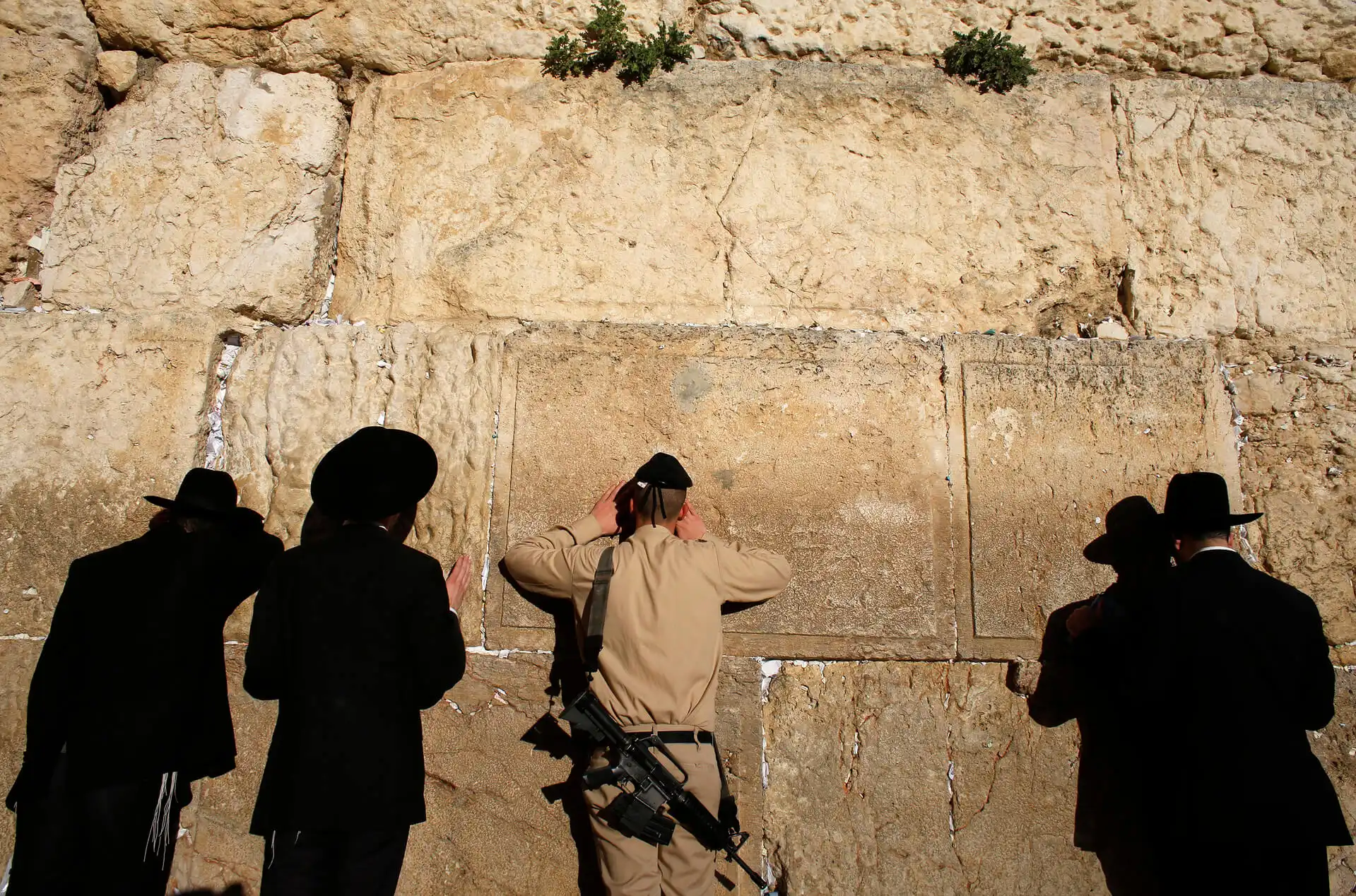
Worshippers at the Western Wall. Photo: Reuters.

Lir Spiriton
June 1, 2026

Summary


Listen to a Dynamic Summary of the Article
Created using NotebookLM AI tool
The video opens with the smoke of battle in the background. Two Israeli soldiers are looking at a picture of the Dome of the Rock. One of them – Adi Eylon, an actor and content creator – asks his comrade why “The Palestinians know what it’s all about,” while the Jews “have forgotten why we are here.” The video, which at first looks like any other war clip, quickly transitions into a conversation about the Holy Temple and redemption. It’s hard to ignore the connection that the video is trying to make: the war and the IDF are not a security necessity; they are part of a religious narrative.
This video is not unusual in terms of the clips that have appeared in Israelis' social media feeds following the October 7 attacks and the subsequent war. Alongside videos of soldiers, flags, hostages, war songs and pro-Israel advocacy (“hasbara”) – which have become a permanent fixture – another phenomenon is swelling: more and more pages, influencers and projects connect new nationalist messaging with religious, faith-based and often messianic messaging. And it looks very different to the old discourse about adopting a religious lifestyle.
Instead of rabbis and Torah lessons, there are videos, interviews, podcasts and celebrities talking about their Jewish identity, about how observing the Shabbat can be a solution to burnout or how faith can help overcome the anxiety and uncertainty that characterizes this period of time. Sometimes, the messages are general and vague; on other occasions, they push toward a much clearer rhetoric of providence, redemption and the Chosen People.
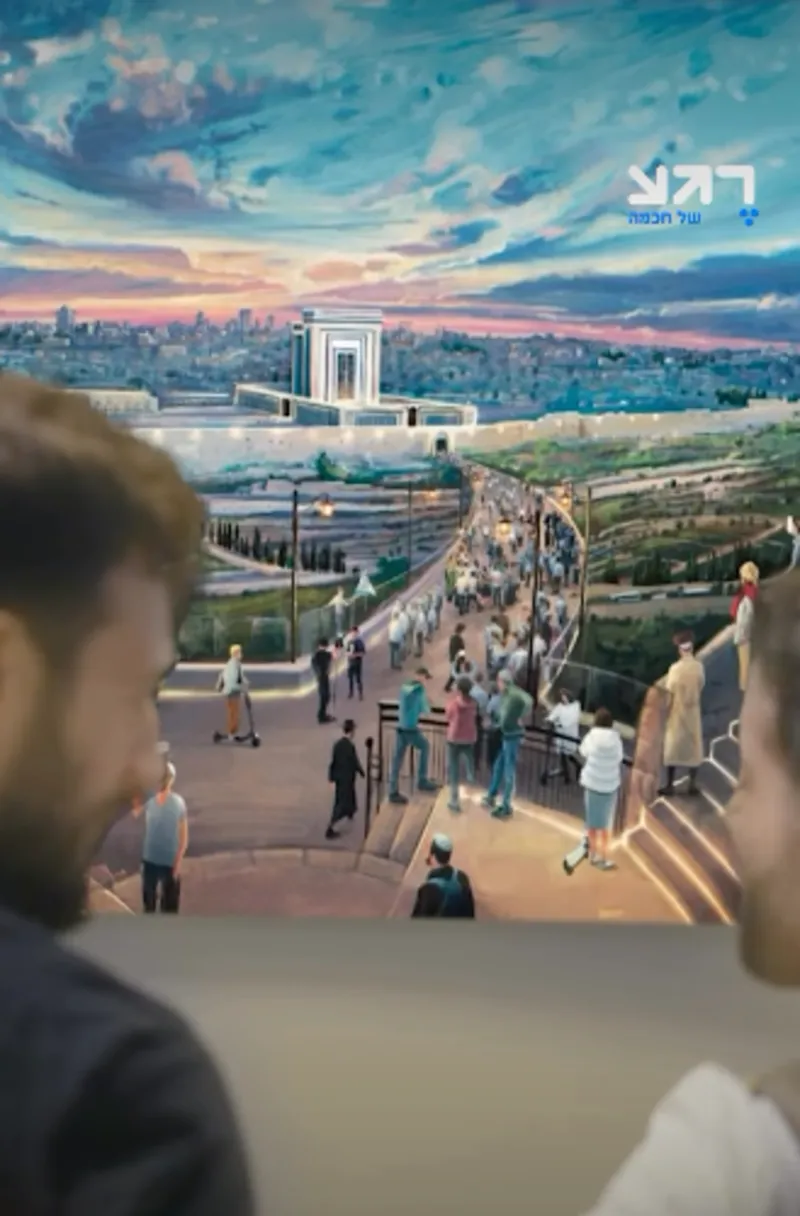
Some of these videos are produced by content creators working alone, while others are part of organized initiatives, with campaigns, collaborations and influencers. That is the modus operandi of initiatives like “Shabbat for Every Reason” (Shabbat Mikol Hasibot) and “A Moment of Wisdom” (Rega Shel Chochma), which have tens of thousands of followers, along with projects which fly influencers out to the Lubavitcher Rebbe’s gravesite in New York, with the stated goal of “normalizing faith.”
Shomrim looked into the identities of the people behind these initiatives and what messaging they are promoting, in order to understand what religious engagement and outreach look like when they are passed through the filter of the algorithm, influencers and the post-October 7 attacks Israeli social media feeds.
Rega Shel Chochma’s Instagram page, which has 88,000 followers, was launched in 2020. The main characters that appeared on the page to begin with looked like they were plucked straight from the synagogue or Chabad House: well-known rabbis from the Chabad movement, including Rabbi Choni Yakont, the CEO of the channel, and ultra-Orthodox women like Sivan Rahav-Meir, Yemima Mizrachi, Rachel Bazak and Dana Varon. The messaging of the channel largely reflects the teachings of the Lubavitcher Rebbe.
Over time, however, the page began to distance itself from its obviously religious identity and started posting videos featuring celebrities, influencers and people better known to a wider audience. The language became broader and more Israeli: fewer rabbis talking directly about Judaism and more content that translates religious concepts into the language of social media, Israeli identity and the national mood of the moment.
An analysis of two of the videos on the page highlights the redesign that it has undergone. The first, uploaded in 2020, features Israeli media personality Dana Varon, explaining to viewers a concept ascribed to the Lubavitcher Rebbe: Moses was angry with the spies who had returned from scouting out the land of Canaan with “bad reports,” even though it was he himself who dispatched them, since “even if it is difficult according to nature, a Jew is above nature.” According to Varon, “if you believe that you are capable and you do not give in to reality – you will create a new reality. Nothing on earth can prevent you from reaching the Promised Land if it was promised to you. The message aligns with ideas associated with Chabad in relation to Greater Israel and the Jewish people’s mystical connection to it.”
In contrast, a video uploaded last month ahead of Jerusalem Day features content creator Dvir Ayelet Hashachar talking about Moshe Dayan’s deliberations over the liberation of the Western Wall during the Six-Day War. “When you look at all the screw-ups,” he says, “at our leaders’ hesitation and the seeming coincidences, you understand one simple thing: Jerusalem was not liberated because Dayan decided or because Military Intelligence was in the know. It seems it was liberated,” he says, pausing to take a wistful gaze at Judaism’s holiest site “because it was time.”
Another example appears in a video published at around the time Israel and Iran were engaged in their second direct confrontation of recent times. In the background, there are soldiers running, tanks firing shells and planes flying overhead; later in the video, we also see soldiers putting on tefillin and praying. The images are accompanied by a script with statements like, “While we have forgotten who we are and why we are here, they are trying to take advantage of the situation and to destroy us,” “our IDF is fighting for the whole world; the forces of light against the forces of darkness, in the name of divine morality and justice” and “this is an opportunity to sober up, to remember why we are here. To connect, to believe, to wake up.”
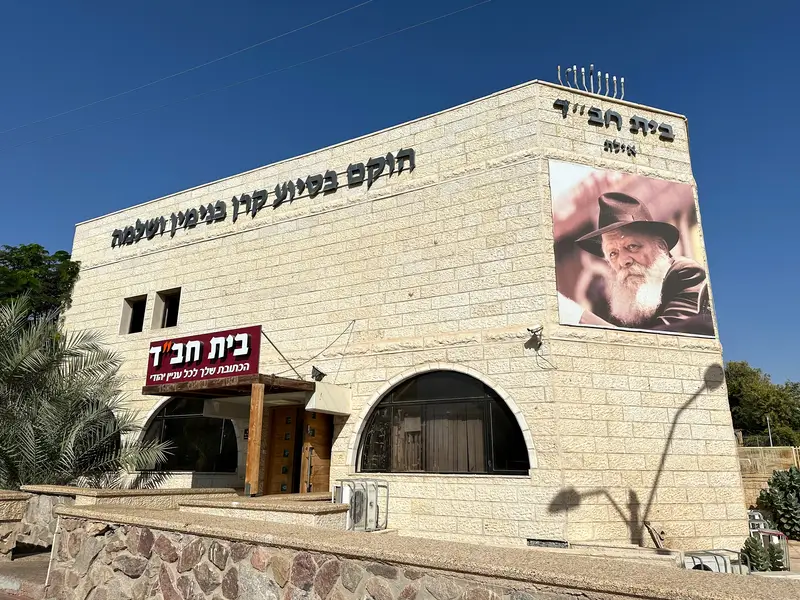
Since the page seeks to appeal to as broad an audience as possible while maintaining its core messaging, as a result, it features videos on a wide range of topics, all of which are connected in one way or another to Judaism. For example, in one video telling the story of a girl with Down syndrome and her family, the interviewers repeatedly ask her about her connection to the Jewish religion.
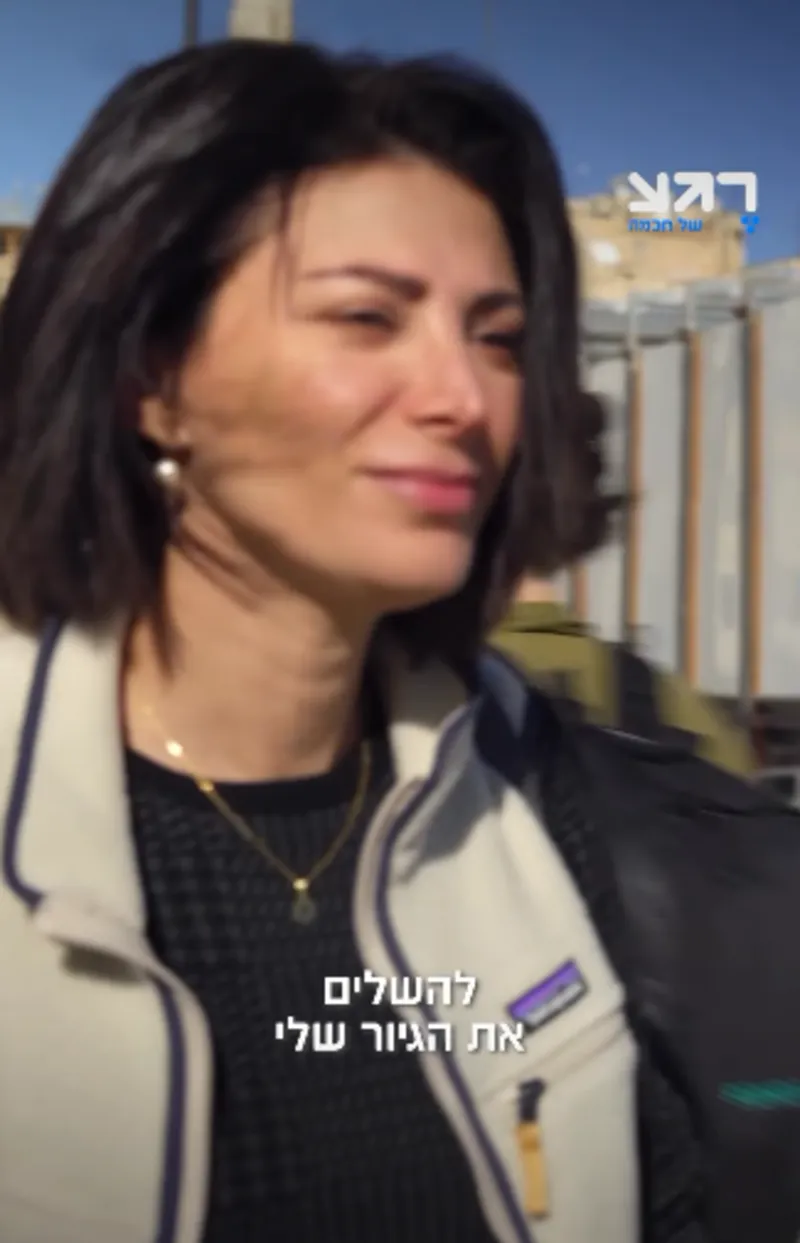
The same is true of a video about Syrian-Lebanese activist Rawan Osman, who is engaged in pro-Israel public diplomacy efforts. The video, which has almost 10,000 likes and 500 comments, starts with a description of the process that Osman underwent as part of her understanding of the geopolitical situation in the Middle East, but continues with a meeting with Rabbi Oury Cherki, who is known to hold a nationalist-religious worldview. Toward the end of the video, Osman talks about her connection to Judaism, having previously identified as atheist, and her intention to join the Jewish people by converting.
Another video, called “Without necklines,” takes a similar approach: actress Magi Azarzar talks about a well-known photographer who will only photograph women whom he deems to be “modest enough.” In another video, singer Mooki talks about his connection to religion.
The Rega Shel Chochma Instagram page also features the people who are behind the initiative and, in December 2025, Amihai Eliyahu Israel's Heritage Minister participated in the festive launch of the channel’s “Heritage Videos.” Chabad’s Online website reported on Eliyahu’s comments: “Our way, as the people of Israel, to remember our heritage is through those initiatives that make heritage accessible to young people.” He added that “anyone who decided to disconnect themselves from their roots, their heritage and their traditions will find themselves like a leaf blowing in the wind.” According to the report, he also said that “the moment we forget our heritage as the Jewish people, we will suffer another October 7.” In this case, too, people whose religious affiliation and messianic worldview are no secret drew a direct correlation between national trauma and religious faith.
The channel operates under the auspices of the Kochvei Or Meirim B’Israel (“Stars of Light Illuminating Israel”) NGO and, according to its financial reports, it appears that Rega Shel Chochma is its main activity. The reports also show that the channel’s budget jumped from around 4 million shekels ($1.3 million) in 2023 to around 7 million shekels in 2024 ($2.4 million) – a figure that may point to a post-October 7 growth trend.

The must-have lifestyle accessory for every influencer: Shabbat
Chabad is not the only organization taking advantage of the momentum. Other organizations which are active in the field, like Hidabrut and TV2000, combine nationalist and military content, which they define as outreach. Even individual influencers are now using Zionist and nationalist concepts in a much more religious context.
Another prominent initiative, which has tens of thousands of followers, is the above-mentioned “Shabbat for Every Reason”. The page was launched after the Oct. 7 attacks and is led by Rachel Bazak, the granddaughter of former Chief Rabbi Mordechai Eliyahu, and Sharon Adam, mother of singer Omer Adam. The initiative seeks to portray Shabbat as an all-Israeli event that is suitable for anybody – “for whatever reason.”
Here, too, the same motifs appear: interviews with influential celebrities who have thousands of followers. including Shahar Hayoun, Omer Adam, Liran Danino, Yuval Shem Tov, Moshe Peretz, Omri Peled and Aviv Alush – who also hosted a series of Torah lessons on the weekly portion – and a whole host of other people from the world of Israeli culture and content. All of this while using “inclusive and unifying” language, with plenty of discussion about the war and the October 7 attacks.
The page tries to portray the Shabbat not as a religious obligation or a slew of prohibitions, but almost as a lifestyle accessory: quality time with the family, disconnected from the mobile phone, rest from the daily rat race and “connecting with oneself.” The videos stress that “Shabbat isn’t just for the religious” and try to appeal to as wide an audience as possible using emotional language.
For example, singer Omer Adam says that Shabbat “brought balance to his life,” while influencer Shahar Hayoun says that she “stopped chasing after her phone” for 24 hours from sundown Friday. Like “A Moment of Wisdom,” the language is not directly preachy; rather, it is all about personal experience, authenticity and self-improvement. Beneath the soft language, however, the goal remains the same. In one of the videos promoted by the page, actor Omer Hazan addresses the camera directly, saying: “Do you hear the word ‘Shabbat’ and immediately think about everything you can’t do? Forget about that.”
On the other hand, the official website of the initiative presents the Halakhic aspects of observing Shabbat: no use of electricity, no transportation, no telephone, cooking in advance and a ban on any of the 39 categories of labor that are prohibited on Shabbat according to Jewish law.
Hazan also appears in another series of videos and in one of these he echoes the key messages that appear throughout the page. “People talk about those definitions of religious, ultra-Orthodox, secular and traditional. Why not Jewish? Why not Israeli? Why not a son of a king who simply wants to live life according to history?” The idea that “Shabbat is not just for the religious,” combined with the trauma of the October 7 attacks, is woven deeply into this content. For example, a video with the title “Is keeping Shabbat only for the religious?,” an interviewer asks someone on the street what Shabbat means to them. The interview is an active part of delivering the message and the interviewee explains that “It comes from connecting to my own soul, to my purpose and my Jewish soul, and to the reason I am here at all. The trigger of October 7 should have, in theory, thrown us into the arena with great intensity.” The interviewer replies that “a lot of people have started to observe Shabbat in the aftermath of October 7” and the interviewee responds: “When 300 missiles land on us and nothing bad happens, there’s nothing else to do except realize that there must be some kind of divine protection.”
A similar theme appears in a video featuring a survivor of the Nova festival massacre, who describes the process of how she has become closer to God as a result of that traumatic day – through observing Shabbat. The experience “opened my mind to understand so many things, like the fact that I am living here in a completely divine reality,” she said. In another post, a freed Hamas hostage is seen flashing the victory sign, alongside a caption reading, “Shabbat of a new beginning, of light and of manifest miracles.”

The idea of giving thanks and getting close to God, while stressing the positive, is also characteristic of the nationalist-religious narrative online. For instance, a video showing a tired father trying to convince his family that driving to the beach on Shabbat is less restful than staying in an air-conditioned home is interspersed with footage of traffic jams. By doing so, the page, which seeks to make Shabbat observance a more central part of Israeli identity, points the finger at the traffic rather than at those who have spent years failing to promote public transportation solutions for the secular public on weekends and Jewish holidays.
The fact that many of these initiatives are connected is no coincidence. Rachel Bazak, one of the co-managers of “Shabbat for Every Reason,” along with Sharon Adam, also appears in many of Rega Shel Chochma’s videos. At the same time, Bracha Shilat, a Chabad activist working in social media, serves on the steering committee of the Leadership for Israeli Unity community, which is operated by Adam and Bazak. The same names and people appear again and again in the context of various initiatives, all of which share these common denominators. One of the most prominent initiatives that came from these circles is flying influencers from Israel to visit the Lubavitcher Rebbe's gravesite in Queens, New York. Within the framework of this project, Israeli influencers and celebrities with hundreds of thousands of followers are flown to the United States for a pilgrimage honoring his personality and his theology. Among those to have made the trip over the years are content creators, models and well-known media personalities, each of whom brings with her a massive army of followers on social media.
Shilat herself, who, along with her husband manages other projects for young people, including Chabad Youth and Chabad on Campus – describes these projects as part of a conscious effort to use the power of social media “to normalize good things.” In one interview, she said that: “Over the years, I saw the power of social media and I saw these influencers and their young followers, so I said to myself that we ought to do something… Unfortunately, less positive things are currently being normalized online and I said we should normalize the good things online – prayer, faith, love of Israel, positive dialogue – and then we had the idea of taking female influencers to the Lubavitcher Rebbe’s gravesite .”
An article published in “L’Isha” described how the organization funds these trips, the hotels and the travel – while the influencers “are not obligated to upload content about the trip,” but, according to Shilat, “they know that they are there to upload – and they end up doing so in practice.” In one of the interviews, she says: “It has become fashionable to visit the Lubavitcher Rebbe's gravesite. Some of the influencers started to observe Shabbat and have become strict about the laws of purity.”
Here, too, like Shabbat Mikol Hasibot and Rega Shel Chochma, the language refrains from being preachy, focusing instead on the experience, empowerment and personal connection. One article about an influencer’s visit to the Lubavitcher Rebbe’s grave described it as “a journey of unity, of connection to religion, leadership and friendship,” while Shilat herself said that “I understood that there is also room to talk about the soul, even with people who seem more materialistic – and that it could happen through social media, where you can influence millions.”

‘They identify here an opportunity that was created following October 7’
Behind the talk of connection and unity and the positive language, however, the use of nationalistic, emotional and populistic language is also coming back, in an effort to bring wider audiences into contact with the faith-based world, with Jewish tradition and observance. The connection between nationalism, fear, Jewish identity and internet content is not a coincidence, according to experts who have been researching the field. Tomer Persico, a scholar of religion, sees these phenomena as part of the broader crisis that struck Israel after October 7. “They identify an opportunity here that was created because of October 7,” he says “There is a sense of public vulnerability, and there is a nationalism -or ultranationalism – that is using traditionalism to amplify Jewish identity.”
“Zionism promised Jews that they would be safe in Israel,” he adds. “October 7 was, and still is, a major crisis for the Zionist concept, first and foremost because Zionism failed to protect the Jews in Israel. It wasn’t just that our lives were put at risk; our entire independence and sovereignty were shaken. And once that happens, people look for a different answer to the question of what makes me Jewish and what lies at the heart of my Jewish identity.”
Persico says that there can be some comparison to the wave of Israelis who “found religion” in the aftermath of the Yom Kippur War, but stresses that, this time, the phenomenon is different. “Once, people genuinely became more ultra-Orthodox. Today, it’s a little different. They take all kinds of symbols from orthodoxy, like the tzitzit, hafrashat challah or modest clothing. These are actually symbols which, in the end, strengthen nationalism.”
Uri Kerman, director of the Secular Forum (an NGO, established to combat religious encroachment in the public sphere), sees these phenomena as a continuation of what he describes as religionization and as the normalization of Jewish supremacy. The goal, he says, is not necessarily to make people become more religiously observant, but “to ensure that the religion, the rabbis and that world are seen as the correct Judaism. They don’t have to turn you into a religious person. It’s enough that you look at that world as the real Judaism. That secular youths will be admirers.”
“It’s very tempting,” Kerman adds. “God loves me, protects me; we are the Chosen People. It’s wonderful to know that someone is always looking out for me and guarding over me. And everything plays on fears. How much we are hated and it’s us against the world. And we are better than everyone else.”
Kerman also argues that the connection between nationalism and religious faith changes the way that some people perceive the war. “And then the wars are no longer defensive wars,” he says. “It’s no longer the Israel Defense Forces – it’s the Army to Conquer the Promised Land.”
According to Kerman, the success of this kind of content also stems from a much deeper problem with the secular population itself. “Our failure, the failure of the liberal, secular public, is that we did not provide an alternative. To raise a generation capable of dealing with such things. We are a bit of a jack-of-all-trades; the product of an education system that doesn’t produce a generation with a firm ideological grasp on who they are.”
Within this vacuum, the use of influencers and celebrities is particularly effective. “It works great online,” he says. “It’s a win-win situation. The pages gain from the exposure that celebs bring them and the celebrities get good PR and the Jewish message.”
The battle over Jewish identity is not just being waged in synagogues, in the education system and in the Knesset. It’s also being waged online, via the social media feed, influencers and a message that has been tailored to its audience. In an election year, the fact that young Israelis are flocking to versions of Judaism which are identified here with the right becomes particularly significant. Efforts to reshape nationalism as more religious will, it seems, be part and parcel of the coalition parties’ election campaigns. They may even have an impact on the outcome.

.webp)