



The Quiet Wave of Arab Emigration: ‘In Israel, Every Day Felt Like I Was on Trial to Prove I Was a Good Citizen’
An increasing number of Arab citizens of Israel are choosing to leave the country. Despite stable careers and financial security, many cite growing political alienation and concerns about their children's future as reasons for emigrating. This story was produced in collaboration with the Arabic-language news site Wasla
An increasing number of Arab citizens of Israel are choosing to leave the country. Despite stable careers and financial security, many cite growing political alienation and concerns about their children's future as reasons for emigrating. This story was produced in collaboration with the Arabic-language news site Wasla
An increasing number of Arab citizens of Israel are choosing to leave the country. Despite stable careers and financial security, many cite growing political alienation and concerns about their children's future as reasons for emigrating. This story was produced in collaboration with the Arabic-language news site Wasla
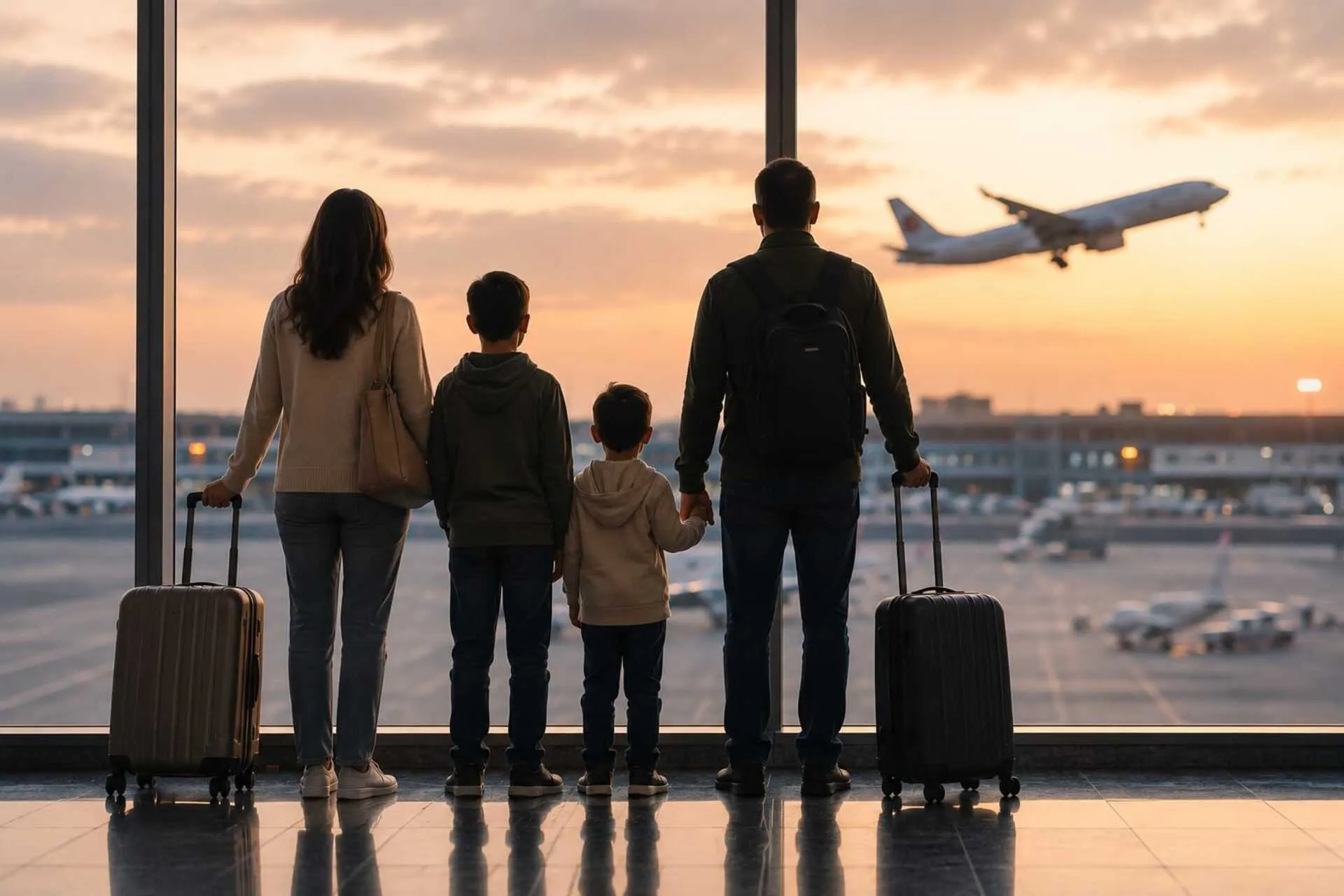
Illustration created using artificial intelligence (ChatGPT)
Rahma Ali, Wasla
July 8, 2026

Summary


Listen to a Dynamic Summary of the Article
Created using NotebookLM AI tool
More than 207,000 Israelis left the country between 2023 and 2025. While Arab citizens account for only a small share of those emigrants, in 2024 they made up 6.2 percent of the long-term emigrants (lower than their share in the population), surveys from the past 12 months indicate a change: between 20 and 30 percent of Arab citizens say that they are considering leaving Israel.
Increasingly, Arab families, including many with established careers, are choosing to build new lives abroad. Their reasons go well beyond economics: they cite fears of future wars, a surge in organized crime and deadly violence within Israel's Arab communities, and a growing sense that they no longer belong.
Dr. Nasreen Haj-Yahya, a social and family researcher, as well as a couples and family therapist, says that the fact that more families are even talking about the possibility of leaving the country shows that a change has taken place. “Arab families in Israel are not migrant families by nature,” she says. On the contrary: one of their defining characteristics is that they stay on their land, close to their extended families and to the places they grew up. “Physical and geographical proximity to the family is part of our social structure,” she explains.
According to Haj-Yahya, when families buy a one-way ticket, it is a response to extreme pressure. “It’s not something that fits in with the structure of the Arab family. For a family to get up and leave, there must have been very extreme forces at work.”
.webp)
These forces are not primarily economic. Haj-Yahya explains that the question of emigration has become a key issue among the families she sees at her clinic and encounters in her research. “The war created a lot of uncertainty, fear and a kind of hopelessness,” she says. “At the same time, violence within Arab society is no longer perceived as something that only affects people involved in criminal activities. Violence is also visited on innocent people, making people fear for their very existence.”
There is also a sense of being silenced. Members of a young and educated generation, who were raised on values like freedom of expression and human rights, found themselves, in the aftermath of the October 7 attacks, afraid to speak their minds. “People feel as if their mouths have been shut. The possibility of living somewhere where they can speak freely and feel safe has become one of the main reasons for emigration.”
"I felt completely helpless to protect my son"
Haitham Khalaila (53) married with one child, from Shefa-Amr, an Arab city in Northern Israel. Returned to Israel from the United States in 2008 and emigrated back to Michigan in 2024
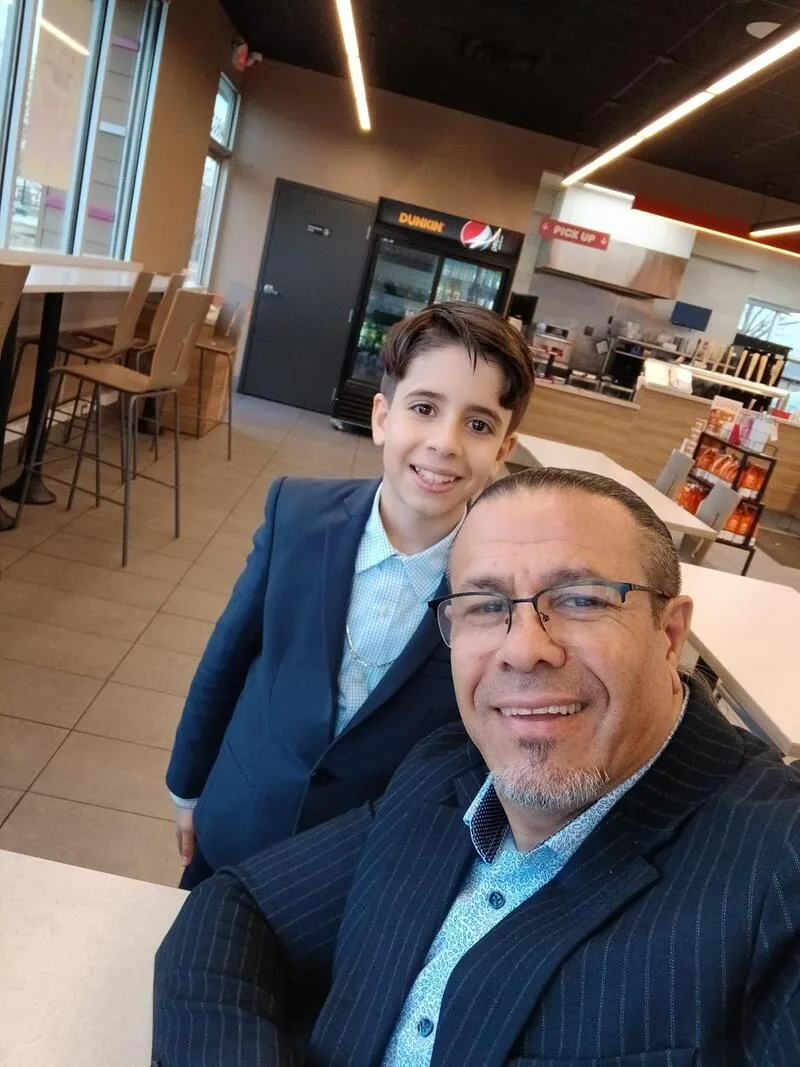
Khalaila decided to leave for the United States again after seeing the psychological effect of the war on his 10-year-old son. “When the war started, I felt completely helpless to protect my son, who was 10 at the time. Every time the siren went off, we’d run for cover, but we didn’t have a bomb shelter near our house. I felt like I couldn’t even give my family the bare minimum of a sense of security. My son refused to sleep alone and kept asking me, ‘Who’s going to raise me if you guys die in the war?’ Those questions are what made up my mind. I realized the fear had already scarred him.”
At first, his wife was very resistant to the idea of moving away from Israel. “She was really hesitant. She doesn’t speak English, she has no family here, and the move terrified her. But as the war dragged on, she realized we had to do it to save our kid.
“The beginning was incredibly expensive. We had huge expenses for lawyers and sorting out my wife’s legal status, and we bought a house for $480,000 with a mortgage. Today I’m working as a big-rig truck driver making around $8,000 a month. It’s a fresh start in every sense of the word.
“Even after we got to the U.S., my son would panic at the sound of regular airplanes, thinking they were drones coming to bomb us. Today he’s calmer, more confident, and introduces himself freely as a Palestinian Muslim. For me, that says it all. If the situation back home stays the way it is – with no security, a high cost of living, and no real change – I don’t see a stable future to bring my family back to. I have no intention of going back.”
"I’m no longer living with the constant tension and stress that followed me for years"
Shaden Atiya (43) married with two children. A pharmacist from Jerusalem, she moved to Barcelona
When did you decide you’d had enough of life in Israel?
“I spent many years living between Jerusalem and Beit Jala. Our lives revolved around daily commutes, checkpoints, and closures. My husband’s work in the hotel industry took a hit time and time again – first during COVID and then with the war. At first, we thought about moving mostly for financial reasons, because housing prices in Jerusalem made buying a home almost impossible. But after the war in Gaza, the move became a mental and political necessity. I felt like we just had to have a fresh start, away from the suffocating atmosphere and the uncertainty.
“Today, in Barcelona, for the first time I feel like I can freely and calmly define myself as a Palestinian. I’m no longer living with the constant tension and stress that followed me for years. The fact that we have relatives here was a major factor, and we also felt that Spanish society is close to Arab society in certain ways – in social relationships, the weather and the lifestyle. The beginning wasn’t easy. The paperwork took nearly two years and cost us close to 100,000 euros (about $114,000) out of our savings. We also had to learn both Spanish and Catalan. Today I’m working part-time as a pharmacist alongside an independent project I’m developing and my husband works in marketing for a medical equipment company while also doing some remote work.”
What is your work environment like now compared to how it was in Israel?
“I had a really hard time adapting to working with Israelis. More than once, I felt discrimination and racism because of my Palestinian identity. I tried to find Palestinian workplaces, but the wage gaps pushed me to work in Israeli institutions. Here, I’ve completely freed myself from that daily stress.”
Will you ever return home?
“The question of remaining abroad or going home depends entirely on what happens in Israel.”
"Only in Dubai that I realized just how exhausted I was"
Wafaa Haj-Yahya (46) married with two children, from Taibeh, an Arab city in central Israel. A gormer organizational consultant and kindergarten director, she emigrated with her two sons to Dubai

“I first started having thoughts about leaving back in 2014. I was in the hospital right after giving birth to my second son when I heard that the principal of the school where I worked had been murdered. When he was killed, I realized that was it. Something inside of me broke. It left a deep wound and for the first time, I asked myself if I really wanted my kids to grow up in this kind of reality. But at the time, the price of leaving felt impossible: we had a house, I had a stable job as a kindergarten director in a Jewish community, my husband was working too, and the thought of giving everything up and starting over terrified me.
“When I arrived in the Emirates in 2022 with my two sons, I felt a sense of security I’d never known before. I made a quick decision to buy a house there as an investment and a foundation for the future. I paid a down payment of about 200,000 shekels (about $66,7000, and later committed to monthly payments of about 10,000 shekels ($3,300) for 30 months. But the real reason we left was life in Taibeh: our house was broken into five times, I was exposed to murders that deeply affected me and my husband was injured trying to stop one of the thieves. Fear has just become a part of our daily life.
“During the first year of the war, I ran a kindergarten in Kfar Saba with a Jewish staff. I happened to overhear one of the assistants say she hoped Itamar Ben-Gvir would stay in the government so that not a single Arab would be left in the country. Precisely because my relationship with the staff was good, that sentence shook me. It reinforced the feeling that I don’t want my children to live in a place where their very existence is seen as something to be rejected.
“Back home, I constantly felt like I was on a daily trial to prove I was a good citizen. That feeling wore me down and it was only in Dubai that I realized just how exhausted I was. Today I’m planning my future in peace and I have no intention of going back.”
"The decision started to form because of this constant, lingering fear for the future"
Noura Amouri (43) married with two children from I'billin, a local municipality in northern Israel. A former occupational therapist for the Ministry of Education and a clinic owner, she emigrated with her family to the town of Varallo in Italy

You lived a stable life – professionally and economically. What caused a family like yours to pack up everything and leave?
“It was never about work or money. The decision started to form because of this constant, lingering fear for the future, and especially the violence that keeps getting worse within Arab society. I felt like my kids were growing up in an environment that didn’t give them real opportunities or any sense of security. When you realize you can’t even protect your children’s mental well-being – the clinic, the pharmacy and the house all lose their value.
“Because of a delay with my husband’s work visa, we moved temporarily to Canada for two months. We burned through about 100,000 shekels (about $33,000) there on housing, paperwork and living expenses. That amount would have lasted us a whole year in Italy. Today we’re living on my husband’s income as a pharmacist and on our savings. I’m trying to get my degree recognized so I can get back to work.
“For the first time, I see my kids living a calm, freer life. They play outside, walk around and just feel safe. That alone tells me we made the right choice. But the truth is, homesickness never leaves you. The little details of our old house haunt me even here. I miss my home, the smallest things in it, even the couch I left behind. When you emigrate, you aren’t just leaving a place. You’re leaving a piece of your memory behind.
“As far as we’re concerned, the decision to leave the country is final. There’s no going back. Italy might just be a stepping stone for now and it’s not certain this is where we’ll settle down for good, but the decision not to return home has already been made.”
"We just couldn’t take any more wars and the constant murders and crime within Arab society"
Rania Laham (50) married with two children, from Haifa. A VP at a non-profit organization, she moved to Limassol, Cyprus

Unlike most migration stories, yours unfolded in reverse—you emigrated while your young daughter stayed behind in Israel. How did that shape your life?
“Usually, kids move with their parents. With us, it was the other way around: we left and our daughter stayed behind. For my husband and me, that’s the most painful part of this whole move. My husband, our 16-year-old son and I moved to Cyprus, while our oldest daughter, who is 19, stayed to continue her university studies. It’s a tough situation, but we temporarily sacrificed our life together as a family so we wouldn’t disrupt her education and her future.
“Cyprus wasn’t some long-held dream. It was just the most practical choice: close enough that we can keep a connection to the work and the life we left behind, but it also gives us more peace of mind. The mental toll was a huge factor. We just couldn’t take any more wars and the constant murders and crime within Arab society.
“I’m still working as the deputy director of the I’lam Media Center and the non-profit’s financial manager. I can work remotely without any issue. The fact that I kept the exact same job gave us financial stability and made the move feel less risky, since we didn’t lose our main source of income. It’s true that rent in Limassol is relatively high, because it’s the most expensive city on the island, but daily expenses and food are cheaper than back home.
“I don’t look at this move as a final step, but more like an open-ended experiment that depends on what happens back home. Ultimately, whether we stay here or not depends mostly on my ability to keep working remotely and secure my livelihood.”