



Born in Jerusalem, but Not Recognized as Residents: The Children Caught in Israel's Bureaucratic Maze
More than 5,000 Palestinian children in East Jerusalem lack recognized legal status, according to a Jerusalem legal aid group. Families seeking residency for their children describe years of paperwork, home inspections and, in some cases, DNA tests

More than 5,000 Palestinian children in East Jerusalem lack recognized legal status, according to a Jerusalem legal aid group. Families seeking residency for their children describe years of paperwork, home inspections and, in some cases, DNA tests
More than 5,000 Palestinian children in East Jerusalem lack recognized legal status, according to a Jerusalem legal aid group. Families seeking residency for their children describe years of paperwork, home inspections and, in some cases, DNA tests
Rama Yusef

Rahma Ali, Wasla
August 9, 2026

Summary


Listen to a Dynamic Summary of the Article
Created using NotebookLM AI tool
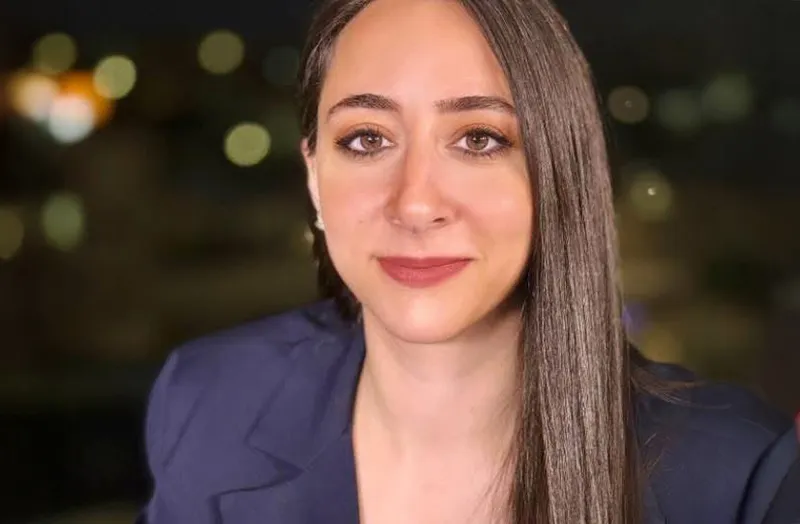
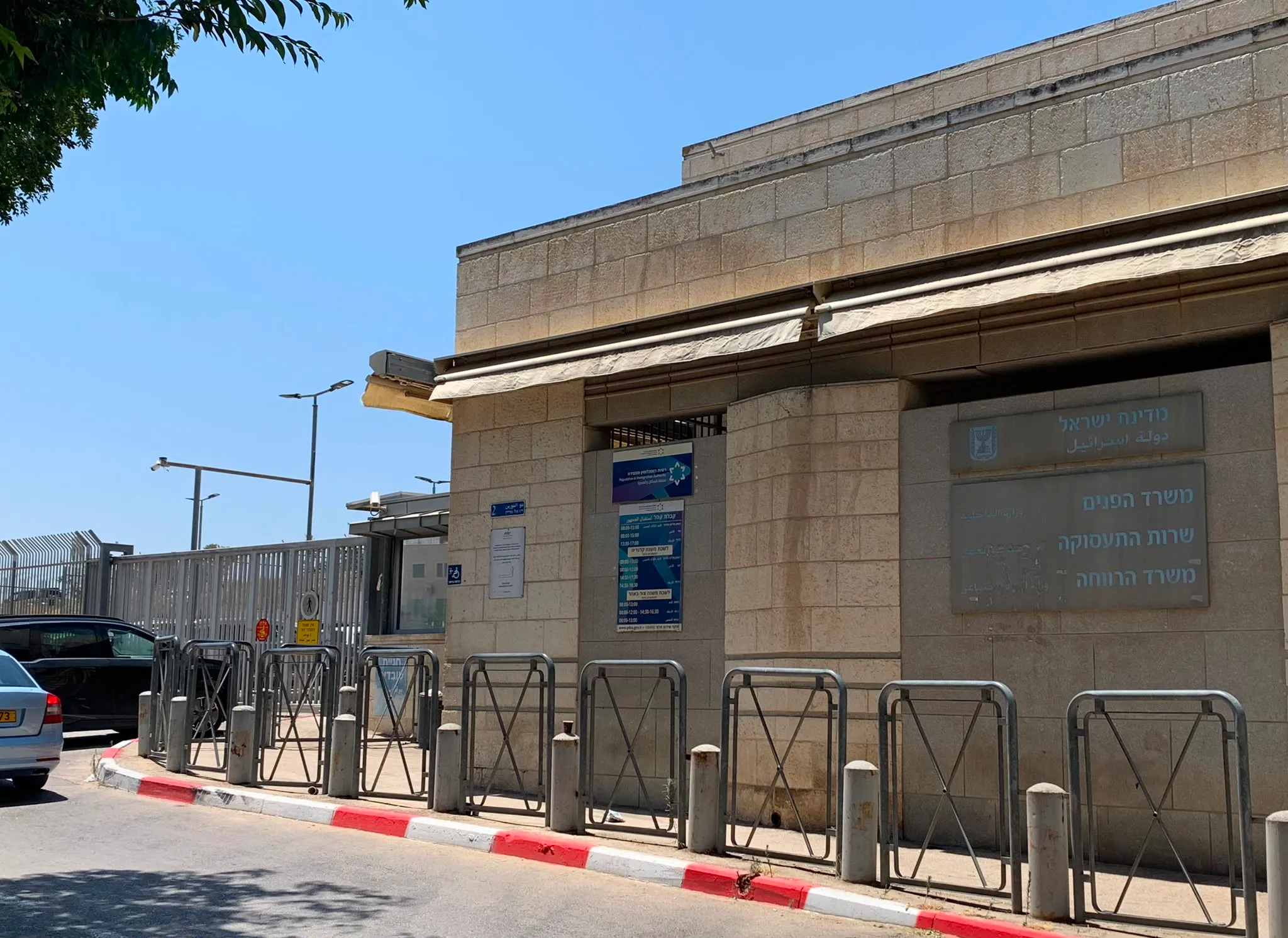
It’s eight o’clock in the morning and Rama Yusef is standing in line at the Interior Ministry office in the East Jerusalem neighborhood of Wadi Joz. Her infant son is asleep on her shoulder. She will remain there for many hours, without knowing what questions she will be asked this time: about her residential address, about her husband, who has a Palestinian identity card, or about other things that have nothing to do with her request. For three years, this ritual repeated itself time and time again, until she was finally given the document legally proving that her child is, indeed, a native of Jerusalem. Rama is a Jerusalem resident who has lived and worked in the city her entire life. The only problem is that she is married to a man from Ramallah. Rama's situation is far from unique. In Jerusalem – the simple process of registering a new birth, which, in other towns and cities across Israel, takes just a few days, can easily turn into bureaucratic ordeal lasting years and that can shape the life of the infant before they have even said their first words.
Palestinians in East Jerusalem generally hold Israeli permanent residency rather than citizenship. When both parents are Jerusalem residents, registering a child is relatively straightforward. But when one parent is a West Bank resident, families must apply separately and prove that Jerusalem has been their “center of life” to receive recognition of residency.
According to figures shared with Shomrim by the Jerusalem Legal Aid and Human Rights Center, more than 5,000 children in East Jerusalem do not have an officially recognized status. Some of them have already had their applications rejected, while others have been waiting years for a response.
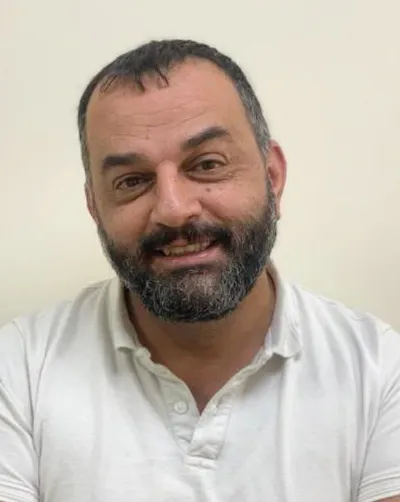
In the center’s offices, amid stacks of files much like Rama’s, director Rami Saleh describes the guiding principle behind their caseload: any family where one spouse is a Jerusalem resident and the other holds a Palestinian West Bank ID – a reality for about 1,000 Jerusalem families – must “prove” that their center of life is indeed in Jerusalem, rather than being allowed to rely on a mere declaration. One document is never enough. The family must provide utility bills, an employment contract, their child’s school registration papers and sometimes even agree to DNA testing.
Over the past year, the center has handled more than 300 such cases. The overall picture is much broader: Of 16,730 child-registration applications submitted by Jerusalem families over the past six years, nearly one in four were rejected (3,943), while more than 1,100 remained unresolved. The significance is that the state does not recognize the legal status of thousands of children who are currently being raised in Jerusalem.
Without recognized status, children can lose access to Israeli health insurance and face difficulties enrolling in school or receiving routine medical care. Saleh rejects the claim that the problem stems solely from cumbersome bureaucracy. He argues that it is part of a broader policy of the Israeli government, designed to encourage Palestinians to leave East Jerusalem, thereby changing the demographic balance in the city.
Thousands of children awaiting recognition in the city of their birth
In 2018, Rama married a man from Ramallah. Their marriage was registered through Palestinian and Jordanian authorities and was not recorded by the Israeli Interior Ministry. As far as the State of Israel is concerned, Rama is single. So, in 2020, when she gave birth to her son Jolan in Jerusalem’s St. Louis French Hospital, she was recorded as a single parent. The hospital demanded that she sign promissory notes to the tune of thousands of shekels to ensure that she would pay the expense of giving birth if her HMO refused to cover the costs.
Registering Jolan’s birth turned into a two-year nightmare for his mother. Rama had to submit a notarized translation of her marriage certificate, two aerial photographs of the family home, electricity bills, municipal property tax receipts and four different affidavits. At one point, an inspector from the Interior Ministry even came to their home and took photographs of the contents of the fridge, the family’s toothbrushes and the trashcans – all to establish that someone is, indeed, residing at the property. “I felt as if I were being accused of some kind of crime,” Rama tells Shomrim, “simply because I married a Palestinian man.”
Suzan Abu Laban is a 45-year-old educational advisor. She remembers only too well the process of registering her first-born son. He was born in Jerusalem and grew up in Beit Hanina, an Arab Palestinian neighborhood of East Jerusalem, but his case remained unresolved for four years. He was only given an Israeli identity number when he turned 16.
The problem started because of something that had absolutely nothing to do with the child: the rented house in which the family was living was not registered with the city tax authorities. The Interior Ministry demanded aerial photographs of the property, at a cost of some 1,500 shekels ($500), but refused to accept the document and demanded that they produce proof of ownership over the property. Over the course of a single year, Suzan returned to the Interior Ministry four or five times. On one occasion, a clerk asked her son – who had never lived in any other house his entire life – about his father, who lives in the West Bank. “Marrying a Palestinian has ramifications that can last for years,” she tells Shomrim.
According to Ziad Hammouri, the director of the Jerusalem Center for Social and Economic Rights, these are all manifestations of the same policy: placing restrictions of Palestinian family reunification. Since 2002, and the introduction of the Citizenship and Entry into Israel Law, the government has imposed restrictions on the reunification of families in which one of the partners is a resident of Jerusalem and the other lives in the West Bank. These restrictions impact the children, sometimes hinging on factors involving their wider circle of relatives rather than just their parents.
When the parents’ status becomes the child’s struggle
Before the Israel-Hamas war began in October 2023, it appeared that the life of 32-year-old Maisa Suleiman, a Jerusalem resident, was starting to become stable. She gave birth to her first son in Beit Ur in the West Bank, at her own expense, after her medical insurance was curtailed. From there, she moved to Kafr Aqab, a Palestinian Arab neighborhood in East Jerusalem, her health insurance was renewed and her children were given temporary identity numbers. That arrangement lasted for three years and Maisa believed that the worst was behind her.
After October 7, however, the Interior Ministry decided to review her affidavit about the size of her apartment and ruled that it “does not match reality.” An electricity bill for 50 shekels ($16) also raised suspicions. Without any new inspection and without giving Maisa an opportunity to explain, her children’s temporary ID numbers were rescinded and, along with them, their right to health insurance.
Her husband, a Palestinian from the West Bank, lost his job in Israel after his request for family reunification was left in limbo and Maisa paid thousands of shekels to lawyers, none of whom were able to help. Jawad, her eldest son, will soon turn 13 and is barred from entering the city he lived in all this life. “I don’t hold out any hope,” Maisa tells Shomrim. “I lay awake crying at night over all the efforts we have made.”
The legal labyrinth that starts where bureaucracy has failed
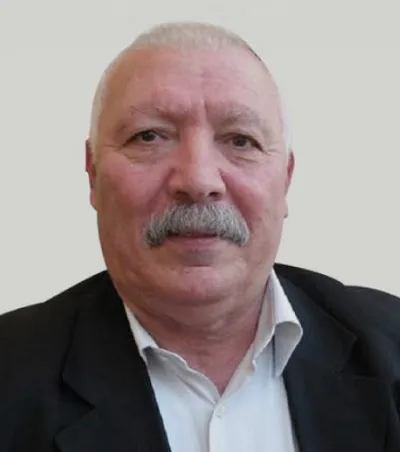
Palestinian rights advocates argue that behind these bureaucratic horror stories is a deliberately convoluted legal labyrinth. Haitham Khatib, the director of the legal department at the Society of Saint Yves, a Catholic human rights organization based in Jerusalem, explains that Palestinian residents of East Jerusalem have permanent resident status rather than Israeli citizenship. When one of the parents resides in the West Bank, the parents must submit a special request and prove that they have lived in Jerusalem for at least two years.
Khatib’s organization has dealt with cases in which the father died before the child’s registration was completed, leaving them without any official status even after they turned 18. In other cases, families were required to undergo DNA testing to prove paternity – at their own expense, of course. According to Khatib, the organization has handled 77 such cases since 2023. The one thing they all have in common is how difficult it is to prove one’s place of residence.
When families run into a brick wall at the Interior Ministry, they switch their attention to the legal arena. According to Maisa Abo-Saleh, an attorney working for HaMoked: Center for the Defence of the Individual, the process goes like this: a child born in the West Bank could get temporary status and, after two years, permanent resident status. Another possibility applies to children aged up to 14 years whose families moved to Jerusalem. However, this pathway can also collapse. Abo-Saleh says that she encountered two children whom the Interior Ministry refused to register. As the result of a court order, they were given temporary residency – but the state later argued that they had been registered “by error.” It took more than eight years for them to get permanent resident status.

Radi Darwish, an attorney with Community Action Center, points to the most ambiguous link: the demand for a DNA test, where there is no clear legal standard dictating when the ministry is allowed to require one. According to Darwish, the cases involve residents of the Shuafat refugee camp, which is part of Jerusalem's municipal boundaries, are the most complex of all, since these people often do not have even the most basic documentation that the Interior Ministry demands as “proof of center for life”: they are not registered to pay municipal tax, they do not have utility bills and most homes are connected to illegal electric grids.
Sometimes, as happened to Maisa, the Interior Ministry links a request for family reunification with a request to register a birth, even though, from a legal perspective, these are two totally different processes. Rama keeps her son’s legal documentation in a safe place, given that it is more important for them than even a passport. Suzan, for her part, has the aerial photograph that the Interior Ministry refused to accept in the reception of her home. After all, she has learned not to throw away any documents before the case is closed once and for all.
None of them talks about “rights” in an abstract sense. They talk about long lines, about electricity bills, about endless expenses and about raising children who are waiting for a document that will prove they belong here. For them, Jerusalem is not a political question that can be put off to a later date. It’s daily life, the reality of which is often determined by the ministry clerk on the other side of the partition.
The Israel Population and Immigration Authority did not respond to Shomrim’s requests for comment.

.webp)