



Israeli Minister’s Wife Holds Key Role in Company He Was Supposed to Keep at Arm’s Length
Israel’s Energy Minister Eli Cohen’s company was supposed to be placed under a blind trust arrangement intended to prevent conflicts of interest. But corporate records reviewed by Shomrim show that Cohen’s wife signed financial documents related to a roughly $4 million real estate investment, while the company continues to list the minister’s personal email address and family home as contact details. The findings raise questions about the safeguards separating his public duties from his private business interests. Published also in Calcalist
Israel’s Energy Minister Eli Cohen’s company was supposed to be placed under a blind trust arrangement intended to prevent conflicts of interest. But corporate records reviewed by Shomrim show that Cohen’s wife signed financial documents related to a roughly $4 million real estate investment, while the company continues to list the minister’s personal email address and family home as contact details. The findings raise questions about the safeguards separating his public duties from his private business interests. Published also in Calcalist
Israel’s Energy Minister Eli Cohen’s company was supposed to be placed under a blind trust arrangement intended to prevent conflicts of interest. But corporate records reviewed by Shomrim show that Cohen’s wife signed financial documents related to a roughly $4 million real estate investment, while the company continues to list the minister’s personal email address and family home as contact details. The findings raise questions about the safeguards separating his public duties from his private business interests. Published also in Calcalist
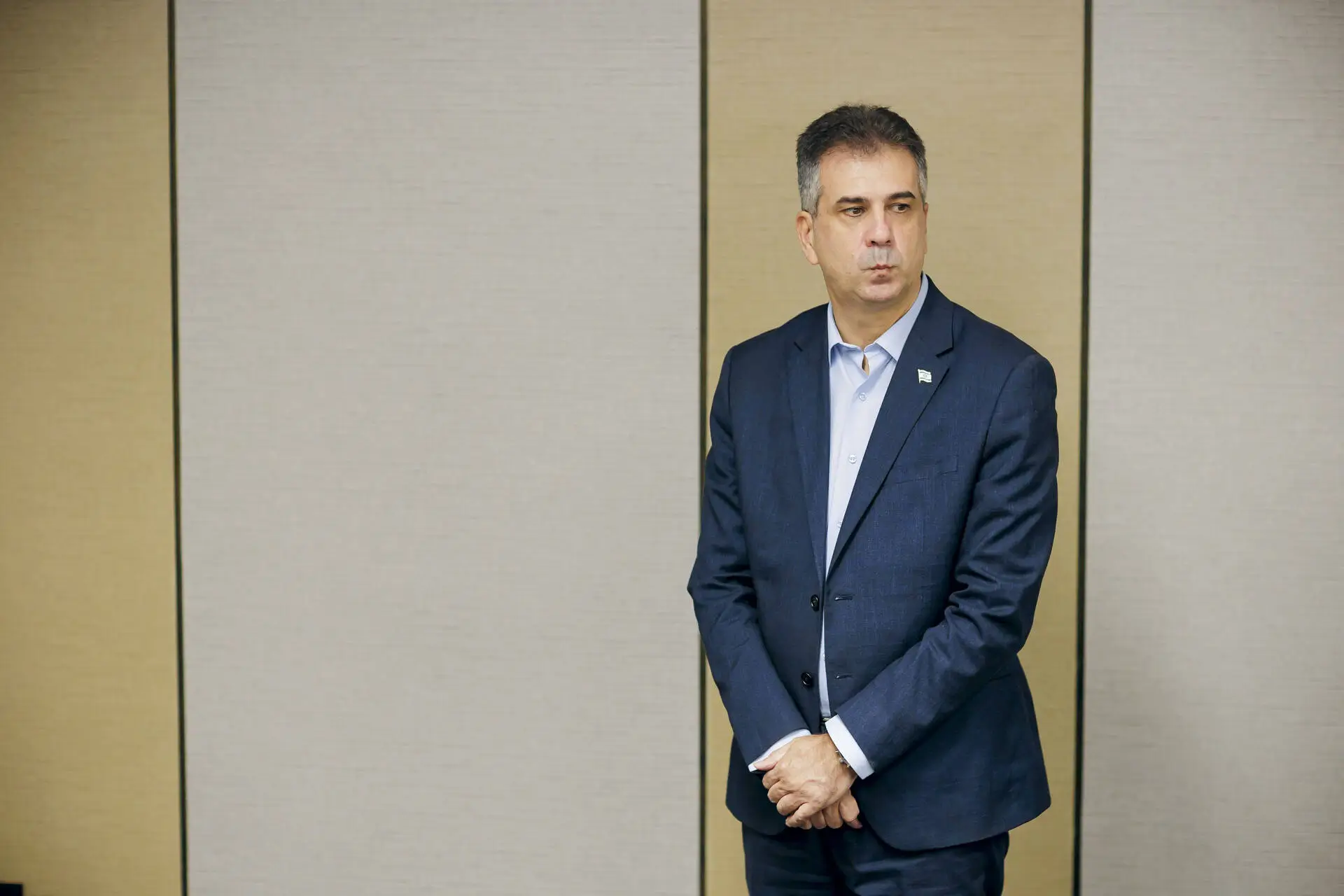
Eli Cohen. Photo: Reuters
Uri Blau
November 16, 2026

Summary


Listen to a Dynamic Summary of the Article
Created using NotebookLM AI tool
Israeli Energy Minister Eli Cohen is the sole owner of a private company that is supposed to be kept under a blind trust.But corporate records reviewed by Shomrim reveal that his wife holds an official role in the company and has signed financial documents related to a real estate investment worth approximately $4 million.
The company, Deshen Holdings, is registered at the couple’s home, lists Cohen’s personal email address as its contact information and identifies his wife’s phone number as its official telephone number.
The findings raise questions about the effectiveness of safeguards intended to prevent Israeli cabinet ministers from maintaining involvement in private business interests while holding public office.
Shomrim also found that Cohen met with municipal officials in the city where the company invested in a major real estate development. The subject of those meetings was not disclosed, and there is no evidence that the investment was discussed.


Real estate, politics and a blind trust
A certified public accountant by training, Cohen previously served as a deputy CEO at the Israel Land Development Company (ILDC), one of the country’s largest real estate and investment groups. In 2010, he established Deshen Holdings, a company that remains wholly owned by him. A year later, it was reported that he had received shares worth approximately $10 million from an ILDC subsidiary.
In 2015, Cohen entered the Knesset as a member of the Kulanu party before later joining Likud. Two years later, he was appointed minister of economy and industry, his first cabinet post.
Under Israel’s conflict-of-interest rules, ministers generally cannot continue to hold private companies they owned before taking office without special approval. Exceptions may be granted by a permits committee operating under the State Comptroller’s Office, Israel’s independent government auditing institution.
In 2017, Cohen asked the committee for permission not to sell Deshen Holdings. According to the committee’s decision, Cohen declared the company held publicly traded securities and approximately 2 percent of a foreign startup in which he had not been involved since acquiring the shares. According to Cohen, efforts to sell that stake had failed, while the publicly traded securities had been transferred to a blind trust.
Because investment management firms handle only publicly traded assets, Cohen, acting on guidance from the attorney general, signed a separate trust arrangement with an accountant to manage the startup shares.
The committee approved the request after Cohen declared that the company was “devoid of content” and would hold no assets while he remained in office. It also stipulated that the company’s director would not provide information about its activities to the minister or his relatives, and that Cohen would not receive financial statements or other information that he was barred from accessing.

The company acquires assets, and the minister’s wife takes a role
In 2020, after being appointed intelligence minister, Cohen again approached the permits committee and received a renewed exemption, also on the grounds that the company remained “devoid of content.”
In January 2023, following his appointment as foreign minister, he returned to the committee again. By then, however, the company’s assets had grown. Cohen reported that it held securities and cash managed through a blind trust at Yelin Lapidot, along with what was described as a passive interest in an income-producing property that was still under construction.
Shomrim found that during the Bennett-Lapid government, between 2021 and 2022, when Cohen was serving as an opposition lawmaker, Deshen Holdings purchased an entire floor in a commercial development in Rishon LeZion, a city south of Tel Aviv, in a transaction valued at approximately $4 million.
Members of Knesset are subject to different conflict-of-interest rules than ministers. They may continue to hold shares in private companies, although they are prohibited from engaging in outside employment while serving in office.
When the Netanyahu government took power again in December 2022, Cohen became foreign minister. Documents filed with the Registrar of Companies raise questions about the extent of the separation between the minister and the company’s activities.
In January 2023, while already serving as a minister and only days before approaching the permits committee, his wife, Anat Cohen, signed documents pledging the company’s rights in the Rishon Letzion project to Bank Hapoalim. She also signed documents creating liens over the company’s bank accounts.
The registry also reveals that Anat Cohen is listed by the company as an authorized reporting officer and has signed various company documents, including filings submitted as recently as June of this year.
The company is registered at the couple’s home in Holon under Anat Cohen’s name. The listed contact details raise additional questions: the contact email belongs to the minister himself, while the telephone number belongs to his wife.

From a property investment to the energy ministry
In January 2024, Cohen was appointed minister of energy and infrastructure.
No record appears on the State Comptroller’s website showing that he sought renewed approval from the permits committee following that appointment.
However, the conflict-of-interest arrangement Cohen signed identifies Deshen Holdings as a company he owns that is being held in a blind trust. His wife is not mentioned in the arrangement. Nor is the investment in the commercial project in Rishon Letzion described in detail; it is referred to simply as an “asset under construction.”
The arrangement requires Cohen to avoid involvement in matters that could directly, or materially through indirect means, affect the company, its clients or companies under its control.
The potential conflict extends beyond the real estate investment itself. B.S.R., a partner of Deshen Holdings’ in the Rishon Letzion development, is also involved in a planned data center project. While Shomrim found no evidence that Cohen intervened in decisions concerning that project, its electricity needs fall within the Energy Ministry’s regulatory sphere.
Cohen’s official meeting diary for the second half of 2024 also records a meeting with the mayor of Rishon Letzion and the deputy mayor. The subject of the meeting was not disclosed, and it is impossible to determine whether the project Deshen Holdings was involved in was discussed.
Responses
Shomrim sent Cohen detailed questions about the company, his wife’s involvement and the blind-trust arrangement. Through a spokesman, Cohen said that “many of the details presented by Shomrim are incorrect. The minister ensures that all of his activities are reported to the state comptroller every year in a full and transparent manner, in strict compliance with all procedures, and is focused exclusively on his public work to improve Israel’s energy and infrastructure systems.”
The spokesman declined to specify which details were inaccurate.
Shomrim also submitted questions to the State Comptroller’s Office, including whether the permits committee was aware of Anat Cohen’s involvement in the company and whether such involvement was compatible with the minister’s commitments.
The comptroller declined to answer, saying only that “information collected in the course of exercising the state comptroller’s powers is subject to confidentiality and secrecy provisions.”