


Exclusive: At Least 12 Israelis Who Fought in Ukraine Are Missing or Being Held by Russia
On the eve of the fourth anniversary of the war between Ukraine and Russia, Shomrim reveals that at least 12 Israeli-Ukrainian dual citizens have gone missing on the front, their fate still unknown. Since authorities lack reliable data on dual nationalities, the true number is believed to be even higher. Meanwhile, Israel continues to cultivate its ties with Russia - even as Putin publicly thanks Hamas. A Shomrim exclusive, also published on N12
On the eve of the fourth anniversary of the war between Ukraine and Russia, Shomrim reveals that at least 12 Israeli-Ukrainian dual citizens have gone missing on the front, their fate still unknown. Since authorities lack reliable data on dual nationalities, the true number is believed to be even higher. Meanwhile, Israel continues to cultivate its ties with Russia - even as Putin publicly thanks Hamas. A Shomrim exclusive, also published on N12
On the eve of the fourth anniversary of the war between Ukraine and Russia, Shomrim reveals that at least 12 Israeli-Ukrainian dual citizens have gone missing on the front, their fate still unknown. Since authorities lack reliable data on dual nationalities, the true number is believed to be even higher. Meanwhile, Israel continues to cultivate its ties with Russia - even as Putin publicly thanks Hamas. A Shomrim exclusive, also published on N12
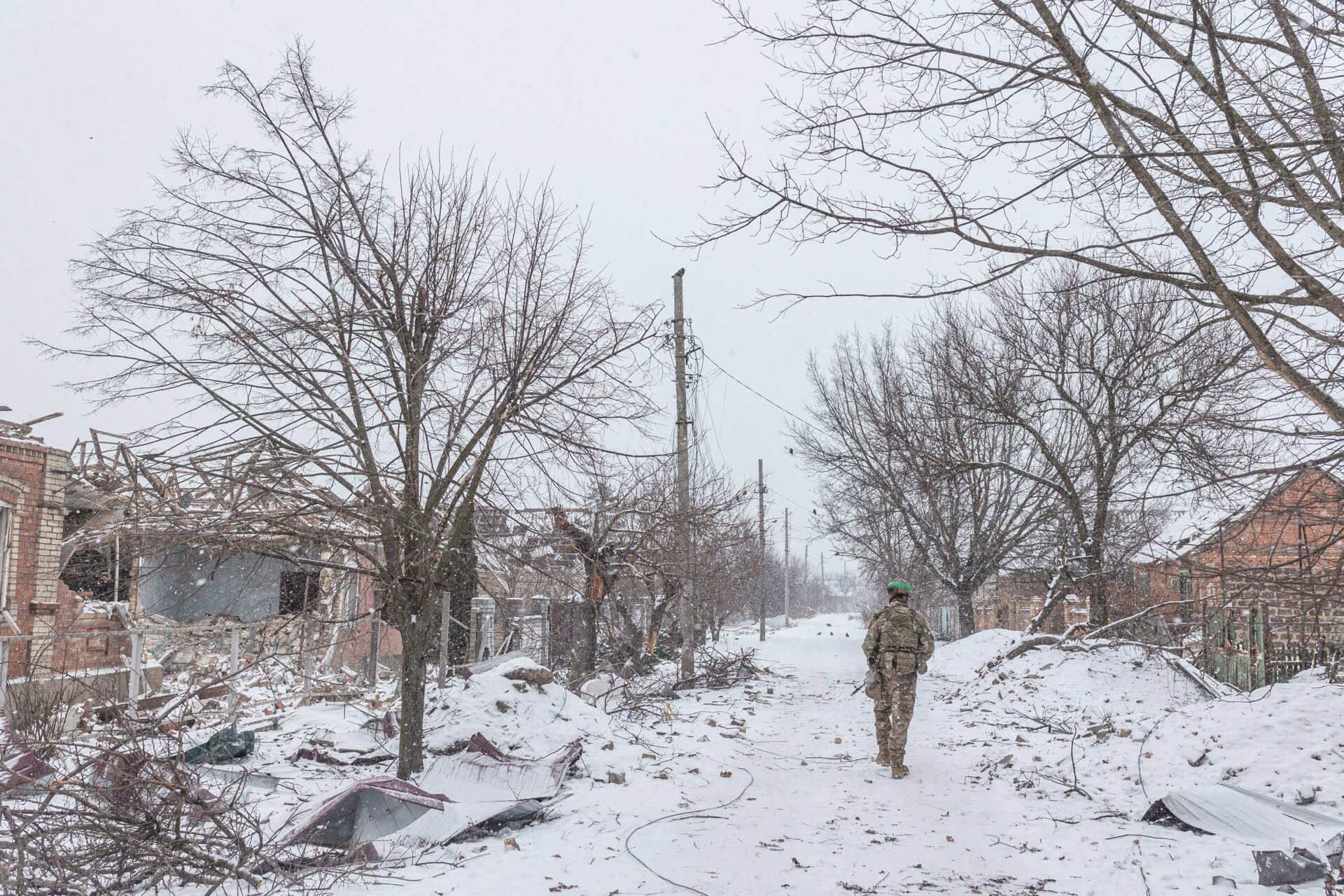
Ukrainian soldier on the eastern front, earlier this month. Photo: Reuters

Milan Czerny
January 5, 2026

Summary


Listen to a Dynamic Summary of the Article
Created using NotebookLM AI tool
Next month will mark the fourth anniversary of the Russian invasion of Ukraine and the start of the war. As we approach this grim milestone, Shomrim can reveal an Israeli angle to the conflict that has been downplayed by all involved. According to figures released by Ukraine’s Coordination Headquarters for the Treatment of Prisoners of War, at least a dozen Israeli citizens are currently defined as missing or are being held as prisoners of war by Russia. Most of them were fighting for the Ukraine side, but some happened to be in the warzone for various reasons – and their fate remains unknown.
In early December, against the backdrop of previous Ukrainian efforts to enlist Israeli support for its war effort, Kyiv sent an official delegation to Israel. Among the members of the delegation was Yulia Pavliuk, the head of the central district of the Coordination Headquarters for the Treatment of Prisoners of War. During her address to a conference in Tel Aviv, Pavliuk mentioned that, during the course of the war, several Israelis have been killed or captured and that their fate is unknown.
In light of these comments, Shomrim contacted the Ukrainian embassy in Israel, which confirmed that there are at least eight missing Israelis. According to estimates, however, the true number is higher, since not every dual Israeli-Ukrainian citizen who joined the Ukrainian army informed the Israeli and/or Ukrainian authorities.
Indirect confirmation of authorities’ lack of certainty came from recent comments by the Israeli ambassador in Kyiv, Michael Brodsky, to the local media. According to Brodsky, the embassy is frequently informed about Israeli casualties in the war after the fact and then helps make funeral and repatriation arrangements.
.webp)
Shomrim contacted the Ukrainian embassy in Israel, which confirmed that there are at least eight missing Israelis. According to estimates, however, the true number is higher.
An Israeli ID card caught on camera
One Israeli citizen who fought in the Ukrainian army and returned to Israel after the October 7 attack to serve in the IDF reserves, tells Shomrim that he has heard about dual Israeli-Ukrainian citizens being held as prisoners of war by Russia. He adds that there have also been cases of Israelis released from internment. One such case was that of Volodymyr Kozlovskyy, who was captured by pro-Russian separatist forces in Ukraine in 2022. In a video filmed before his release – which appeared to be scripted – he was shown holding an Israeli identity card up to the camera.
So many Israelis are defined as missing because information during wartime about prisoners of war is hard to come by. In many cases, it can take several months or more to find out what became of a soldier who went missing on the frontline and reports of fatalities are often based on nothing more than eyewitness testimony from other soldiers. Take the case of A., an Israeli citizen from Ashdod, who also fought in Ukraine. He says that one of his Israeli comrades, whose name Shomrim is not publishing here, was killed in action.
A. himself fought in Ukraine from the first day of the invasion. “I was forged in the furnaces of Sievierodonetsk and Bakhmut,” he wrote on Instagram. He says that his Israeli friend was seriously wounded in fighting near Bakhmut. “When the Russians came, they didn’t take him prisoner,” he says. “They simply shot him in the back.”

A. says that his Israeli friend was seriously wounded in fighting near Bakhmut. “When the Russians came, they didn’t take him prisoner. They simply shot him in the back.”
Israel turns a blind eye – and maintains ties with Putin
The official Ukrainian delegation which visited Israel in December had hoped – given the Israeli experience of hostages being held by Hamas in Gaza – that the suffering of the Ukrainian people under similar circumstances would resonate with the Israeli people and raise support for Ukraine. Among those in the delegation was the former mayor of Kherson, Volodymyr Mykolaienko, who was held for three and a half years by Russia for refusing to collaborate with occupation forces, as well as other former detainees.
One senior European official who is familiar with the issue says that the Ukrainian embassy in Israel spent weeks preparing for the delegation’s arrival and its various meetings in Israel. However, not a single Israeli official attended the main reception welcoming the delegation to the country. According to the same European source, senior officials from the Israeli Foreign Ministry who were invited to hear testimony from former prisoners of war did not even respond to the invitation.
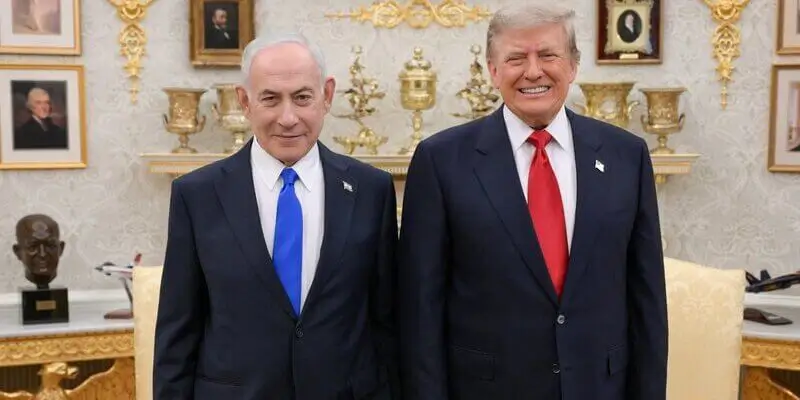
In recent weeks, Prime Minister Benjamin Netanyahu has spoken effusively about his ties with Vladimir Putin and has held several phone conversations with the Russian president. This is despite the fact that, during the course of the October 7 war, the Kremlin strongly criticized not only Israeli actions in the Gaza Strip, but the June 2025 attack on Iran. In April 2025, when Putin met with freed Israeli hostage Alexander Troufanov, his mother, Yelena Troufanov and his fiancée, Sapir Cohen, he said that “we should express gratitude to the Hamas leadership and political wing for meeting us halfway,” before describing his release as a “humanitarian act.” Israel, incidentally, has also not lodged any formal complaints when Russia bombed Jewish sites in Ukraine, such as the synagogues in Kyiv and Kherson.
The Ukrainian ambassador to Israel, Yevgen Korniychuk, said that he was surprised by Netanyahu’s remarks, “especially given what Israel experienced on October 7. You have to stand on the moral and right side of history,” he added. Following these comments, he was summoned to the Foreign Ministry for a diplomatic rebuke.
Not only did senior Israeli Foreign Ministry officials fail to attend events for the Ukrainian delegation, the very same week, some of them participated in events organized by the Russian embassy. Among them was a New Year’s reception at the home of the Russian ambassador and the opening of Russia House – a new cultural center in Jerusalem operated by Moscow.
Many other countries closed the branch of Russia House opened on their soil after the invasion in 2022, arguing that its entire purpose was to increase Moscow’s influence and disseminate propaganda. Moreover, the Russian government company that runs these institutions has been under European sanctions since July 2022.
.webp)
The Russian guard said ‘Welcome to Buchenwald’
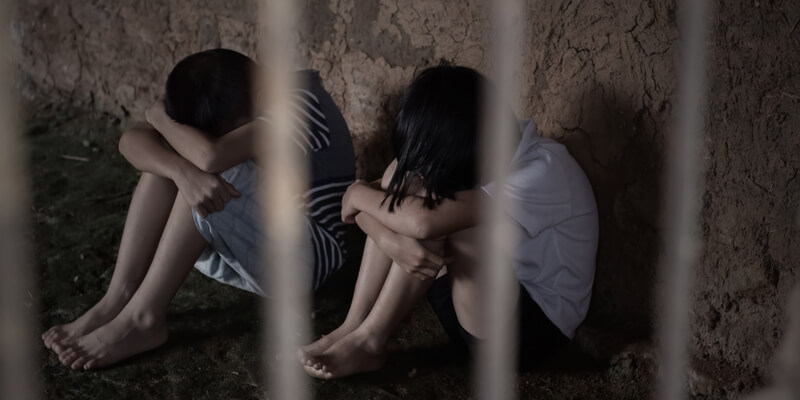
Dmytro Khyliuk, a Ukrainian journalist who addressed the conference organized by the visiting delegation at the ANU Museum of the Jewish People in Tel Aviv, said that, when he was taken prisoner, the Russian guard patted him on the shoulder and said “Welcome to Buchenwald.” Khyliuk spent more than three years in a Russian prison, where he was beaten, starved and held in freezing conditions. The Russians conducted a mock execution for his father before his release. “Every day in captivity is like an eternity,” says former mayor Mykolaienko. Images of many released Ukrainian prisoners of war show signs of torture and emaciated bodies.
“We understand just how much Hamas and the Russian Federation use the same systems, have the same attitude to human life and use the same torture,” says Anna Zharova, cofounder of the Israeli Friends of Ukraine organization. “I would very much like to organize a meeting between former Israeli hostages and Ukrainians who were held by Russia.”
Zharova spoke about this at the conference, saying that it highlights how the issue is almost invisible in Israel. “The fate of these Israeli citizens does not resonate with Israeli society,” she said. “It’s an issue that is barely raised – if at all.”
The Foreign Ministry did not respond to this article by the time it was published.
.webp)