


Around 40 percent of Jerusalem’s population lives in the eastern part of the city, yet they are served by just 10 percent of its public bomb shelters. “My children shake with fear, and there’s nothing I can say to reassure them,” says Fadi, 45. “I just try to keep them away from the windows,” adds Amani, 39. In response, City Hall attributed the disparity to historical factors.
“We Don’t Know What to Do When We Hear a Siren. We Don’t Have Anywhere to Go”
Around 40 percent of Jerusalem’s population lives in the eastern part of the city, yet they are served by just 10 percent of its public bomb shelters. “My children shake with fear, and there’s nothing I can say to reassure them,” says Fadi, 45. “I just try to keep them away from the windows,” adds Amani, 39. In response, City Hall attributed the disparity to historical factors.
Around 40 percent of Jerusalem’s population lives in the eastern part of the city, yet they are served by just 10 percent of its public bomb shelters. “My children shake with fear, and there’s nothing I can say to reassure them,” says Fadi, 45. “I just try to keep them away from the windows,” adds Amani, 39. In response, City Hall attributed the disparity to historical factors.
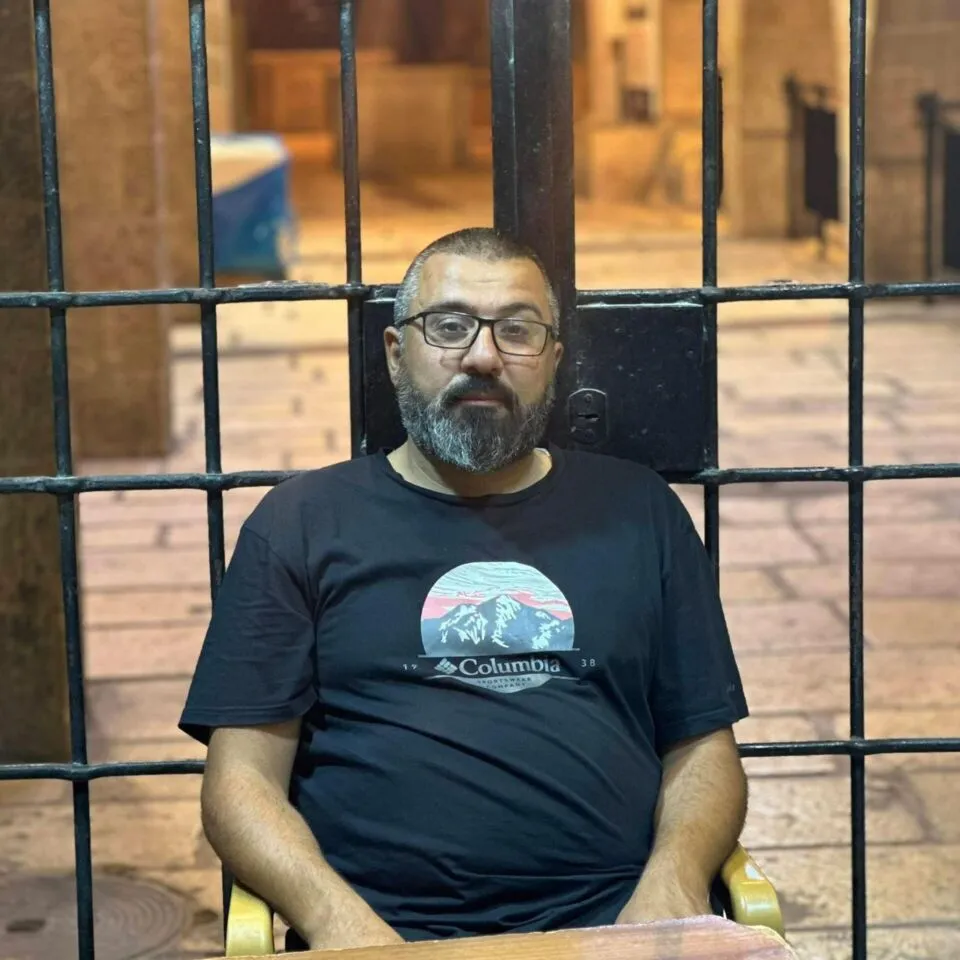
Fadi Matour, a resident of Wadi Jozץ Photo: Rahma Ali

Rahma Ali, Wasla
March 19, 2026

Summary


Listen to a Dynamic Summary of the Article
Created using NotebookLM AI tool
Fadi Matour is a 45-year-old resident of the East Jerusalem neighborhood of Wadi Joz. Like the other 20,000 people who live in that part of the capital, when the sirens sound to announce another ballistic missile attack from Iran and instruct Israelis to take shelter, all he can do is hope for the best.
That’s because Wadi Joz does not have a single public bomb shelter that Matour and his family can reach and the apartment block they live in does not have protected spaces. In fact, the only protected space that is open to the public in the neighborhood, which was only recently opened by Jerusalem Municipality, is a primary school located some 15 minutes’ walk from his home. That, of course, is much longer than the warning that the Home Front Command provides. “We don’t know what to do when we hear a siren. We don’t have anywhere to go,” Matour tells Shomrim. “My children shake with fear and there’s nothing I can say to reassure them.”
The situation in the other neighborhoods of East Jerusalem is not much better. Since the start of the war against Iran some two weeks ago, sirens have sounded in East Jerusalem on no fewer than 36 occasions (as of March 16). And while residents of the western part of the city hunker down in protected spaces and bomb shelters, many of the 400,000 residents of East Jerusalem do not have that luxury. As is the case in many other aspects of Jewish-Arab life in the shared city of Jerusalem, there are also gaps between the service provided to Jewish and Arab residents when it comes to protection from missiles. In the flashpoint neighborhood of Sheikh Jarrah, for example, there isn’t a single protected space or bomb shelter for the 15,000 residents – according to Jerusalem Municipality’s own website.
According to Bimkom, an NGO dedicated to protecting the rights of Palestinian residents of East Jerusalem, there are 551 protected spaces in Jerusalem, including public shelters, shelters in schools and reinforced parking garages. Just 10 percent of them – 54 in total – are located in the eastern neighborhoods of Jerusalem and the vast majority of them are in schools. According to data from Jerusalem Municipality, there is just one independent public bomb shelter in the whole of East Jerusalem, in the Nusseibeh housing projects in the Beit Hanina neighborhood. However, a team from Bimkom toured the area and was unable to locate the shelter in question and local residents who were asked were also unable to find it.

The situation is similar in Arab neighborhoods located on the other side of the Israeli separation barrier – places like Kafr Aqab, Ras Khamis and Dahiyat al-Salam, which are home to some 150,000 people. “A few days ago, I got an alert on my phone while I was praying at the mosque. I looked around and I saw that no one was rushing away – because there was nowhere to go to. So, I just continued praying,” says Hasna Muhammad Ali, 48, from Kafr Aqab. She says that the closure of the Qalandiya checkpoint when sirens are activated makes the situation even harder. The checkpoint closes the moment sirens sound and soldiers stationed there run off to protected spaces – while the civilians are left without protection at all.

Siren during the Iftar meal
As Shomrim reported earlier this month, a highly critical state comptroller’s report into the state of bomb shelters and protected spaces in Israel – published some two months ago – found that the situation is worst of all in the Arab sector. According to the report, there are just 37 public shelters in the Arab sector – 0.3 percent of the total number in Israel. Of them, the watchdog found, eight were unusable. According to figures published in late 2024 by the Emergency Center for Arab Local Authorities around 60 percent of Arab local authorities do not have any public bomb shelters at all.
The gap in mixed Jewish-Arab cities – especially Jerusalem – can be examined numerically. So, while around 40 percent of the total population of Jerusalem lives in the eastern part of the city, their share of the city's protection infrastructure is much smaller than their share of the population. According to Ahed al-Rishq, a 45-year-old resident of the Old City of Jerusalem and a member of the Neighborhoods Committee, his extended family – numbering around 80 people – all live in a four-story apartment block that does not have a bomb shelter. Like Fadi Matour and Hasna Muhammad Ali, he has nowhere to hide when the sirens are activated and the missiles fall. “When we hear the sirens, we just carry on with what we were doing, because there’s no safe space for us to rush to,” he says. The last such occasion, he says, was a few days ago when the whole family sat down for the iftar meal that ends the daily Ramadan fast. Everyone just continued eating and ignored the siren, he says, because there was nowhere to go.

According to al-Rishq, it is impossible to add bomb shelters to buildings in the Old City of Jerusalem. Moreover, municipal authorities have not offered alternative solutions, such as opening temporary shelters in nearby schools. In the Jewish Quarter of the Old City, in contrast, which is home to around 3,000 residents, the situation is very different, since most of the buildings there were rebuilt after 1967 and have communal bomb shelters below ground or have protected spaces in individual apartments.

In the nearby neighborhood of Silwan, located south of the Old City, the lack of safe spaces and bomb shelters has become an integral part of daily life. Amani Odeh, a 39-year-old mother of two who lives in Silwan, tells Shomrim that most of the buildings in the neighborhood – both apartment blocks and single-family dwellings – do not have protected spaces. She adds that the style of construction in Silwan, where many buildings are old or have been expanded over the years without orderly planning, makes it very difficult to build fortified rooms. Like the others interviewed for this article, she, too, has nowhere to hide. “When the sirens go off, I have nowhere to go,” she says. “I stay home with my children and try to keep them away from the windows.”
According to Odeh, the schools adjacent to her home have not been opened to residents as makeshift shelters and public buildings in the neighborhood have not been adapted as such. This leaves thousands of residents without a safe space to shelter in an emergency.

What does the Jerusalem Municipality have to say about this situation? Spokesperson Motti Shaham Maimon said that local authorities in Israel stopped building public bomb shelters as far back as the 1980s, adding that modern defense policy is now based on fortified rooms inside the home. He adds that part of the problem in East Jerusalem is related to illegal construction, which does not generally include fortified rooms. The municipality acknowledges that a gap exists in the number of shelters between the east and west of the city, but attributes this to historical factors from the period of Jordanian rule in East Jerusalem before 1967.