


The Caregiver’s Dilemma: What to Do When Your Patients Cannot or Will Not Move Into a Bomb Shelter
This week is not the first time that missiles have rained down on Israel - but official guidelines for caregivers remain unclear. Workers rights organization Kav La’oved reports a spike in calls from foreign caregivers, especially women, who say that some families flatly refuse to allow them to go down to the bomb shelter alone. The National Insurance Institute, Ministry of Labor and the Population and Immigration Authority all shunt responsibility to the Home Front Command - which, for its part, is not responding. Following an inquiry by Shomrim, MK Meirav Cohen has now submitted an urgent request
This week is not the first time that missiles have rained down on Israel - but official guidelines for caregivers remain unclear. Workers rights organization Kav La’oved reports a spike in calls from foreign caregivers, especially women, who say that some families flatly refuse to allow them to go down to the bomb shelter alone. The National Insurance Institute, Ministry of Labor and the Population and Immigration Authority all shunt responsibility to the Home Front Command - which, for its part, is not responding. Following an inquiry by Shomrim, MK Meirav Cohen has now submitted an urgent request
This week is not the first time that missiles have rained down on Israel - but official guidelines for caregivers remain unclear. Workers rights organization Kav La’oved reports a spike in calls from foreign caregivers, especially women, who say that some families flatly refuse to allow them to go down to the bomb shelter alone. The National Insurance Institute, Ministry of Labor and the Population and Immigration Authority all shunt responsibility to the Home Front Command - which, for its part, is not responding. Following an inquiry by Shomrim, MK Meirav Cohen has now submitted an urgent request
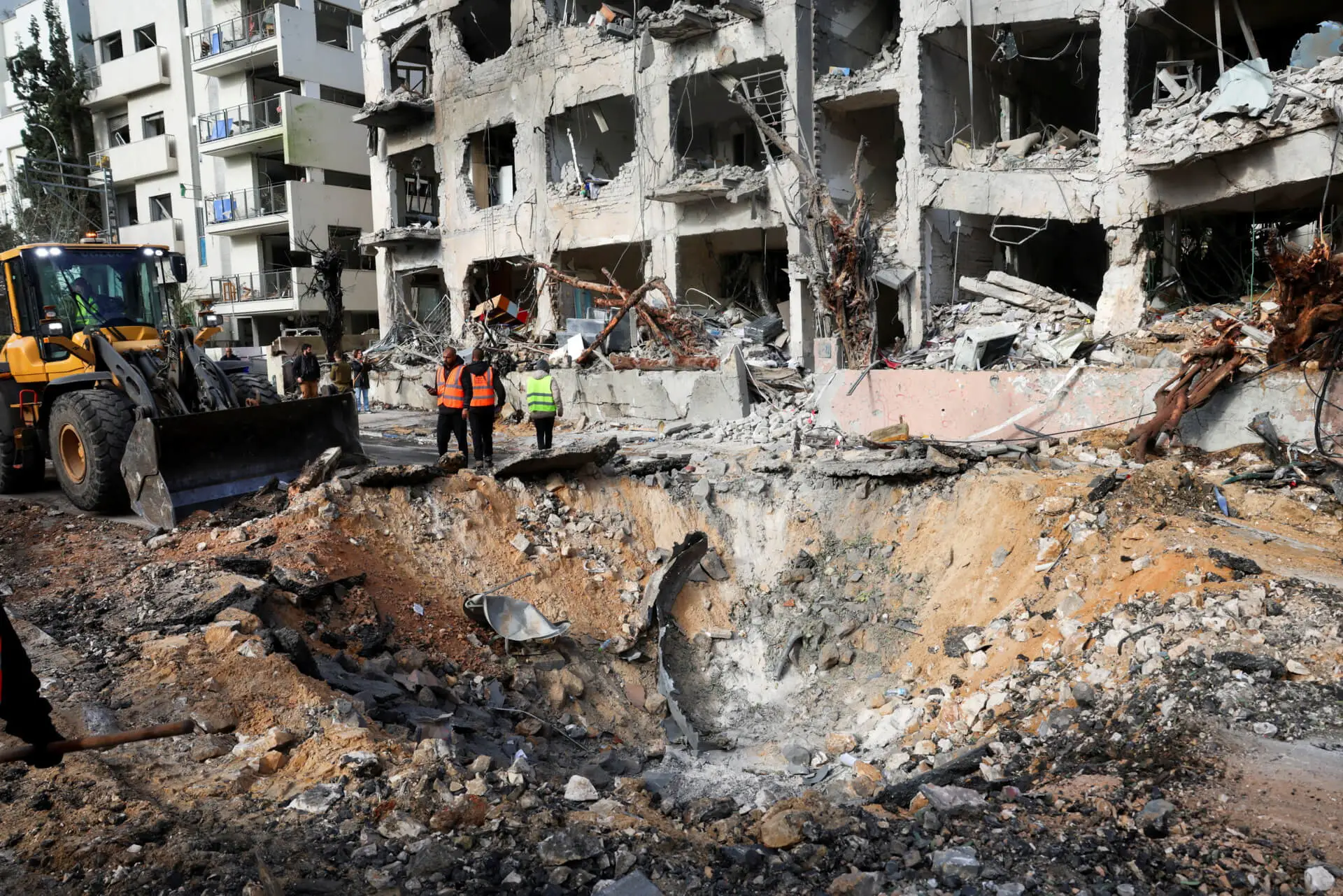
The scene of a missile strike from Iran in Tel Aviv. Photo: Reuters

Chen Shalita
March 4, 2026

Summary


Listen to a Dynamic Summary of the Article
Created using NotebookLM AI tool
The tragic death of Mary Ann de Vera, a 32-year-old Filipina caregiver who was killed by shrapnel while assisting her elderly patient to a shelter during an Iranian missile strike on a residential building in Tel Aviv that did not have a reinforced room or a bomb shelter, has resurfaced a dilemma that many caregivers face during war: What happens when their charge refuses or is physically incapable of reaching the bomb shelter when their apartment does not have a reinforced room? Should they risk their own lives and remain by their patient’s side or should they make their way down to the shelter, leaving their patient alone in the apartment? In the case of de Vera, it’s worth noting that, according to reports, she and her patient were on their way to an external shelter when the rocket hit. The phenomenon, nonetheless, remains complex.

Even though this week’s barrage of attacks on Israel are nothing new, official instructions on how to act during missile strikes remain unclear. The National Insurance Institute and the Ministry of Labor refer questions on this issue to the Home Front Command – which, while providing answers for many situations, does not address this one specifically. Given this, the issue is often left up to the patient’s family. On the one hand, there are some families which insist that the caregiver remain by the patient’s side no matter what. Some directly forbid the caregiver from leaving the patient alone, arguing that it is part of the caregiver’s job and, according to testimony that reached the Kav La’oved organization, “they aren’t here on vacation.” On the other hand, some families tell the caregivers: “My Mom or Dad has lived long enough – you’re young. Don’t insist on staying by their side when there’s a missile attack. Protect yourselves.”
“We have had a lot of calls from women who are afraid for their lives and don’t know what to do and what they are allowed to do,” says Karin Koretsky, a fieldworker in Kav La’oved’s caregiver department. “They ask whether they should save their own lives by going down into the shelter – even if that means leaving their patient alone. And we tell them what should be obvious: a caregiver whose patient cannot or who refuses to move into a protected area must protect themselves – and the patient’s family must allow that to happen.”
What has been happening so far in this war and in the previous conflict?
“In the last war with Iran, the 12-day conflict in June, we did not manage to get any written memorandum on the matter, but we did get the impression that everybody with responsibility for deployment of caregivers and contact with patients’ families had been instructed by the Population Authority to allow caregivers to enter bomb shelters freely – and they were equipped to deal with such issues. I was able to contact a body on behalf of a caregiver who was not being allowed to leave their patient and go into the bomb shelter – and that body would send a social worker to intervene.”
"I got a call from one caregiver who was in a panic. The son of her employer told her to remain in the building’s stairwell since that was ‘safe enough.’ We know for a fact that it isn’t safe enough."

To try and persuade the family to let the caregiver go to a shelter?
“Or simply to inform them that there are instructions and there’s nothing they can do. If that didn’t work – and I encountered a few cases like that – the social worker gave the caregiver permission to go to the shelter and also informed the Population Registry of the situation so that the family couldn’t claim that he or she had abandoned their patient. Being reported for abandonment is something the caregivers are very wary of.”
What happens if the caregiver goes to the shelter and the family simply locks the door behind them? They won’t have anywhere to live.
“There have been such cases. And when it does happen, the social worker is supposed to find temporary accommodation for the caregiver and a position with a different family. It is, indeed, a problem. The letter issued yesterday by the Population Authority says that families must ensure that foreign workers know how to get to the protected spaces and that their sense of personal security is vital to ensure they remain committed to their jobs.”
This is a very self-interested approach. And still, the problem is that they might know where the shelter is – but aren’t always allowed to get there by the families.
“True. I got a call from one caregiver who was in a panic. The son of her employer [the patient is considered an employer, according to Israeli regulations – CS] told her to remain in the building’s stairwell with his wheelchair-bound parent during a missile attack, since that was ‘safe enough.’ We know for a fact that it isn’t ‘safe enough.’ She isn’t employed as a bodyguard and nobody expects her to lay down her life for the minimum wage she’s being paid. She came to Israel to work as a caregiver and to help someone unable to fend for themselves – but she’s not their legal guardian. She is not responsible for him legally. There seems to be some confusion over this issue.”
One can also understand the problem of leaving a patient alone – especially during the current conflict, when it is taking longer for the all-clear to be given to leave the shelter.
“It’s a tough dilemma, but we can find a creative solution. We don’t have to go all the way to abandoning the patients. Some families take the patient into their family home while the caregiver remains in the apartment and can rush off to the shelter when needed; some families take the caregiver back to the family home, too. Not everyone has room – and that’s understandable. Sometimes, it’s a legal guardian who makes decisions, not the family, and they sometimes have a different sense of commitment.”
.webp)
Yossi Barabi, the chair of the Histadrut’s Caregiving Union: “Based on calls to our action committee, the instructions to caregivers are not clear and some of these workers find themselves in extreme danger.”
Everyone turns to the Home Front Command – which does not respond
Official instructions, as already mentioned, are unclear, despite the fact that Israel has been at war for more than two and half years and even though the Knesset’s Labor and Welfare Committee discussed the difficulties of protecting many of the 620,000 elderly and people with disabilities living in the community during last June’s war against Iran.
Shomrim asked the National Insurance Institute and the Ministry of Labor for comments. Both of them referred us back to the Home Front Command’s instructions. “During times of national emergency, the Home Front Command is the address for these questions,” sources in the Ministry of Labor told Shomrim. “And, in any case, it’s got nothing to do with us; it’s the Population Administration. We are the address when it comes to workers’ rights in employment.”
Is the right to safety and protection not a fundamental human right? That’s one question no organization was willing to answer. A spokesperson for the Population Authority told Shomrim that, “the only body with the power to instruct people how to act during a siren is the Home Front Command. And it is also the role of the Home Front Command to make these instructions accessible to everyone. Your assumption that the Population Authority is responsible for protective instructions is incorrect and baseless. Nonetheless, the Population Authority has gone above the call of duty and published videos in various languages, based on Home Front Command instructions. Any questions on this subject should be directed to the Home Front Command.”
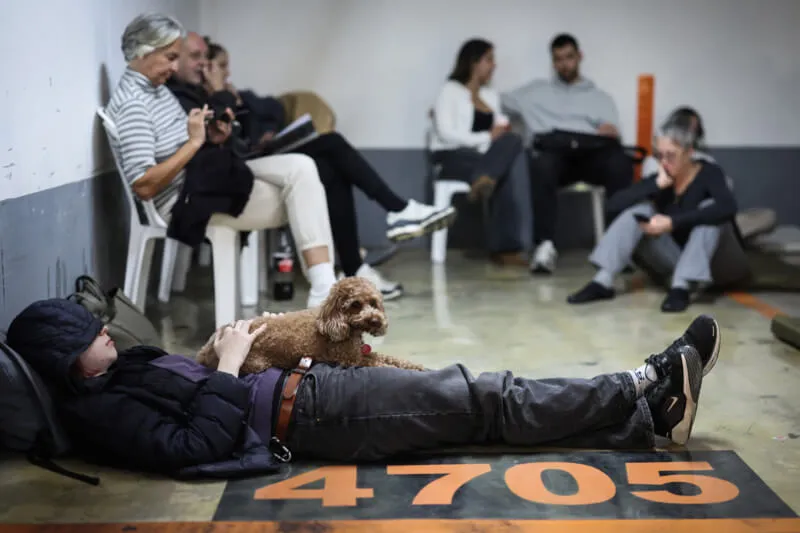
Shomrim did just that – and discovered that the Home Front Command also prefers not to deal with the issue. According to the Home Front Command’s approach, each employee’s actions should be governed by the terms of employment they agreed with the patient – as if the power dynamics in these cases are equal and as if caregivers are always made aware of the dangers. The instructions on the Home Front Command website intended for the elderly population and caregivers refer to the importance of evacuating to a protected space whenever possible, but do not focus on the risks of war with Iran and do not touch upon the dilemma in question. The IDF Spokesperson, who is supposed to respond on behalf of the Home Front Command, declined to provide any official answer on the matter.
After Shomrim contacted Meirav Cohen, a Yesh Atid Knesset member and former minister of social affairs , she sent an urgent letter to the Population Authority and the Home Front Command, asking them to issue clear instructions on the matter.
In the meantime, the dilemma is now in the hands of the families. In one of the Facebook groups in which families and patients have been discussing the issue, one welfare patient shared that she “instructed her caregiver, if they couldn’t get me to the safe space in time, that she should protect herself. She shouldn’t have to die for the privilege of working for me. She didn’t come here to meet her end.” While there are some caregivers who become very attached to their patients and who would refuse to leave their side under such circumstances, the issue should not be determined by their kindness or by the good will of the patient’s family. What’s needed is for the state to make a clearer statement on the matter.
Yossi Barabi, the chair of the Histadrut’s Security, Caregiving and Cleaning Workers’ Union, also wants the state to make a clear statement. “Based on calls to our action committee, the instructions to caregivers are not clear and some of these workers find themselves in extreme danger,” he says. “I will soon declare a labor dispute over the whole disordered issue of welfare caregivers, especially in light of the confusion created by the war. As far as we are concerned, the situation is clear: there are around 180,000 welfare caregivers in Israel and they deserve the right to protect themselves.”