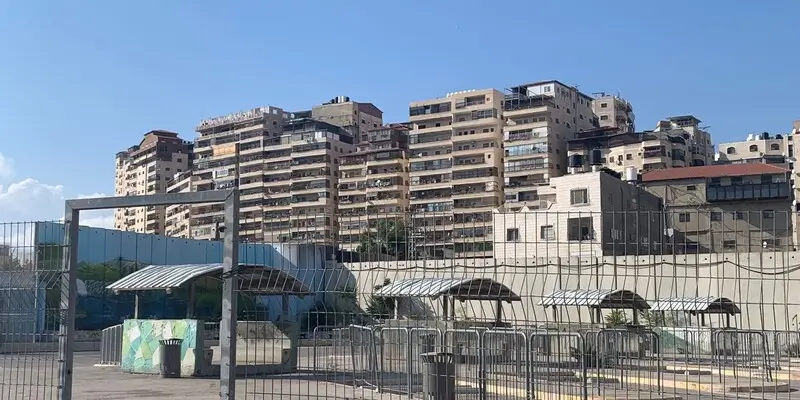



Shelter Failure: Just Five Public Bomb Shelters for 80,000 Residents
In the past six years, the number of Israelis lacking access to a safe space has grown from 2.5 million to 3.19 million. And while the state of public shelters has improved slightly – with only 12 percent unfit for use, compared to 20 percent in 2020 – the county’s Arab citizens continue to suffer from shocking discrepancies in bomb-shelter accessibility. Shomrim continues to monitor the state of civilian protection on the home front
In the past six years, the number of Israelis lacking access to a safe space has grown from 2.5 million to 3.19 million. And while the state of public shelters has improved slightly – with only 12 percent unfit for use, compared to 20 percent in 2020 – the county’s Arab citizens continue to suffer from shocking discrepancies in bomb-shelter accessibility. Shomrim continues to monitor the state of civilian protection on the home front
In the past six years, the number of Israelis lacking access to a safe space has grown from 2.5 million to 3.19 million. And while the state of public shelters has improved slightly – with only 12 percent unfit for use, compared to 20 percent in 2020 – the county’s Arab citizens continue to suffer from shocking discrepancies in bomb-shelter accessibility. Shomrim continues to monitor the state of civilian protection on the home front
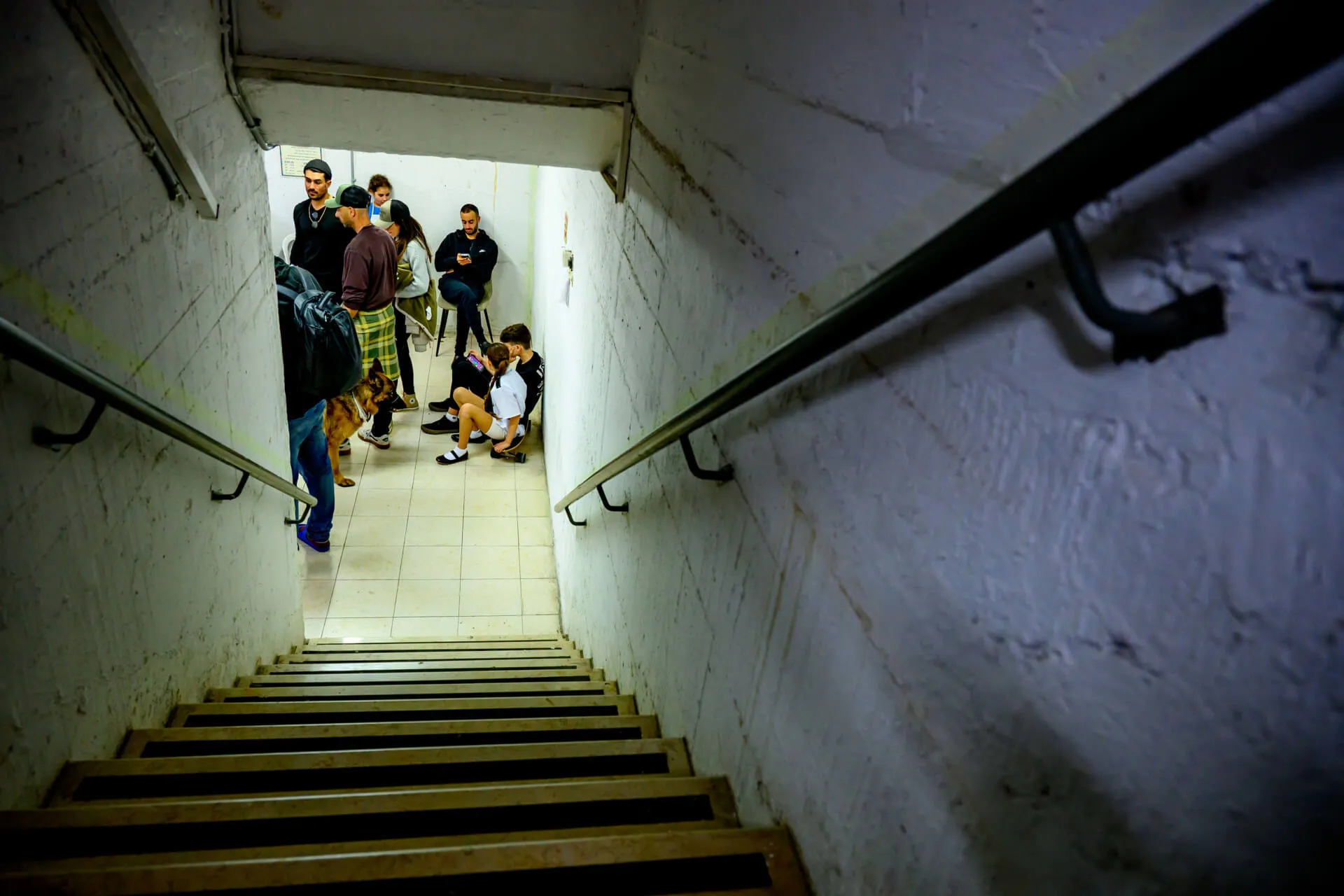
Residents in a Tel Aviv bomb shelter. Photo: Reuters

Shuki Sadeh
March 12, 2026

Summary


Listen to a Dynamic Summary of the Article
Created using NotebookLM AI tool
When State Comptroller Matanyahu Englman visited the scene of a fatal rocket attack in Bat Yam during the 12-Day War between Israel and Iran in June last year, he said that he had already presented Prime Minister Benjamin Netanyahu with a draft of his report into the discrepancies between bomb-shelter accessibility in different parts of Israel. These gaps, he said, “are highly significant: millions of citizens do not have access to protected spaces, public shelters are not up to standard and there has been no mapping of populations without access to bomb shelters.” According to the full report, which was published some two months ago, the situation remains dire, with around one third of the population – more than 9 million people – not having a standard reinforced room or shelter to enter when rocket sirens are sounded. When comparing the situation described in the most recent report to the comptroller’s report on the same subject from 2020, it becomes evident that the situation has not changed for the better. According to the 2020 report, 28 percent of Israeli citizens did not have standard shelter; fast forward six years, however, and the 2026 report suggests that, instead of there being fewer citizens in that situation, 33 percent of Israelis now don’t have access to a safe space during missile attacks.
The state comptroller’s report focuses extensively on the state of bomb shelters – both public and private, which serve 4 and 16 percent of the Israeli population, respectively. The condition of these shelters is not good, to say the least. According to the report, 12 percent of public shelters are unusable. While this is an improvement on 2020, when 20 percent of public shelters were not in good enough condition to be used during an emergency, it is hard to understand why more of an effort was not made, given the ever-increasing threat of rocket attacks from the Gaza Strip, Lebanon and Iran. In June 2025, for example, the government passed Resolution 3166, allocating 50 million shekels to revamping public shelters and another 50 million shekels to purchase portable bomb shelters. Shomrim asked the minister of defense for details on how much of this had been carried out and what money remained, but has yet to receive a response.
It is worth noting that the Home Front Command told the state comptroller that it changed the way that it analyzes data between the 2020 report (which was based on 2018 data) and the 2026 report (which relied on data from 2025). Among other things, in 2018 the Home Front Command relied on a manual survey of shelters which it conducted along with the local authorities, while today the accessibility gaps are calculated using a computer model and data collected by a variety of statistical methods. At the same time, the state comptroller left in his report a comment stating that, not only had the accessibility gaps not been reduced – they had actually widened.
There is also an information gap when it comes to the condition of shared bomb shelters in apartment blocks, which are under the supervision of the local authorities. The 2020 state comptroller’s report found that the Home Front Command did not have any reliable information about the state and usability of these shelters and was unable to say how many of them were fit for a prolonged stay. That remains the situation today. Although local authorities are responsible for inspecting them, it seems that – at least until the October 7 attacks – maintaining them was not top of their list of priorities.
In this context, the most recent state comptroller’s report examined the performance of five local authorities across the country. Among its findings were that in Holon, Givatayim and Ashkelon, there were hardly any inspections to see if public shelters were usable before October 7 and that most of those that were conducted were the result of residents’ complaints. The municipalities vowed to increase inspections using a variety of means, but in order to do so properly, they need proper funding. Ronen Peretz, who was then director general of the Ministry of Interior , told a Knesset committee hearing in June that: “The I Ministry of Interior allocates tens of millions to local authorities every year – last year it was more than 40 million shekels – for emergency preparedness. A local authority has a budget that is supposed to be used for the maintenance of shelters. Is it enough? No, it is far from being enough.”
The result is that in many cases – as a Shomrim report from last year showed – more aggressive residents of apartment buildings take over these shared bomb shelters and use them as their private storage areas. In some cases, they are even turned into sleeping areas. In that special report, Shomrim highlighted the plight of Anna Olitzky, who lived in Jaffa at the time and who took on a neighbor who had blocked access to the bomb shelter in their apartment block, preventing other residents from seeking shelter during missile attacks. After a few days, her struggle was successful and the shelter was cleared of the neighbor’s possessions. The success, however, was short lived and now residents are forced to cross the street to a public shelter since their neighbor has once again filled the shelter with his possessions.
The number of people with no access to bomb shelters has increased | Figures from the state comptroller’s report
2020 report (2018 data)
- Protected space in apartment: 3.5 million (38%)
- Shared bomb shelter in apartment block: 2.5 million (28%)
- Public bomb shelter: 555,000 (6%)
- Without standard protection: 2.5 million (28%)
2026 report (2025 data)
- Protected space in apartment: 4.3 million (46%)
- Shared bomb shelter in apartment block: 1.5 million (16%)
- Public bomb shelter: 435,000 (4.6%)
- Without standard protection: 3.19 million (33%)
One shelter for 15,000 residents
The state of the bomb shelters and protected spaces is the worst in the Arab community. According to the state comptroller’s report, there are just 37 public shelters in Arab communities – 0.3 percent of the total number of shelters in Israel. Of them, eight are unusable. According to figures published in late 2024 by the Emergency Center for Arab Local Authorities, which operates under the auspices of the Social Equality Ministry, around 60 percent of Arab local authorities do not have any public bomb shelters at all. For the sake of comparison, the town of Carmiel has 126 public bomb shelters, while the two Arab towns adjacent to it have two between them. In Carmiel, therefore, there is one bomb shelter for every 375 residents, compared to one shelter for every 15,000 residents in the Arab communities. A study published in February by the Negev Coexistence Forum for Civil Equality found that Ofakim, with a population of 41,000, had 150 public bomb shelters. In Rahat, which has more than double the population, there are only five public shelters. In Segev Shalom, which has a population of 13,000, there isn’t a single public bomb shelter.
Given the lack of public shelters, leaders of Arab local councils use those located in schools, as well as deploying mobile shelters. The drawback, of course, is that both of these solutions are not close to residents’ homes. For example, in northern Israel’s Yanuh-Jat, where 35 percent of homes do not have any kind of safe space, there are also no public bomb shelters. During wartime, the local authority evacuates residents to 22 shelters located in various educational institutions across the region. In addition, after the October 7 attacks, it deployed 21 mobile bomb shelters. The same is true for Majd al-Krum – where two residents were killed in a missile attack in 2024 and where there are no public bomb shelters. Instead, the local authority uses shelters in five nearby schools and 24 mobile shelters deployed across the town. In both of these communities, some of the mobile shelters were bought using money donated by philanthropists, while the rest were paid for by the state. This is information gained from a freedom of information request submitted by the Hatzlacha NGO on behalf of Shomrim.
At the very top of the list of communities suffering from bomb-shelter inaccessibility are the unrecognized Bedouin communities in the Negev. On October 7, some 165,000 members of the Bedouin Diaspora in southern Israel did not have access to bomb shelters. Since then, nongovernmental groups have provided roughly 300 concrete pipes, which are used as makeshift shelters. Additionally, 64 protective structures using sandbags have been deployed in the region, along with 135 portable bomb shelters, even though the Home Front Command does not consider them to provide standard protection. In any case, there are no bomb shelters here and perhaps the most important fact of all is that there will not be any as long as there is no approved master plan for the Bedouin Diaspora areas – not before and not after the war. In the absence of such a plan, it will not be possible to build bomb shelters there in the future, either.
.webp)
.webp)