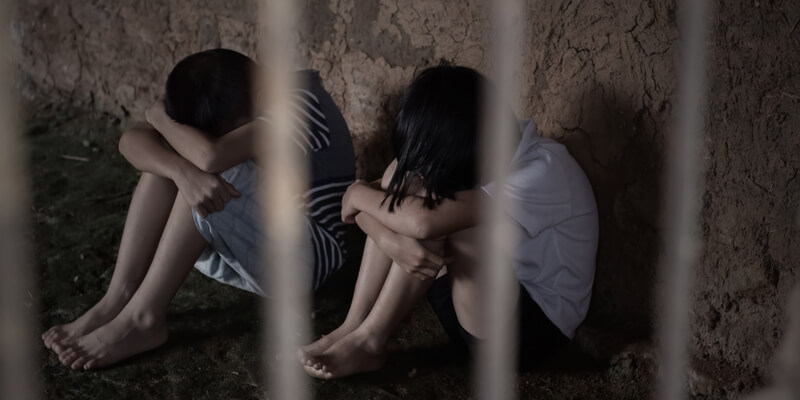



The Heavy Mental Toll: One in Two October 7 Fighters Is at Risk of Experiencing “Moral Injury”
Moral injury is the conflict between an individual’s moral code and the actions they committed or witnessed on the battlefield. If that sounds detached from the reality of war, it is worth understanding the severe psychological consequences – from depression to suicidal ideation. ‘When you enter combat fueled by a desire for revenge, you do things that you may later look at differently.’ And what can be learned from the lack of awareness on this subject at the time of the Gaza disengagement? A special report by Shomrim and Ynet
Moral injury is the conflict between an individual’s moral code and the actions they committed or witnessed on the battlefield. If that sounds detached from the reality of war, it is worth understanding the severe psychological consequences – from depression to suicidal ideation. ‘When you enter combat fueled by a desire for revenge, you do things that you may later look at differently.’ And what can be learned from the lack of awareness on this subject at the time of the Gaza disengagement? A special report by Shomrim and Ynet
Moral injury is the conflict between an individual’s moral code and the actions they committed or witnessed on the battlefield. If that sounds detached from the reality of war, it is worth understanding the severe psychological consequences – from depression to suicidal ideation. ‘When you enter combat fueled by a desire for revenge, you do things that you may later look at differently.’ And what can be learned from the lack of awareness on this subject at the time of the Gaza disengagement? A special report by Shomrim and Ynet
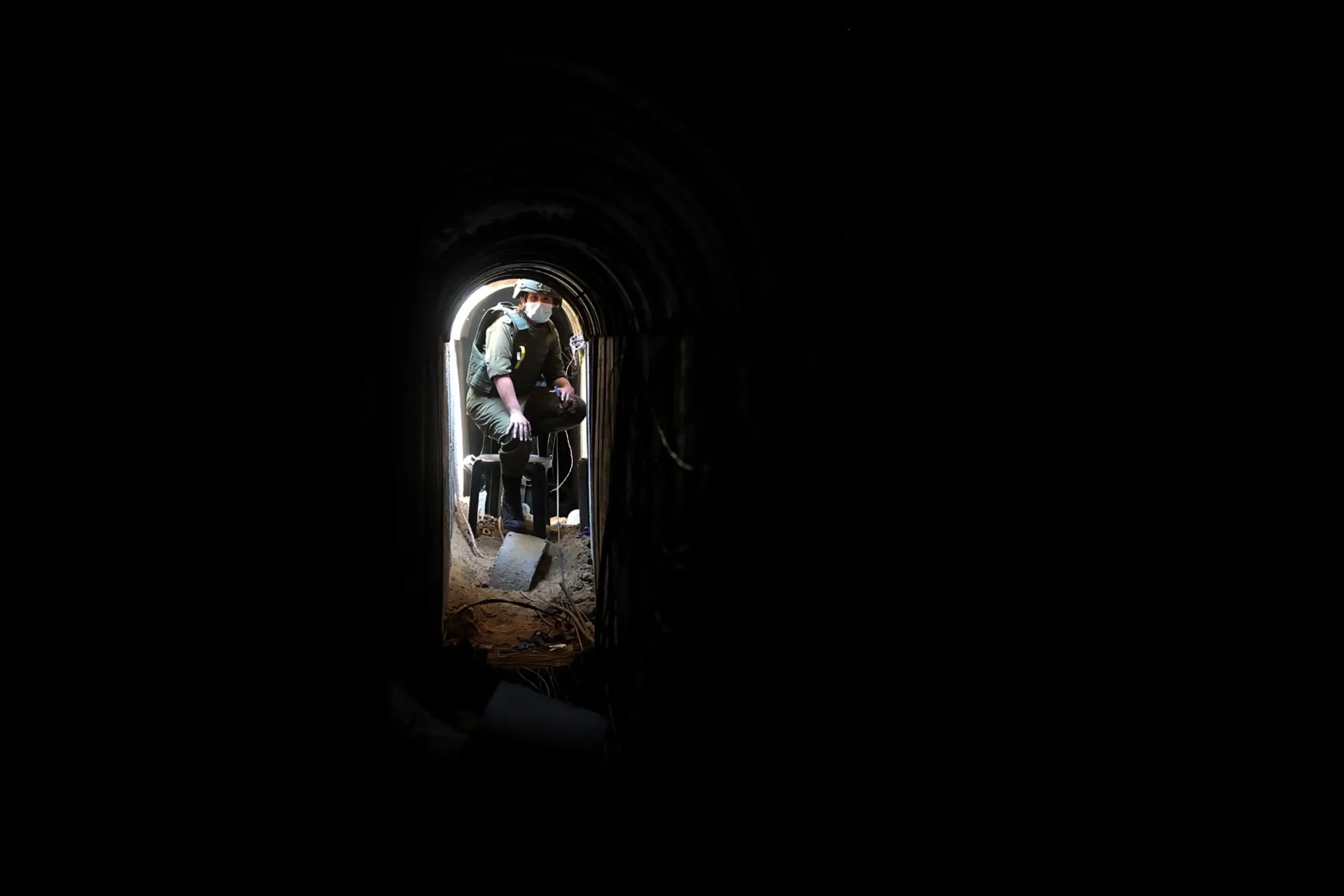
An IDF soldier in a Hamas tunnel in the Gaza Strip. Photo: Reuters

Haim Rivlin
February 24, 2026

Summary


Listen to a Dynamic Summary of the Article
Created using NotebookLM AI tool
In one of the climactic scenes of the award-winning 2008 Israeli animated drama “Waltz with Bashir,” the character of filmmaker and protagonist Ari Folman tells his friend and therapist about the night of the Sabra and Shatila massacre during Israel’s 1982 war with Lebanon. “I’ll tell you what’s amazing. A massacre took place. It was carried out by Christian Phalangists. All around were several circles of our soldiers. Every circle had some information. The first one had the most. However, the penny didn’t drop. They didn’t realize they were witnessing a genocide.” Folman, whose memory of the First Lebanon War – in which he served as a combat soldier – was erased for 20 years, suddenly recalled the flares that were fired and lit up the atrocities committed by the Phalangists against the residents of the Palestinian refugee camps in broad daylight.
His friend the therapist offers an explanation: “You can’t remember the massacre because in your opinion the murderers and those around them are the same circle. You felt guilty at the age of 19. Unwillingly, you were cast in the role of the Nazi. It’s not that you weren’t there. You were. You were there firing flares, but you didn’t carry out the massacre.”
More than four decades after the first Israeli war in Lebanon and as the country is only just starting to come to terms with the implications of the October 7 massacre and the subsequent war, Folman is an example of what modern psychology refers to as moral injury – a relatively new term that still does not have an official diagnosis but is recognized as a clinical phenomenon with broad scientific backing. “For years, they said it’s PTSD – but PTSD is a situation of life or death,” says Prof. Yossi Levi-Belz, who has been researching the subject for around 10 years – long before October 7. “Ari Folman’s life was not in any danger. He stood on the roof and set off flares. But he says that his internal moral code told him: You did something wrong. You cooperated with a massacre.”
In other words, moral injury is the conflict between an individual’s moral code and the actions they have done or witnessed. And, as we are about to discover, this conflict can have profoundly serious consequences in terms of mental health – from depression to suicidal ideation. “The IDF, like the whole of the State of Israel, went to war in the aftermath of October 7 in a very aggressive manner,” Levi-Belz explains. “The phrase ‘Never again is now,’ which was prevalent at the start of the war, was actually saying: We are dealing with the Nazis of the modern era.” He says that this kind of ideology is fertile ground for moral injuries which only become evident over time. “When you go into a war with such a desire for revenge, you do things that, in retrospect, you’ll view very differently.”

Levi-Belz, the head of the Lior Tsfaty Center for Suicide and Mental Pain Studies at Haifa University, is perhaps the antithesis of the isolated academic, sitting aloof in an ivory tower. In fact, he is that rare example of a researcher who finds himself in both the field of academic research and on the battlefield at the same time. Since October 7, he has served for more than 300 days of reserve duty and, in his role as a clinical psychologist in the Intelligence Corps, he has met with hundreds of soldiers – first on the battlefield and later, when they were no longer in active service, in treatment rooms or the retreats he attended. What he heard from them was not merely anecdotal; it was disturbing and it demands immediate attention. It also fits in with the findings of studies that Levi-Belz has been conducting for the past decade or so with his colleague, Prof. Gadi Zerach from Ariel University’s Department of Psychology, into moral injury and its psychological implications.
“I heard several soldiers speak about incidents when they shot people and later found out that they were uninvolved,” Levi-Belz says. “In the Intelligence Corps, I encountered cases of people who said, ‘Listen, I put X’s on houses where, in the first month, 2,000 to 3,000 Palestinians were killed. And it seemed right; it seemed justified.’ I’m not saying this as criticism – because that really is how we were and how we felt. This concept, called ‘collateral damage,’ was very, very rigid before the war, but became much more fluid at the start of the war. Again, stemming from those same circumstances – because if Sinwar is sitting inside a building surrounded by 50 or 100 people, you realize that the question of whether to take him out or not is easier to answer than it was on October 6.”

“They are holding a newborn baby, and suddenly everything comes back”
Not everyone will experience the implications of moral injury – especially not in the immediate term. But anyone for whom there is a conflict between what they did and saw and their internal moral code is considered at risk. “One of the complexities of moral injury is that it does not always appear at the very second that you do whatever action it is. Rather, it can happen a week or two later, when you’re no longer in uniform because reserve duty is over; and sometimes it can happen years after the events,” Levi-Belz explains. “I’ve met a lot of people for whom it happened when they had their first child. They’re holding this pure, tiny infant and they suddenly have the memory of an incident, of that conflict, a moment from the war and the conflict between their values, between their views on the world, between their views about people and the whole of humanity – and what they did or saw. That contradiction becomes untenable and it is at the very heart of moral injury.”
Levi-Belz and Zerach began researching the phenomenon of moral injury among Israeli soldiers in 2017. “At that time, there was a wave of studies looking into the issue,” Zerach told Shomrim, “and I said that Israel – a country with a lot of experience of trauma and the highest proportion of trauma researchers per capita – must conduct its own study into moral injury. That’s where it started: an effort to see if the phenomenon also existed in Israel.”
Since then, Levi-Belz and Zerach have coauthored more than 30 articles and conducted studies long before October 7 among former combatants and medical teams who worked during the coronavirus pandemic. In some of the studies, they followed soldiers who fought as recruits during a conflict long after they were released from compulsory service and returned to civilian life, uncovering a significant prevalence of moral injuries. “One of our first findings, as far back as 2019, is that, like every other army in the world, including the U.S. army or the British army, between 20 and 35 percent of IDF soldiers say that they experienced at least once incident with the potential to lead to moral injury during the service,” Zerach adds. “These are similar figures to what we saw in other armies across the world. In our study, we showed that the more a person is exposed to events with the potential for moral injury, the more prone they are to its outcomes; and the more outcomes they have, the more prone they are to consequences such as post-traumatic symptoms and such.”
.webp)
Researchers are currently working to collect updated data from the October 7 war. They are expected to publish their findings in the coming months, but Levi-Belz has already provided some indication and expects that the figure will far exceed the standard for military operations of this kind, which is around one in every three soldiers. “There’s no question that, among IDF soldiers and reservists, there has been an increase in the incidence of moral injury compared to the state of routine operations in the territories,” he adds. “Our clinical experience and scientific understanding indicate that during war, the intensity is much higher and the number of operations is far greater; therefore, it can be assumed with a far degree of confidence that the number of people with moral injury is rising significantly – as is the number of people with PTSD. We still do not have confirmed and unequivocal data on this, but various samples and clinical experience tells us that between 40 and 50 percent of IDF soldiers – with the emphasis on reservists – encountered incidents of moral injury during the war.”
“It’s not a political act to treat soldiers. A society that sends its young people into battle must take responsibility for them and do everything it can to help them. This isn’t a political debate about undermining or not undermining.”

According to Zerach, there are other factors which also increase the risk. “People fought in this war to defend their country; some of them were injured themselves. After all, everybody here knows someone who was hurt. And to go to war with such intense emotions is sometimes jarring when encountering the other side. And then you stop and say, ‘Wait. What did I do? Was it the right thing or not?’ Those kinds of questions. And another thing, maybe the most important thing: the fact that this is a war fought in a civilian environment against an enemy that, cynically and frequently, used the civilian population and civilian facilities. War is always a terrible thing, but when it affects a civilian population it places soldiers in impossible situations whereby they cannot know who is an enemy combatant and who is an innocent civilian.”
‘That doesn’t mean the IDF isn’t a moral army’
Israeli studies into moral injury are, as mentioned, relatively new. Studies from other countries have found that, among people who reported experiencing incidents with a potential for moral injury, 6 percent will develop the full-scale phenomenon of moral injury and all its associated consequences. “General speaking, there are two groups.” Zerach explains. “Phenomena related to shame – what we call ‘moral emotions,’ including guilt, self-flagellation, self-disgust, the feeling that one did something terrible and a lack of trust in one’s ability to be a moral person. The second group is what we call Trust Violation. It includes rage, anger, loss of trust in the system, distancing from others, cynicism and an immense difficulty in sustaining interpersonal relationships. You see that the two central phenomena related to moral injury involve changes in the way a person perceives themselves, society, the world, their character and who they are.”
Researchers believe that, left untreated, these manifestations can lead to a variety of psychopathologies. “This can manifest as post-traumatic symptoms, symptoms of depression, anxiety, substance use and even suicidal ideation.”
“In the end, moral injury is something experienced by people whose moral compass is more complex and less simplistic. And then there’s a conflict between the action and what they feel.”

Judging by videos of their lectures that Levi-Belz and Zerach have uploaded to the internet, it appears that some members of their audience believe that the phrase ‘moral injury’ is charged in and of itself and that it challenges the assumption that the IDF is the most moral army in the world. “We had some lectures when people stood up and shouted at us, accusing us of saying that IDF soldiers are immoral,” Levi-Belz tells Shomrim. “So, it’s important to say that moral injury happens in every army in the world. And not just in armies; it happens in organizations and hospitals; it can happen to school teachers and to caregivers in mental health facilities. In the army, it happens every time the military encounters a civilian population during its operational activity. It happened to the U.S. Army during the wars in Afghanistan and Iraq and it happens to other armies as well. Whenever there is an interaction between a military force and civilians there will be moral injury. This doesn’t mean that the IDF isn’t a moral army; it just means that there are conflicts all the time. Just like you wouldn’t say that the army is weak because some soldiers suffer from PTSD, it’s wrong to call an army immoral just because there are cases of moral injury.”
Evidence of how divisive the issue of moral injury can be in the Israeli public discourse can be found in the fact that the IDF itself prefers not to use the term at all, opting instead to talk about ‘identity injury.’ Levi-Belz and Zerach are forced at every opportunity to reiterate that their research is apolitical – and, incidentally, they both grew up in the West Bank settlement of Ariel – and that their only goal is to help people who are affected and are suffering terribly. “It’s not a political act to treat soldiers,” Zerach says. “A society that sends its young people into battle must take responsibility for them and do everything it can to help them. This isn’t a political debate about undermining or not undermining; it’s about what can help to rehabilitate people dealing with this.”
Dr. Tamar Lavi, a clinical psychologist and trauma expert, is the coeditor of a soon-to-be-published book containing the testimonies of dozens of therapists and caregivers who were active throughout the war. Levi-Belz and Zerach contributed a chapter on moral injury to the book and, according to Lavi, the concept is well known in the areas of therapy in which she is involved. “We see it a lot. We see people tortured by the things they have done: harming civilians; shooting at collapsed buildings; shooting bodies in the field and what the dogs do to those bodies; or entering a home and suddenly seeing a child’s bedroom. On the other hand, you can go into a building where there’s a stand for bicycles and then suddenly armed men burst out from behind the stand and you know that if you don’t shoot they’ll shoot you. Then you know that the next time you have to enter a building, you’ll first of all spray the bike stand with bullets, or the stairwell, before you enter.”
"There are some people who do certain things and they believe that they are justified because of what they did to us. There are others who find themselves in certain situations and they can live with that. And there are others who cannot live with it.”

Not everybody who experienced such situations will experience moral injury. “If I were to make a broad generalization,” Lavi says, “I would say that there are some people who do certain things and they believe that they are justified because of what they did to us. There are others who find themselves in certain situations and who understand that, within the military context and the combat situation, they did things that would normally have no place in their moral world – and they can live with that. And there are others who cannot live with it.”
“In the end, moral injury is something experienced by people whose moral compass is more complex and less simplistic,” says Levi-Belz. “And then there’s a conflict between the action and what they feel. I believe we want soldiers like that to maintain our humanity. I believe it strengthens the IDF.”
Not just soldiers: Half of Israeli civilians are at risk
Another dimension of moral injury – and arguably the most painful aspect of the phenomenon – is when it is linked to a sense of betrayal. Lavi describes cases from the clinic of soldiers who were abandoned: “People who were left on the roadside in the middle of Gaza because ‘a convoy will come along soon’ or soldiers whose commanding officer told them not to attack on the morning of October 7 and waited for authorization while others were already shooting the locks off emergency warehouses. They are experiencing feelings of abandonment and betrayal and they carry it with them. They come to the clinic two years later and talk about it because they are in pain.”
Zerach explains that soldiers and civilians alike share that sense of betrayal. “This is one of the clearest examples of how moral injury becomes a shared experience. The common graffiti that you see in Israel, asking ‘Where were you for eight hours?,’ is an expression of a sense of abandonment. [Rapper] Jimbo J has a song in which he says, ‘We called 100 (100 is the police dialing number in Israel) a hundred times; 100 didn’t answer.’ He said it much better than I ever could.”
The data collected by Levi-Belz in his studies dramatically supports this. In a survey of a representative sample of the Israeli population conducted one month after the October 7 massacre, 48 percent of respondents said that they felt betrayed by their leaders and commanders. Moreover, those who said they felt betrayed also showed higher levels of depression, exhaustion and post-traumatic symptoms even a year and a half into the war. “The hostage crisis created a major moral injury,” Levi-Belz adds. “Many Israelis felt that the operations being conducted in real time went against their moral code and the morals of the society from which they came.”
Levi-Belz began monitoring Israeli society before the outbreak of the war – at the height of the public protest against the government’s judicial overhaul. In August 2023, when there were nightly protests, between 73 and 80 percent of a sample of 5,000 protesters reported experiencing a betrayal-type moral injury by their leaders. He argues that the 2005 disengagement from the Gaza Strip may have created a similar wound among the National Religious community, which at the time did not receive recognition for the moral pain it experienced.

“If we had undergone a process and recognized that, in addition to everything else that they experienced, the anti-disengagement protesters in their orange t-shirts also experienced a betrayal-type moral injury – because they witnessed leaders, commanders and institutions of state carrying out actions that violated their moral code – and had we recognized their pain at the time and taken steps to make amends, perhaps we could have avoided everything that happened during the protest against the judicial overhaul,” Levi-Belz says. “These people experienced a massive level of alienation from the very people who should have recognized their pain and seen that they suffered the kind of moral injury that led them to say, ‘Never again – we’ll make sure no one ever does something like that again.’ They would even go so far as to turn the country upside down and alter its very way of life. That is the extent to which moral injury can be severe and painful, and that is the depth of the psychological toll it takes.”
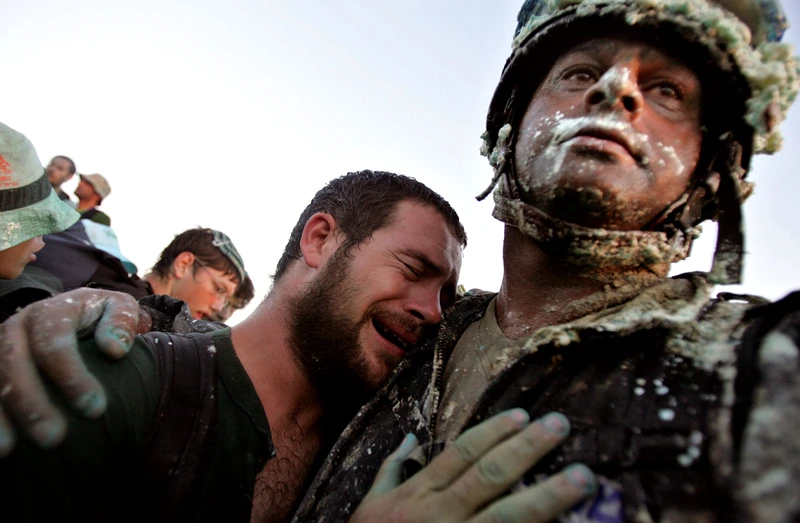
Nonetheless, Levi-Belz and Zerach are optimistic that the IDF and Israeli society as a whole can deal with the issue – as long as we do not shy away from addressing it. And the message to soldiers returning from war must be clear: You are not alone. “We all have an ethical duty to change because of what happened,” Zerach says in conclusion. “To become a more inclusive and compassionate society regarding what happens on the battlefield. Once society is more compassionate, there’s a better chance for rehabilitation.”