



"There’s Been an Increase in Disorders and Suicidal Ideation"
Since the outbreak of the war between Israel and Iran, psychiatric wards for children and adolescents in northern Israel have scaled back their operations and treatment has moved online. Youths suffering from eating disorders, depression and suicidal thoughts have been sent home – and therapists are warning not only of deterioration in their condition, but also of a wave of new patients once the war ends. The mother of one teenager with anorexia: ‘She spent all day in bed and sometimes refused to take her medication. It’s a war within a war’. Published also in Ynet
Since the outbreak of the war between Israel and Iran, psychiatric wards for children and adolescents in northern Israel have scaled back their operations and treatment has moved online. Youths suffering from eating disorders, depression and suicidal thoughts have been sent home – and therapists are warning not only of deterioration in their condition, but also of a wave of new patients once the war ends. The mother of one teenager with anorexia: ‘She spent all day in bed and sometimes refused to take her medication. It’s a war within a war’. Published also in Ynet
Since the outbreak of the war between Israel and Iran, psychiatric wards for children and adolescents in northern Israel have scaled back their operations and treatment has moved online. Youths suffering from eating disorders, depression and suicidal thoughts have been sent home – and therapists are warning not only of deterioration in their condition, but also of a wave of new patients once the war ends. The mother of one teenager with anorexia: ‘She spent all day in bed and sometimes refused to take her medication. It’s a war within a war’. Published also in Ynet
Illustration: Shutterstock
Yael Shani
March 23, 2026

Summary


Listen to a Dynamic Summary of the Article
Created using NotebookLM AI tool
“It happens every time. You reach a stage in life when you tell yourself that it can’t get any harder, then you experience an even worse crisis – and then another one,” says Michal – not her real name – whose 15-year-old daughter suffers from anorexia nervosa and is currently hospitalized at the Ziv Medical Center in Safed. “When the war started, she was released from hospital to home care. During the first few days, there was a rapid deterioration in her condition. She felt as if she had been booted out of her framework and that she had no daily routine. She sank into a depression, spent all day in bed and sometimes even refused to take her medication. It’s a war within a war.”
Michal’s daughter had been hospitalized in the psychiatric ward at Ziv Medical Center for five months before the war broke out. “In October, she was accepted to the ward after a long waiting period and after a lot of pressure from us,” Michal says. “Over these months, there were incidents when she didn’t want to eat at all. During the waiting period, we used to go to the hospital so that they would be familiar with her case.”
Almost three weeks into the 2026 war, hospitals in northern Israel which have psychiatric wards for children and adolescents are under constant rocket fire – from both Iran and Lebanon. When hostilities broke out, these wards were forced to move into protected spaces and naturally became much smaller. Most of the treatment was changed from in person to online. Children and adolescents dealing with psychiatric issues are now being treated via a screen. For some of them, virtual treatment simply isn’t enough.
There are two medical centers in northern Israel which provide inpatient psychiatric care for children and adolescents: the Galilee Medical Center in Nahariya and the Ziv Medical Center in Safed. Many of these minors are being treated there because of court orders following a variety of psychiatric issues, including suicidal ideation, self-harm and eating disorders.
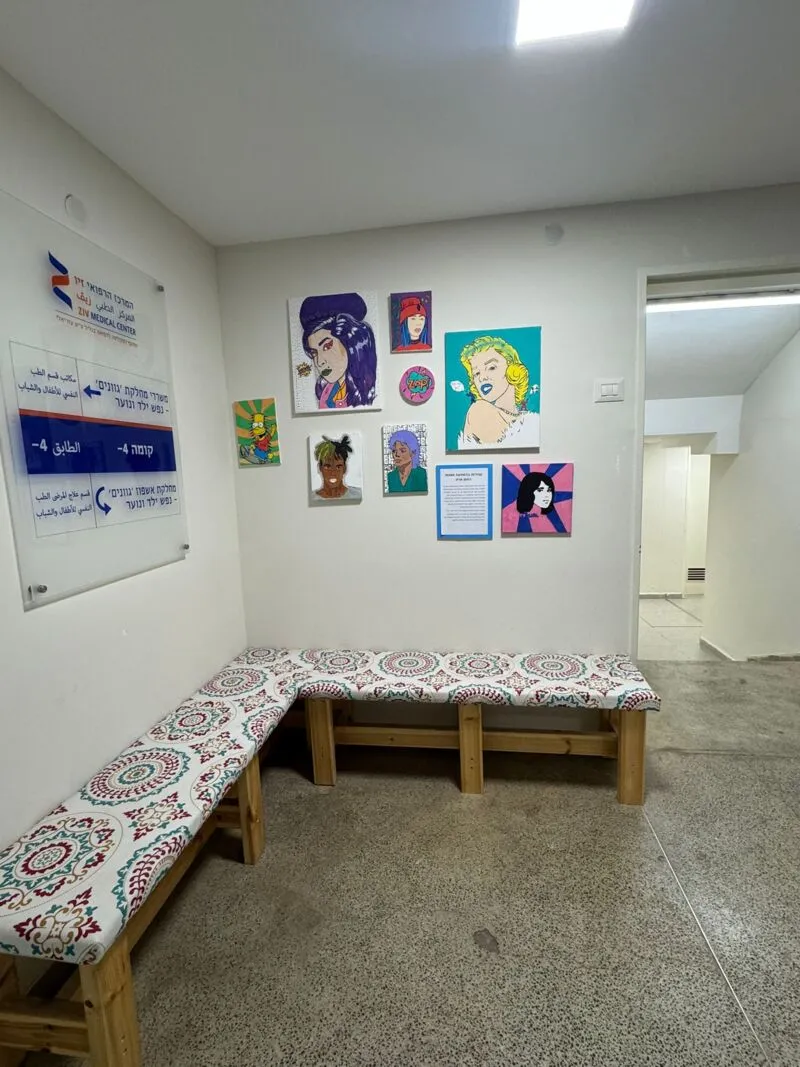
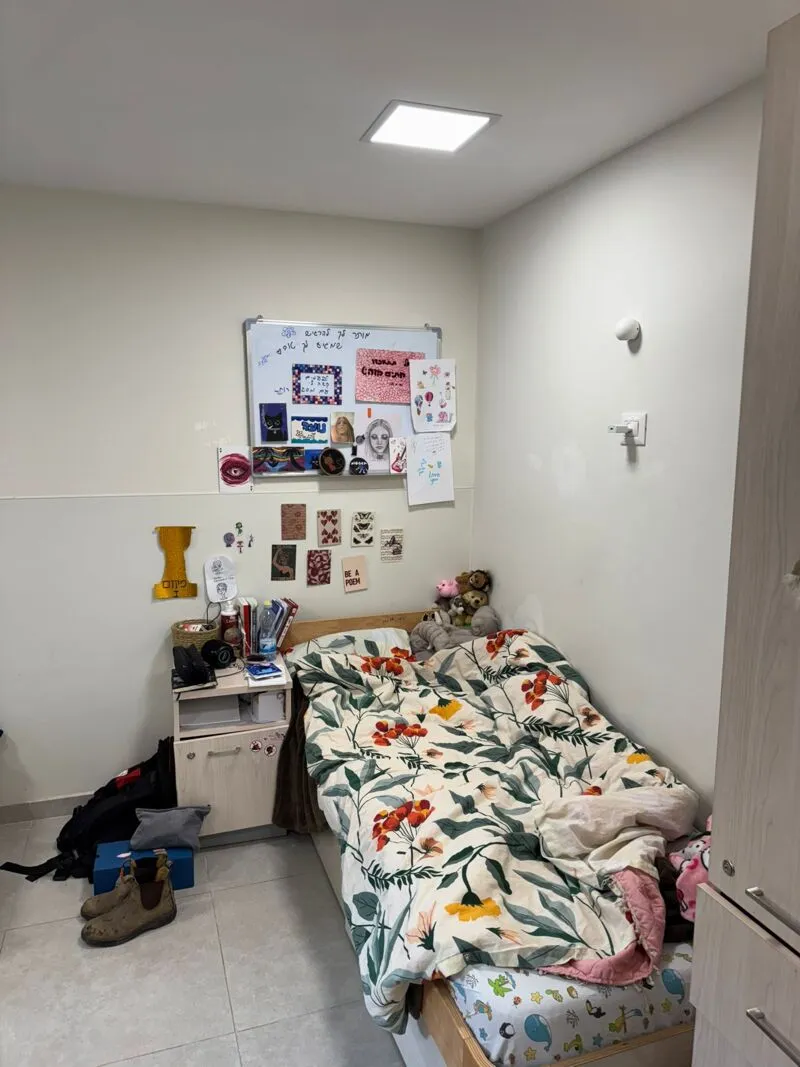
The inpatient psychiatric ward at the Galilee Medical Center has 25 beds. There are currently 13 patients being housed in a protected area and four more are in remote day treatment. In Safed, there are two inpatient wards with 33 beds for full hospitalization and around 15 for day treatment. In addition, the hospital operates 15 mental health clinics and satellite clinics throughout the north, including in Kiryat Shmona, Maghar and Katzrin.
These clinics treat children of all ages and, at any given time, they treat more than 1,000 patients. During the war, the two inpatient wards have been unified into one, which treats just 15 adolescents as inpatients.
“In order to meet the standards for fortified areas, we merged the two inpatient wards into one and we send more than half of the children we were treating to home care – even those who were sent to us by court order,” says Dr. Uri Yatzkar, director of the Child and Adolescent Psychiatry Department at the Ziv Medical Center. “Those children whose lives were not in immediate danger were sent home the very same day, even though we knew that, for some of them, halting treatment could lead to a deterioration in their clinical condition.”
“In cases where closer supervision and more intensive solutions are required – like in severe cases of eating disorders or suicidal ideation – we have already witnessed deterioration"
According to Yatzkar, Israel’s mental health system is among the best in the world when it comes to online treatment. “We are highly experienced when it comes to online treatment, not only because of the coronavirus pandemic but also because of the wars,” he says. He adds that, on Saturday night two weeks ago, the Ministry of Health’s Mental Health Division issued instructions to activate the online treatment program. “The system was operational from the very first morning,” Yatzkar says.
On the one hand, Yatzkar says, there are a lot of advantages to the fact that the healthcare system provides online solutions; on the other hand, when it comes to more complex psychopathologies, this kind of treatment is not always effective. “In cases where closer supervision and more intensive solutions are required – like in severe cases of eating disorders or suicidal ideation – we have already witnessed deterioration,” he says. “During the first week of the war, everyone got online treatment – including the dozens of patients who were released from psychiatric wards and the more than 1,000 children and adolescents who are treated at our satellite clinics. The longer the war goes on, the more we are seeing that this solution is not enough for many of them.”
Mother of teenager with anorexia: ‘At the start of the war, they told me I am now responsible for everything’
Michal’s daughter has suffered from anorexia since she was 13 years old. “It all started when a school nurse weighed her and said that she was close to the top decile. My daughter said that she wanted to consult with a dietician, because she wanted to be able to go to pool parties in the summer. At first, everything seemed fine, but she slowly reduced her daily calorie intake and she was in a state of euphoria over her weight loss. I saw her eating, so I assumed that the weight loss was controlled and that everything was in control”
According to Michal, in January 2025 she understood that this was a lot more than a diet. “We were celebrating my husband’s birthday and, that same night, she started to cry and told us that she has a problem. From the moment she told me, I put cameras everywhere in the house – and I discovered that she was throwing out the meals I made and only having something small to eat in the evening. We sought help in the community, but we were waiting a long time. In the meantime, her weight dropped from 45 kilograms to 40 and her pulse was 50. We were on the verge of full hospitalization.”
In October last year, her daughter was finally accepted into the outpatient clinic at Ziv Medical Center’s psychiatric ward. “The moment she was accepted on the ward, she had a full daily routine – lots of treatment, occupational therapy and structured meals throughout the day.” But, when the war broke out, she was sent home. She is still officially registered with the ward, but the only treatment she currently gets is online. “At the start of the war, they told me I am now responsible for everything,” Michal says.
“The transition has been difficult. We used to wake up every day at six in the morning, get on the bus at seven – and have a full schedule of treatment until five in the afternoon,” Michal says. “Now, I have to care for her, make sure she eats and maintain a routine 24 hours a day – all while the sirens are going off. We live in the Haifa suburbs, but she doesn’t mind traveling an hour and 15 minutes each way to Safed – even during sirens – because she really wants to return to in-person treatments. Her friends from school are busy and all that is left for her is a void that I have to fill.”
"We know that it can’t go on this way for much longer. We are already witnessing more calls to emergency care – including from youths who were relatively stable until recently"

Dr. Rasha Elias is the director of the adolescent psychiatric ward at Ziv Medical Center. “We are very concerned about the children that we were forced to send home for treatment,” she told Shomrim, “because ongoing processes of psychotherapy are being interrupted. We’re trying to maintain some continuity with remote treatments, but it’s not enough. We know that it can’t go on this way for much longer. We are already witnessing more calls to emergency care – including from youths who were relatively stable until recently.”
“We recognize this pattern from previous wars and, when the situation goes back to normal, there’s a wave of children and adolescents in crisis,” Yatzkar explains. “But even now, in a way that is somewhat unusual compared to previous wars, we are seeing an increase in referrals,” he adds. “We see an increase in severe disorders such as eating disorders and suicidality.”
‘During sirens, she falls over and hurts herself. She gets confused. She says that the thoughts about food come back’
The 16-year-old daughter of Inbal – not her real name – suffers from bulimia and was also released from day hospitalization at the Ziv Medical Center psychiatric department. “Now that she’s home, I can see a regression again,” says Inbal. “She’s stressed, tense and anxious. She has fits of anger and tears. Her bulimia is back and, as a result, they increased her medications.”
“We are getting remote treatment from the psychiatric department,” Inbal adds. “I haven’t got a bad word to say about them. They are an incredible team, but it’s still not the same as going somewhere that there’s a large team with a very broad array of treatments. Normally, there’s a bus that comes to pick her up at seven in the morning. She’s at the hospital until four in the afternoon, with a routine, breakfast and lunch, and treatment. Suddenly, all of that stops and they find themselves without any framework, sitting at home with all their fears and all the missiles – and it’s triggering.”
Inbal’s daughter first developed an eating disorder during the summer between fifth and sixth grade. “She went to a swimming camp at school and the lifebelt wouldn’t close around her. The other girls laughed at her and called her fat,” she says. “We thought it would pass, but it got worse. She was diagnosed two years ago and it took a year before we found a place for her. She’s an excellent student, very popular and well liked – but she reached a point when her entire day revolves around eating, vomiting and her thoughts. It’s terrible.”
Inbal recalls a particularly difficult period before her daughter’s hospitalization. “I would spend 700 shekels on groceries and the next morning I would wake up and the fridge would be empty. She would eat all night long and then throw it all up. At the worst point, she was vomiting between seven and 10 times a day. I reached the stage when I put a padlock on the fridge and hid food in the trunk of my car. Now she has been recognized as having a 100 percent disability allowance from the National Insurance Institution. Her disease has led to heart problems, as well as an issue with her vocal cords because of acidity in her stomach.”
Inbal adds: “As the war continues and there are more and more sirens that wake us up at night, she suffers from dizziness and falls and gets injured a lot; she is confused. I talk to her and she disconnects. It is not simple at all. She tells me that the thoughts about food are returning, about eating everything in the house and then vomiting. It is hard for all of us, but it’s especially hard for her.”
Inbal also opened up about the difficulties she has experienced as a single mother with three more children and a job as a teacher. “The moment she comes home, responsibility shifts to me. I do not have the tools; I’m not a psychiatrist or an emotional therapist; I do what I can as a mother. When there are sirens and I also have to work, looking after her is not simple. I miss things quite often because I am not 100 percent available – and I also have other children who need me.”
.webp)
Bitter experience in the north: ‘After the Second Lebanon War, they dealt with related disorders for two years’
Dr. Lyudmila Sandler is head of the Child and Adolescent Psychiatry Department at the Galilee Medical Center and has been working in the field for more than 20 years. She remembers the impact of the Second Lebanon War on children’s mental health. “For two years following the war, we treated the various reactions and disorders that developed in its wake. Currently, while the experience is frightening, there is also a sense of solidarity. However, once a child returns to a routine – whether in school or their social life – and parents’ focus shifts back to work and their livelihood, a reaction may surface. This could manifest as an adjustment disorder, a depressive episode, or a combination of depression and anxiety.
“In 2006, we witnessed a surge primarily as the war drew to a close. When the fighting ended, it was as if people’s internal resources were suddenly exhausted. That was when we saw a flood of referrals and a significant need for intervention. I am concerned that we may see a similar pattern this time,” she says.
Yatzkar adds: “What’s happening now is that we are two weeks into the war and online treatment is not always enough, so we are seeing deterioration. And, at the same time, we are getting new patients who we have not seen before – people who are in a dangerous situation, especially adolescents who have tried to commit suicide.”
Violence in Arab society is undermining the foundations – and children are at greatest risk
When considering the overall picture of child and adolescent psychiatric wards in northern Israel, there’s another figure that needs to be factored in: around 30 percent of the patients at the Ziv Medical Center’s inpatient ward and its satellite clinics come from the Arab sector. For the Galilee Medical Center, that figure is more than 50 percent. The violent atmosphere in which they live makes treatment that much harder.
“Violence has reached an unbearable level. If you add in the conflict with Iran, you’ll see that the Arab sector experiences it as two separate wars,” Dr. Rasha Elias explains. “It means living with a feeling that there is no security, truly at the most basic level. I can even tell you from personal experience; if you pull up at a traffic light and a motorcycle stops next to you, your heart pounds because you are afraid you will be shot. Or when children leave the house and you just worry about what will happen to them,” she adds.
“The Arab patients we treat live with a sense that they are not safe – and that’s true of my Arab colleagues as well,” Yatzkar adds. “When we encounter them in the midst of the war and this overall situation, this issue becomes part of the war itself – and it’s no less dramatic, and perhaps even more so, in terms of the sense of security and the threats involved.”
“I am worried about the chronic and long-term effects of exposure to this kind of reality,” Elias explains. “And then the war broke out, our defense mechanisms don’t work as well and resilience is undermined. Not every child who is exposed to trauma will develop post-traumatic symptoms, but when an entire population is vulnerable anyway – the chances increase dramatically.”
“Studies conducted after October 7, which examined Jewish and Arab children, clearly show that the levels of psychological disorders are much higher among the Arab population than the Jewish population. When an Arab child or adolescent comes to us, they usually arrive in much worse condition than we would like; they only come to us when their disorder has become very serious. We know that the sooner treatment is given, the greater the chances of improvement; and when they don’t seek help in time, they end up being hospitalized right away,” she adds.
Shnina Kasnetz-Stern, a developmental and educational psychologist from northern Israel, says that “based on my experience from previous wars, children experienced difficult things and developed anxieties. They adopted obsessive rituals which help them maintain a sense of security. I also see children who developed eating disorders – and right now it’s starting to happen again. With some of the patients I treat, psychopathologies re-emerge because of wars.”
“based on my experience from previous wars, children experienced difficult things and developed anxieties. They adopted obsessive rituals which help them maintain a sense of security"

“It’s happened again now – with older kids and younger ones. For example, regressive behaviors: children who start wetting the bed again or those who used to be unable to leave their parents’ side but grew out of it have become clingy again,” she adds. “As distress intensifies and depression and anxiety develop, we do not always have the availability or the time to begin long-term psychological therapy.” As a result, there is also an increase in the prescription of psychiatric medications that, under different circumstances, might not have been given.
Inbal is also worried about her daughter’s increased use of medication. “When there were crises before the war, we could drop everything and go for a walk along the beach. When there are sirens all the time, however, we can’t do that. So she gets into a situation where she’s taking more anti-anxiety medication. Before the war, these pills were a last resort in times of crises; now we rely on them far more. She says to me: ‘Mom, I can’t stop thinking about it. My thoughts won’t give me a moment’s peace’.”
Inbal adds that her daughter was due to be released from the psychiatric ward soon. “She’s in 10th grade and, in order to return to school, she needs to be gradually exposed to high school. She has to turn up once a week and then twice a week and so on. She had only just started the process a few weeks ago and then everything came to a halt. They postponed her release because they saw that there was regression as a result of the war.”
“This is an emergency situation,” Dr. Elias says. “But things could get even more challenging when we are back to routine. Then we will see more children, including some who have never needed treatment before. When the routine returns, we recognize that the strength we need has been eroded and that our emotional state could be even worse. I only hope that the current war will not drag on for too much longer, so that we can resume treatment for children who need it, rather than widening the gaps.”