


The 12-Day-War Evacuees: ‘The State Doesn’t Give a Damn About Me. I Have Received Zero Compensation’
Over the past two weeks, some 3,500 Israelis have joined the 12,000 who were evacuated from their homes during the last war with Iran. In most cases, they will end up rebuilding their own homes, while dealing not only with a long period of bureaucracy but also with looting from their homes – from air conditioners and screens to faucets. Shomrim continues to follow the people whose homes were wrecked by missiles and who are trying to rebuild their lives. Published also by Mako
Over the past two weeks, some 3,500 Israelis have joined the 12,000 who were evacuated from their homes during the last war with Iran. In most cases, they will end up rebuilding their own homes, while dealing not only with a long period of bureaucracy but also with looting from their homes – from air conditioners and screens to faucets. Shomrim continues to follow the people whose homes were wrecked by missiles and who are trying to rebuild their lives. Published also by Mako
Over the past two weeks, some 3,500 Israelis have joined the 12,000 who were evacuated from their homes during the last war with Iran. In most cases, they will end up rebuilding their own homes, while dealing not only with a long period of bureaucracy but also with looting from their homes – from air conditioners and screens to faucets. Shomrim continues to follow the people whose homes were wrecked by missiles and who are trying to rebuild their lives. Published also by Mako
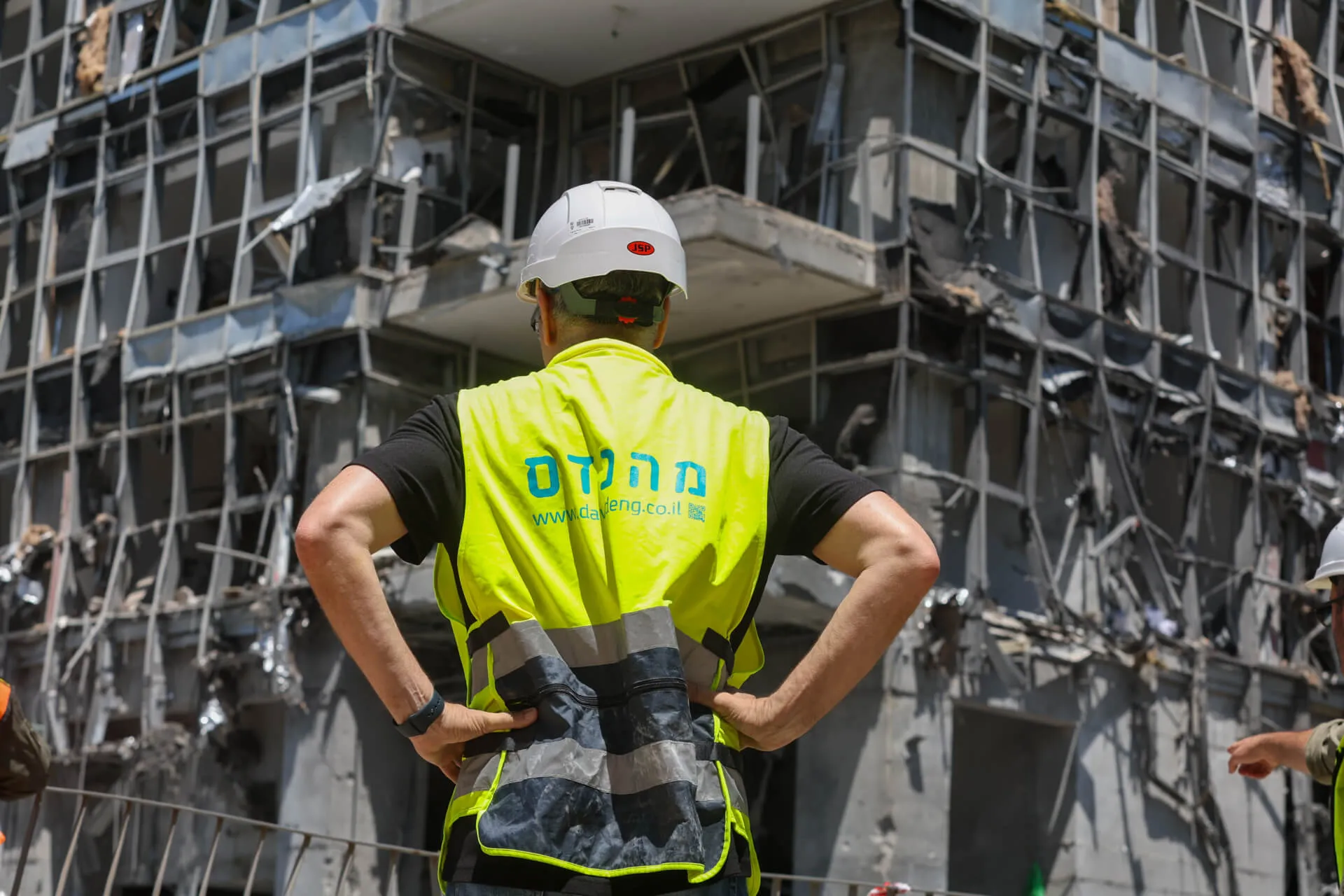
The Ramat Gan building that was hit by an Iranian missile in June 2025. Subject not related to the story. Photo: Reuters

Shuki Sadeh
March 30, 2026

Summary


Listen to a Dynamic Summary of the Article
Created using NotebookLM AI tool
Shomrim first met Orli and Akiva Haim – an elderly couple from Ramat Gan – in a Jerusalem hotel during Operation Rising Lion in June last year. They had been evacuated from their 30-story apartment block in the Tel Aviv suburb after it was hit by an Iranian missile, which severely damaged the bottom 10 floors, including the lobby and the fitness room. At the time, they said optimistically that, according to the building management company, renovations would be completed within six months or so, after which they would be allowed to return to their home. Now, according to Orli, the best-case scenario is that they will return to their home in another two years. In the meantime, they have rented a smaller apartment elsewhere in Ramat Gan. “At first, the residents committee told us that we would have to rent a place for up to a year and no more. But throughout that entire period, they hadn’t even started on renovations,” she says “It’s only recently – just before the outbreak of the current war, in fact – that they told us that renovation would begin imminently. In the meantime, a new war has started, so we have no way of knowing when it will happen.”

One of the other residents of the building is architect Renana Yardeni, the former Central District Planner in the Ministry of Interior, who is also involved in the renovation process. “Right from the outset, an administration was set up to represent the residents, who took charge,” she says. “The administration dealt with all of the details ahead of the start of rebuilding the tower block using expert lawyers and a project director, who are managing all necessary requirements with the Property Tax Authority, including a highly complex itemized cost estimate and price quotes for every aspect of the work. We hold periodic meetings over Zoom with all of the residents, at which we update them on the progress and decide what issues should be on the agenda. Actual work has not yet started because, I believe, it is a far more complex process than building a new apartment block. It will take at least three years from the date of the missile strike – and it is expected to be very expensive indeed even just for the public areas. Apart from that, every resident will have to start a separate process of redesigning their damaged apartment.”
Even though the elevators in the building were paralyzed in the missile strike, looters have made their way into the building to rob from the empty apartments. “I have been burglarized twice already,” says Yardeni. “People climb 20 flights of stairs to steal whatever they can. They stole items with sentimental value – not to mention the horrible feeling that someone with malevolent intent has invaded your private space. I took the most important items with me, but there were so many I had to leave behind. Many of them were stolen. Because of the whole situation and how we had to leave the apartment and our lives so suddenly, it’s hard to keep track of what’s been stolen from how many apartments. Police believe that between 15 and 20 apartments have been looted. It’s disgraceful.”

Orli, Akiva and Renana are just three of more than 12,000 Israelis whose homes sustained some degree of damage during the previous war with Iran in June last year or who were evacuated from their homes. To begin with, the affected structures were divided in three categories: green, red and yellow. Green structures are those in need of minor renovation work, such as replacing windows, and residents usually return home within a few weeks. Red structures are those that have been designated for demolition. In some of these cases, they are old buildings that were in any case in areas slated for development. In the middle are the yellow structures, like the apartment block in Ramat Gan, where residents have to renovate the building themselves and then manage the claims process with the authorities. The upshot of this is that residents have no choice but to become subcontractors and project managers, while simultaneously trying to protect their damaged homes from looters. Indeed, there is hardly a yellow building that hasn’t been looted.
The yellow structures are also usually those that are stuck in a particularly frustrating limbo, neither here nor there. It could take a year, two years or a lot longer. In recent weeks, 3,500 people have been added to the many thousands who are already facing this predicament; of them, 2,800 are in Tel Aviv, Beit Shemesh and Be’er Sheva. While some strikes were fatal and claimed lives, the vast majority of residents now find themselves dealing with buildings categorized as either green or yellow.

"I submitted a claim to the Property Tax Authority over loss of rental income, but I haven’t received any money yet. I spend a lot of time dealing with it and there’s so much paperwork and bureaucracy."
‘I never thought I would be in this situation’
What lies in store for these people? A glimpse into the likely bureaucracy they can expect is provided by N, who owns an apartment in central Israel that was damaged by a rocket and who prefers to remain anonymous. Last June, a missile hit a tree in the yard of a nine-floor apartment building. Most of the residents were in the public bomb shelter on the other side of the street at the time. The damage was huge. Internal walls collapsed in almost every apartment; windows were shattered and furniture destroyed. The foundations of the building remained steady, however, according to a structural engineer’s report three days after the strike. Since then, in addition to getting used to their new status as evacuees, N and her neighbors have also faced the challenge of rebuilding and renovating their apartment block.
For them, this has been a Sisyphean nightmare, with fresh and unwelcome surprises waiting at every turn. For example, just a few weeks ago, contractors came to the building and discovered that there was a flood. “We couldn’t work out how it happened, since the water supply to the building was turned off months ago,” says N. “But then one of the contractors who has been helping us explained that it was because some of the faucets broke and others were stolen, so whatever water was left in the pipe flooded the building.” As a result, she adds, “it’s now difficult even to enter the building. There’s mold and mildew everywhere. It also caused the wooden framing inside the apartment ceilings to fill with water.”
N is furious by the fact that she now has to deal with additional damage caused by stolen faucets in a building already hit by an Iranian missile. “They tore off the faucets, stole computer screens and televisions – they even stole air conditioners. There were also cases of damage for its own sake, vandalism, pure and simple. We have guards and we pay the municipal security levy – but nothing helps.”
N does not come from the world of real estate. She works in a caregiving profession and her daily life is far removed from construction, civil engineering or the accompanying bureaucracy – but, left with no alternative, she decided to join the housing committee in order to help expedite the renovation and, to a large extent, help her get her life back on track. “I never thought I would find myself in this situation. Just recently, before the outbreak of the current war, it had seemed that things were going in the right direction. Although the structural engineer said at the outset that the building would not have to be demolished, we only got final confirmation that it was stable a week ago. For the months that passed, we’ve been dealing with the gradual move-out from the apartments, as each unit has to move forward with its own interior renovations at the same time as the building itself is being rehabilitated. That means finding a contractor and a supervisor and submitting a detailed list of the required materials to the Property Tax Authority. Sometimes, one thing depends on another; in our apartment, for example, they found cracks in the exterior walls – which means that there is a structural issue for the whole building. In short, it’s a massive headache that we have to deal with – and it’s interfering with our lives.”
Ron Avisar – the owner of an apartment in Haifa that was damaged in the previous war – is also stuck in a yellow limbo. He describes a similar situation. “I have made no substantial progress,” he says. “They only started to renovate the building about a month ago, but it’s impossible to know when it will be ready. I submitted a claim to the Property Tax Authority over loss of rental income, but I haven’t received any money yet. I spend a lot of time dealing with it and there’s so much paperwork and bureaucracy. We’ve also had looters in the whole building. Whatever was left in the apartments was stolen. They’ve broken in several times. They especially wanted the air conditioning units, probably for the iron.”
‘Property Tax officials threatened to throw us out of the hotel’
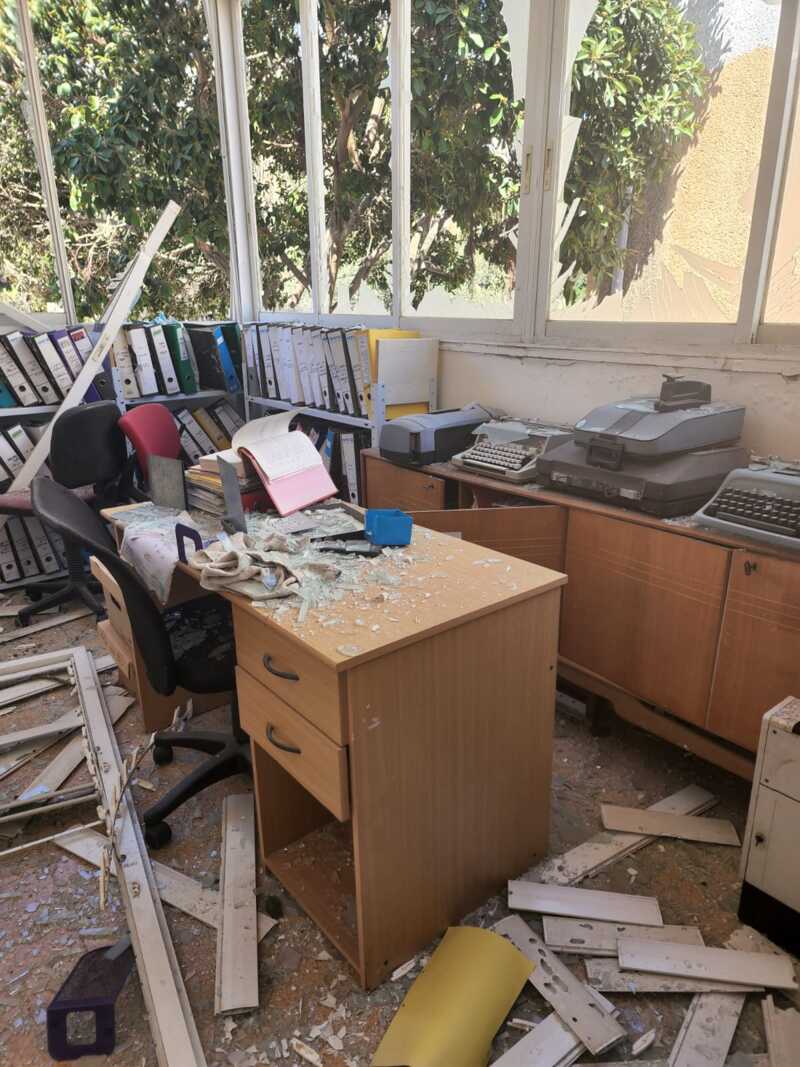
Although the worst headache belongs to people who own apartments damaged by missiles, spare a thought, too, for people who rented apartments in these buildings and who are still suffering, months after the incident. Take, for example, attorney Yael Pinkas, who owns a law firm in Haifa and who just this week cut her hand on glass shards left inside files brought from her previous office, which was damaged in a missile strike.

From her new rented office, she or her staff make frequent trips to the ruined site to retrieve the bulky files required for client deals. Even though months have gone by, she says she is yet to receive any compensation from the Property Tax Authority. “The state doesn’t give a damn about me,” she says. “What I have learned from this whole story is that I can’t count on anyone apart from family, friends, colleagues and dedicated workers. To this very day, I have received zero compensation. The Property Tax Authority told me to submit receipts. I submitted a claim through the 30,000 shekel fast-track, but then I was notified that the application was closed and transferred for individual handling. I paid everything – all of the very hefty expenses. For relocating to a new office, new office equipment, furniture, filing cabinets – everything. I’m not going hungry, but all of this move has had an impact and the expenditure is crazy. It also feels terrible. It’s hard to go back to an office that I worked in for more than 30 years and see the destruction. We’re just lucky that the archive of files was stored at the other end of the office and wasn’t damaged.”
“What I have learned from this whole story is that I can’t count on anyone apart from family, friends, colleagues and dedicated workers. To this very day, I have received zero compensation."
.jpg)
Attorney Haya Mena has a rather different complaint about the Property Tax Authority. She owns an apartment in the same Ramat Gan block as Orli and Akiva Haim, but she claims that the state has not paid her the rent that it was supposed to according to special law passed in the aftermath of the previous Iran war. The reason is that, according to the law, if the apartment is registered in the name of a company, it is that company which is paid compensation. In Mena’s case, she claims that the mere fact she was registered as a business owner – even though the apartment was not under the business name – led Property Tax officials to determine that she was not eligible for rent. “It doesn’t make any sense that some residents get compensation for rent and some don’t,” she says. “In January, I got notice saying that my request was being denied. A day later, I submitted an appeal, which was entered into the system two weeks later. I have been waiting since then. In the meantime, I am paying an astronomical sum every month for the mortgage. I am breaking into my savings for this. I have fewer clients during wartime and my cash flow is worse. I’m a strong woman and I won’t let this break me. It’s clear to me that, in the end, I will get what I deserve, but I feel sorry for anyone who has to work with the Property Tax Authority.”
One such person is Yehudit Zanzuri, who was evacuated from a building destroyed by a missile strike on Bat Yam last June. Zanzuri, who works as a kindergarten assistant, was evacuated from her home and forced to spend two months living with her mother – until recently finding an apartment for 4,200 shekels ($1,350) a month, which is 1,000 shekels more than she was previously paying. She says that she was treated very poorly by officials from the Property Tax Authority, who urged her to leave the hotel that she was staying in for the first two months after the missile strike. “The official would attack us all the time,” she says. “They would threaten to throw us out of the hotel or that we would have to pay for the rooms ourselves. When they called up to see how we were getting on, they would scold me for doing nothing, saying that we’re enjoying life in the hotel – as if I chose to go through such a traumatic experience. I explained that I don’t have the resources to pay for a more expensive apartment, no matter what. They would also call when I was working with children in the kindergarten. That pressure was one of the most difficult things I experienced after the missile strike. I very much hope that they have learned the lesson and are not behaving that way any more.”
According to Kati Piasecki, a long-serving Meretz member of the Bat Yam city council, many of those renting apartments in the complex that was hit are now dealing with the same problem: a rise in the cost of rental since their apartment was struck. “There were 2,600 tenants there, which is 70 percent of the evacuees,” she says. “Suddenly, rent jumped from 3,200 shekels to 5,000 shekels. The state stopped paying for anyone whose lease expired in August. In my estimation, this is just the beginning of the problem. At a certain stage, the state will have to find a legislative solution to the problem – or some other kind of solution. We’re about to start seeing a wave of people who cannot afford to pay rent in their new apartment when their contract expires. We can fix the structural damage; we’ll find a way. The social damage caused by this whole episode, however, will take many years to fix.”
The Property Tax Authority said in response: “Hotel evacuation was intended as a short-term solution until a long-term arrangement could be made – either returning to a rehabilitated building or moving into a rental funded by the Compensation Fund. The Compensation Fund assists those in need of alternative housing to find a suitable home, as necessary. This includes help from the Ministry of Construction and Housing in locating an apartment, as well as funding for brokerage and moving expenses. If it is determined that an evacuee cannot find housing comparable to their damaged home at the price they were previously paying, funding for higher rent may also be approved.”
The response went on to say that “the claim that a homeowner is not compensated if they are registered as a business is incorrect. Regarding Ms. Mena’s specific claims: her case was rejected, she filed an appeal and we are currently reviewing her appeal and will provide a final answer shortly.
“The claim regarding non-payment of compensation for contents or damage to a homeowner or business owner is unclear. Should there be a specific case, we would be happy to look into it.”