


They are only too familiar with the scare tactics – from ‘It will damage your uterus’ or ‘No one will want to marry you’ – and the rabbis saying that army service has ‘driven our girls crazy.’ The state religious education system keeps pushing them to opt for national service instead. But the reality is that one out of every two religious girls chooses to enlist in the IDF, with a surge in religious women in combat roles. A special report featuring all the voices – from the Ulpana and the pre-military academies to the induction center
More Religious Israeli Women Are Enlisting and Challenging Traditional Barriers
They are only too familiar with the scare tactics – from ‘It will damage your uterus’ or ‘No one will want to marry you’ – and the rabbis saying that army service has ‘driven our girls crazy.’ The state religious education system keeps pushing them to opt for national service instead. But the reality is that one out of every two religious girls chooses to enlist in the IDF, with a surge in religious women in combat roles. A special report featuring all the voices – from the Ulpana and the pre-military academies to the induction center
They are only too familiar with the scare tactics – from ‘It will damage your uterus’ or ‘No one will want to marry you’ – and the rabbis saying that army service has ‘driven our girls crazy.’ The state religious education system keeps pushing them to opt for national service instead. But the reality is that one out of every two religious girls chooses to enlist in the IDF, with a surge in religious women in combat roles. A special report featuring all the voices – from the Ulpana and the pre-military academies to the induction center
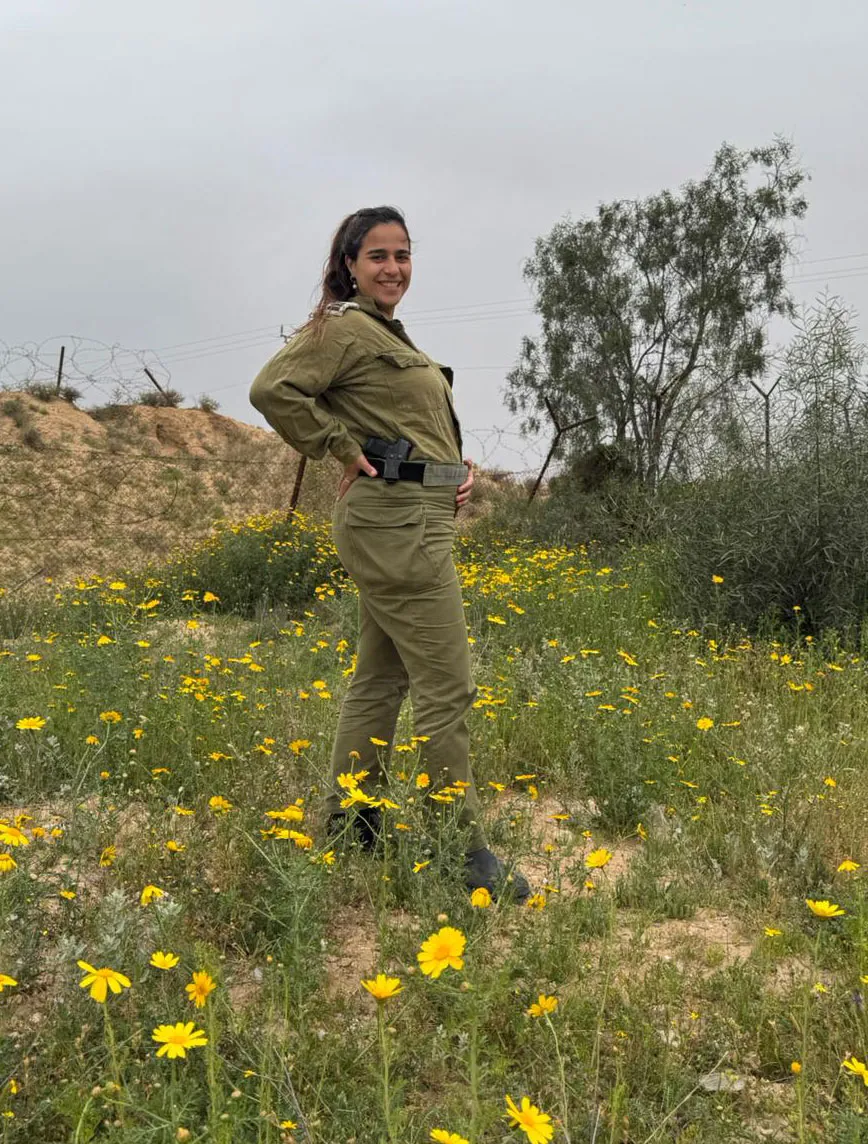
Rinat Levy, a reserve officer. Photo courtesy of the subject

Shuki Sadeh
April 28, 2026

Summary


Listen to a Dynamic Summary of the Article
Created using NotebookLM AI tool
During her military service, Rinat Levy – now 26 – served as a company commander in the Home Front Command’s Search and Rescue Brigade. She completed her compulsory service in 2024 but was immediately called back for reserve duty which lasted until just a few weeks ago. She grew up in Katzrin on the Golan Heights in a national-religious home, which she describes as “a house that was full of Zionism and values.”
“I always knew that I would join the IDF and that I would be an officer,” she says in the conversation with Shomrim. She adds that she decided to serve in the army despite the negative feedback she received from some of those around her – including the Ulpana in which she studied and some of her relatives. “My parents would have been a lot happier if I had done national service instead. They were worried by some comments from the national-religious camp – things like ‘It will damage your uterus’ or ‘No one will want to marry you.’ My brothers kept on telling me that I would become half girl-half gorilla. Now, I know it was all nonsense and stupid scare tactics.”
Even in civilian life, Levy has not strayed far from the military framework. She works as a combat fitness instructor for religious girls who are about to join the IDF. “When girls come to me from religious households for combat fitness training, I can see just how ignorant they really are,” she says. “They have no idea how things work – and that bums me out. There is a dissonance between the amount of values that they inject straight into your veins and the choices that you have to make in the end. When Ulpana girls tell me that military service will ruin their uterus, I show them my beautiful baby bump. I had that bump during my most recent reserve service, too. Over time, my parents became proud of me. That’s important; who doesn’t want the support of their parents and the people surrounding them?”

Levy is a member of Women Warriors Community, which is run by Forum Dvorah in order to advance women in the fields of security and foreign policy. The Community provides a dedicated space for women serving in combat roles within the IDF, offering them both personal and professional guidance and support. According to Levy, the Ulpana in northern Israel where she studied encouraged students to sign up for national services and even organized open days so that students could get to know the various places that offer national services. In addition, she says, the Ulpana would also happily sign a declaration in the girls’ name, exempting them from military service for religious reasons. Now, she adds, things have changed slightly – but not significantly. Last week, on the same day that Shomrim spoke to Levy, buses left the Ulpana where she studied for the rabbinical courts, where students signed their exemption declarations in their own names.
This is not the only Ulpana where the signing of the exemption declaration is handled in a centralized manner. Galit Yismach-Moshe, who has two daughters who both served in the IDF, tells Shomrim that teachers at her daughters’ Ulpana unambiguously tried to encourage students to opt for national service rather than military service. “They didn’t provide transport for the girls, but they brought a rabbi to the Ulpana to get them all to sign at the same time,” she says. “In fact, the whole atmosphere at the Ulpana was aimed at promoting national service. At the end of 12th grade, they hang up a big map of Israel and all the girls are supposed to stick a pin in the community where they will be doing their national service. Those girls who are enlisting cannot stick their pin in because they don’t yet know where they will be serving. Apart from that, some of the teaching staff told the girls that serving in the army isn’t ‘modest’ and that it ‘isn’t for girls.’ There was a sense that the Ulpana did not respect the girls’ wishes when they said that they want to serve in the army. At the same time, the rabbi in charge of the Ulpana did actually back them and told them that he would be there for them if they needed any help during their military service.”
Rabbi Ohad Teharlev is head of the Midreshet Lindenbaum seminary and founder of Maaminot BeMadim (“Believers in Uniform”) organization, which provides advice and guidance for religious girls interested in enlisting into the IDF. He is only too familiar with the messaging that Levy and Yismach-Moshe mentioned. Speaking recently on the Meshartot B’Enuma (“Serving with Faith”) podcast hosted by the Aluma NGO, he said that, “the question of girls enlisting into the IDF is not one of Jewish law; it is an educational and spiritual question. Honesty is a very important value in the religious world. And if we are being honest, there is no reason a girl cannot serve in the military. There are some places in the army that are better suited and some places that are more of a challenge. The same is true for national service. Therefore, the question is who are you and what do you do. But to say that a girl isn’t capable of serving? Girls can deal with anything.”
In the same interview, Teharlev adds: “It pains me to say this, but there are some girls who will sign the exemption declaration just because they didn’t get the posting they wanted. As far as Judaism is concerned, that’s like lying. The fact that Ulpana heads provide buses to take the girls to sign en masse is also educating them to lie. They tell the girls that they cannot join the army – but it’s not true. We know that there are solutions [in the framework of military service]. There’s no reason today for a girl not to enlist into the army.”
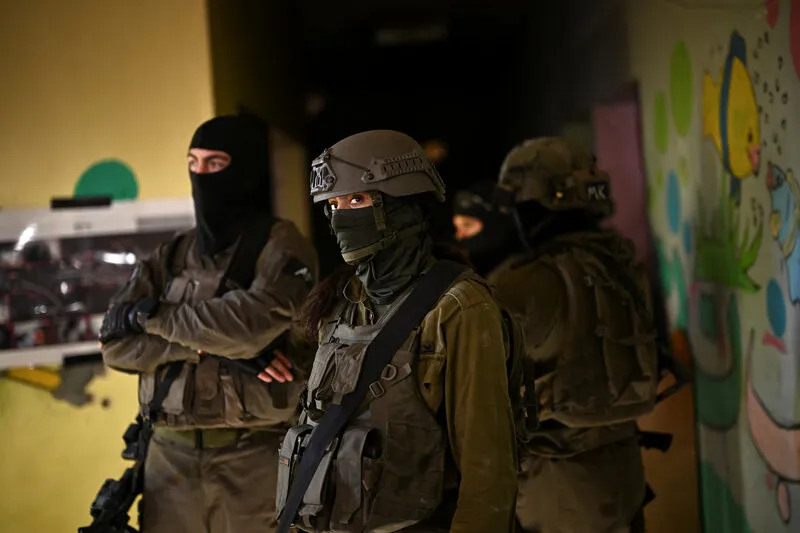
More girls enlisting, more in combat roles
Just before the outbreak of the latest round of the conflict with Iran and Hezbollah some two months ago, the issue of women serving in the IDF was one of the most pressing on the Israeli national agenda – as covered extensively by Shomrim. The campaign led by Nationalist Haredi groups focused mainly on women serving in combat units. The primary concern was the potential mixing of men and women on the battlefield and much of the immediate pushback targeted a pilot program for recruiting women into maneuvering tank units – even though the issue was not even on the table yet and was not slated for discussion until November. Last week, Ynet reported that a group of rabbis opposed to the planned pilot held an emergency meeting on the matter. IDF chief Eyal Zamir, meanwhile, said this week that “women will not be excluded from the IDF. Integrating women is moral, equitable and an operational necessity.”
Since the pilot program is only planned for the end of the year, the timing of the campaign suggests a different motive. It appears the real reason was to capitalize on the public debate regarding the Haredi draft law. By doing so, these groups were able to emphasize their positions regarding women serving in the IDF. This included issues regarding modesty; of late, there have been several scandals involving the infringement of secular female soldiers’ rights concerning dress codes or excessively harsh punishments. One such example was the prison sentence handed down to Border Police officers for holding a barbecue on Shabbat.
Organizers of the campaign are less keen, however, to discuss the fact that there has been a sharp rise in the number of girls being enlisted into the IDF – even among religious girls. The most recently published figures show that at least 40 percent of girls graduating from the state religious education system opt to enlist into the military, rather than declaring that they are exempt for religious reasons. The real figure today, however, is expected to be even higher, at around 50 percent, given that the most recently published numbers come from two years ago and are yet to fully factor in the increase in motivation to serve due to the October 7 war.

Given that there has also been an increase in the number requests from religious girls to serve in combat units – and an increase in the number of girls who, since the October 7 massacre, have requested to annul the religious exemption they were given in advance – one can very much understand the panic that leaders of the Nationalist Haredi camp are currently experiencing. The most often cited comment in this context was made by Rabbi Yigal Levinstein, who heads a pre-military academy in the settlement of Eli. Back in 2017, he spoke to students about girls serving in the IDF and told students that, “They’re driving our girls crazy. They draft them. They go in Jewish and they’re not Jewish when they come out.” A similar sentiment has persisted with varying degrees of intensity in Nationalist Haredi circles, but it has gained significant momentum over the past year. For example, several rabbis have come out against women serving in the IDF and are actively trying to discourage the army from drafting them – or, at least, not to enlist them into combat units.
The official position of the state religious education system also seeks to encourage girls to volunteer for national service – and organizations like the abovementioned Aluma NGO are very much frowned upon. “Notwithstanding the significant increases of the past two years, the policies of the state religious education system have not adapted,” says Hadas Yonatan, head of Aluma’s “Serving with Faith” project. “We say that it is possible to be a female soldier in the IDF. They say that they won’t allow girls from the state religious education system to be enlisted. So, it’s obvious why I’m like a red rag to a bull for them.”
According to the head of one of the religious pre-military academies, rabbis from the Nationalist Haredi stream emphasize issues like health concerns or the prospect of men and women serving together in the same tank – something that doesn’t actually happen – when speaking publicly about joint service. In reality, however, they are categorically opposed to women serving in the military at all. “They deliberately use the narrative of warfare and combat because they know it resonates with more people,” he says. “The real story is the very fact that women are being drafted into the army. They are fundamentally opposed.”
Attorney Yair Nehorai, whose book, “The Third Revolution,” warned against efforts to replace Israel’s secular, liberal democracy with a theocracy, has been studying the influence of the Nationalist Haredi stream on Israeli society. “What you are hearing now is messages that have existed within those circles for decades. That is what they are being taught at the messianic pre-military academies. That’s how they are educating your soldiers, who then go on to assume key positions in the military. It’s something a lot more profound than some discussion or other on Channel 14, because it’s having an impact on what’s happening within the IDF.”
‘We have rabbis’ daughters coming here’
The changing attitudes of religious girls is also plainly evident in the pre-military academies, which have registered a steep climb in demand since the October 7 massacre. Not just in the standard, co-ed academies, but also in the small number of academies for religious girls only that have been set up. The Lapidot Academy, for example, says that it received applications from around 1,200 religious girls last year, all hoping for one of the 60 places available on the course. According to academy head Nir Yehuda, Lapidot usually gets between 400 and 600 applications a year. “This year was something crazy,” he told Shomrim. “I assume that it isn’t necessarily something to do with my academy – that it’s suddenly popular – but rather a more general trend. There is a phenomenon here; a very dramatic change which is linked to religious girls’ motivation to serve in the IDF. I can see that the change is not just in terms of quantity; it’s also the quality. We have girls coming here from Ulpanot that are considered conservative, the daughters of rabbis who go on to serve in very important roles in the IDF.”
Another academy which has experienced a surge in demand over the past two years is the Tzahali Academy, which is dedicated to the memory of Tamar Ariel, a religious Air Force navigator who died in 2014. Tzahali is one of the proactive academies, which caters for girls who have already decided that they want to serve in the IDF. This contrasts with Lapidot, which is a retroactive academy; in other words, it does not take an official position in terms of army service, but provides assistance to any girl who decides to enlist. Graduates of Tzahali are more likely to enlist to combat units and, during the most recent conflict, have fought shoulder to shoulder with male troops.
A. serves as a combat soldier in the Border Protection Corps and is a member of the Forum Dvorah female combatant community. She told Shomrim that it was the combat role itself that attracted her to IDF service. In her role stationed on the seam line between Israel and the West Bank, she is involved in routine security operations as well as more offensive activities, such as accompanying Palestinians detained by the Shin Bet (Israel's internal security service ). She does so without it affecting the level of her religious observance. “I am in a place which respects me very much when it comes to my religion and observing commandments,” she tells Shomrim. “Once a week I also have the option of study days and Torah classes. They take care of everything I need. I see the comments of people who are against girls in combat roles, but it doesn’t bother me because I know what the reality on the ground is. Most of my company is girls; there’s no difference between the boys and us. There is a graduated training program, and anyone who makes it through is a combat soldier – male or female – in every sense of the word. It’s not too difficult; you just have to do what they tell you.”
A. adds that “we won’t be stopped by some criticism on television. So, if a young religious girl is thinking about it and asks me what to do, I would tell her that a combat role is the most intensive thing, that you don’t get to go home very often – and after all that, that it’s an experience that stays with you your whole life and is very gratifying.”
.webp)
‘The army is in an impossible situation’
One of the problems that academies in general – and religious academies in particular – are dealing with is the limited number of places. According to figures published by the Knesset’s Information and Research Center earlier this year, there were 1,515 places for boys at religious pre-military academies, compared to just 205 for girls. In non-religious academies, girls actually have more places than boys – 1,840 to 1,507. This, of course, also affects the funding for the academies – which comes from the Ministry of Defense and the Ministry of Settlements, headed by Religious Zionism ministers Bezalel Smotrich (in his role as minister at the Ministry of Defense) and Orit Strock – since the budget is determined by the number of students in each academy.
“The lack of places for religious girls is a significant problem,” says one former official from the Council of Pre-Military Academies. “Tzahali and Lapidot, which are perfect academies for religious girls, have too few places. The Ministry of Defense won’t increase the number of places. I don’t know whether that’s because of pressure from the rabbis, but I am certain that the rabbis aren’t pressuring them to increase the number of places.”
“It’s really one big headache for the army, because it wants religious soldiers and the rabbis who oppose female service are very dominant,” says the head of one academy. “On the other hand, anyone who is actually on the ground knows what a massive contribution female soldiers make in every respect – especially religious female soldiers. The army is in an impossible situation here. During wartime there may be some things that they can turn a blind eye to, but when it becomes routine it becomes more complicated.”
All of this is happening at a time when the Ministry of Defense has a policy on the issue – even if it does not like to wave it around in public. In the Ministry of Defense's annual freedom of information report, there is a chapter dedicated to the Defense and Society Department, which is responsible for pre-military academies. In the 2023 report, it was stated that the following year would require “an effort to increase the potential number of combat recruits: Haredim, religious girls, Diaspora Jews, Bedouin, Muslims and Christians.” Exactly the same thing appears in the 2024 report with regard to efforts for 2025. In previous reports, from 2022 and 2021, this wording does not appear – which perhaps points to an increase in the recruitment potential as a result of the war and the need for manpower.
The Ministry of Defense's Defense and Society Department is also responsible for organizing high school workshops in preparation for military service and meetings between upper schoolers and “male and female combat soldiers and officers within the school framework,” in the words of the report. At the same time, despite the official effort to increase recruitment among religious girls, IDF officers will not step foot in Ulpanot or other religious educational institutions for girls and do not run preparation workshops there.
But it is not just the army that isn’t allowed in. NGOs which encourage girls to serve in the military also find it hard to get access to female students in the state religious education system. After attorney Amnon Lorch filed a High Court petition several years ago, the Ministry of Education established criteria for funding preparation workshops for female students in state religious schools as well, with a dedicated budget of approximately 11 million shekels (around $3 million) per year. At the same time, a Shomrim analysis reveals that, in practice, even today most of that budget is used for activity in boys’ schools, while only a fraction reaches schools for girls. Since the funding is designated for “encouraging service,” some of it is also used to encourage national service.
Either way, since this move was launched, the Aluma NGO has been getting an annual budget of around 500,000 shekels to run its workshops, but it is still not allowed into every school. Hadas Yonatan says that she is allowed into around half of the schools. Aluma also holds an annual conference, in cooperation with the Ministry of Health, where religious girls can go for information about military service. Additionally, there are three days a year when religious girls visit military bases and receive training as Gadna cadets from IDF soldiers.
.webp)
‘A no entry sign just means you can enter somewhere else’
Notwithstanding the rigid official position of the state religious education system, it appears that not all religious high schools in Israel toe the line when it comes to girls serving in the IDF. There are three main education networks operating within the state religious system: Amit, Bnei Akiva and Tzvia. Bnei Akiva and Tzvia are seen as more conservative – especially Tzvia, which is viewed as closest in ideological terms to the Haredi Nationalist camp. In February, Rabbi Eitan Eiseman – the founder of the Tzvia-Noam network, appeared on a podcast hosted by channel 7, in which he said that “enlisting girls is an ethical and moral problem. The IDF is not currently set up in a way that allows girls to serve. The issue of modesty still needs addressing. We cannot allow the girls to walk around in places where they are insufficiently protected.”
Rabbi Dr. Yona Goodman, Bnei Akiva’s national director of education, was less rigid in his response to a similar question when he appeared recently on the Meshartot B’Enuma podcast. “We are less keen on it at the Bnei Akiva network,” he said, “but the girls can do whatever they want. That’s why the message is complicated. As a starting point, I would say that we prefer national service, but it is our duty and honor to accompany those who go into the army as well.” In the same interview, Goodman added that 27 percent of the graduates of his organization enlist into the IDF.
Amit is considered a more liberal network and even has Ulpanot that encourage girls who want to serve in the military. For example, at the Yeshurun Ulpana in Petah Tikva, a “joint call-up” day was held, similar to other schools where an entire class goes together to the induction center when receiving their first call-up notice. “What happens in the schools depends on the principal, whether she is for or against, which, to a large extent, depends on the parents,” says Nirit Leibowitz, a former chair of the PTA at an Amit Ulpana in Givat Shmuel. “In Givat Shmuel, the parents are in favor and Aluma was openly allowed into the school, but other Ulpanot in the region do not allow Aluma in because the principal opposes girls serving in the IDF. The main problem is that most of the Ulpanot which refuse to let Aluma in are more conservative and the girls come from a more insular society. And then, when they go to the army, it’s harder for them because they were not exposed to a lot of vital information in advance.”
This information gap is something that Hadas Yonatan from Aluma knows all about. “According to an IDF tutorial published on the website for recruits, proper preparation can raise a recruit's psychometric rating by 20 points, which significantly expands their range of potential roles. If a candidate misses out on 20 points, she pays the price, not the school principal. Many girls fail the personal interview because they don’t come prepared. Because of things like this, we emphasize how critical it is to get prepared and to know what you are getting into. We recognize the challenges and the official position of the State Religious Education Administration, but we aren't giving up.”

“Unfortunately, the State Religious Education Administration has not changed its position,” adds Rabbi Teharlev. “But we can reach these girls not only through the school gates, but through the school of life – the digital world and social media. A ‘no entry’ sign just means you can enter somewhere else, in at least five different ways, legally. If you believe in the path, you’ll find a way in. You can’t be stopped.”
In recent years, Taharlev has been working to establish dedicated gender-segregated frameworks where religious girls can successfully integrate. These frameworks would include weekly meetings with a spiritual mentor to strengthen the religious component of their service. So far, there is only one such unit – the Combat Intelligence Collection Corps, which has gender-segregated platoons. Other attempts by Taharlev to promote gender-segregated units have not succeeded; he says this is due to insufficient demand from the girls themselves, partly because they are more interested in units with a higher level of combat intensity. “That’s fine,” he says in conclusion. “My interest is to provide a solution to the religious women in the group. For example, somewhere that they can have a weekly meeting with a spiritual counselor. The idea is to create frameworks to let as many religious women as want to enlist into the IDF. If you build the right infrastructure, the sky’s the limit.”
Responses: There is no sweeping ban on the activity of IDF officials or NGOs in schools; the matter is determined according to the discretion of the institution’s management
The Ministry of Education submitted the following response: “State religious education encourages meaningful service, with the choice of service track deriving from the lifestyle and community of the students. The ministry supports both tracks – national-civic service and service in the IDF – and provides information and tools for making an informed decision. In recent years, the ministry has improved its solutions for female students interested in military service, including increasing the dedicated budget for guidance and counseling. Contrary to what has been claimed, there is no sweeping ban on the activity of IDF officials or non-governmental organizations in schools; the matter is determined according to the discretion of the institution’s management and supervision. The minister’s policy in this context is clear and consistent: to encourage and enable military service for graduates who wish to pursue it.”
The Ministry of Defense responded: “The Defense and Society Department in the Ministry of Defense operates IDF preparation programs and support programs to encourage meaningful enlistment among target populations, such as religious girls, across all high schools, midrashot and Ulpanot, as well as among interested non-profit organizations. Among other initiatives, the department operates a dedicated Gadna for religious girls, and Haznek pre-military academies with dedicated groups for religious girls are expected to open in the coming months.
“Regarding your question about pre-military academies, we note that female graduates of the state religious system integrate in high percentages into both mixed academies and five academies and branches dedicated to religious girls. We further note that the Defense and Society Department in the Ministry of Defense is working to expand the general pre-military academy enterprise; as part of this, the number of male and female participants across all frameworks was increased by approximately 10 percent in 2026-2027.”