



Over a Decade Late Israel Launches National Pilot to Reintroduce Magnesium to Drinking Water, Funded by Private Money
The absence of magnesium in desalinated drinking water significantly spikes the risk of heart disease, diabetes and dementia. Netanyahu ordered a national pilot to restore the mineral back in 2012, but his declarations led to nothing. Now the project is finally underway—but funded entirely by private entities rather than the government. A Shomrim investigation
The absence of magnesium in desalinated drinking water significantly spikes the risk of heart disease, diabetes and dementia. Netanyahu ordered a national pilot to restore the mineral back in 2012, but his declarations led to nothing. Now the project is finally underway—but funded entirely by private entities rather than the government. A Shomrim investigation
The absence of magnesium in desalinated drinking water significantly spikes the risk of heart disease, diabetes and dementia. Netanyahu ordered a national pilot to restore the mineral back in 2012, but his declarations led to nothing. Now the project is finally underway—but funded entirely by private entities rather than the government. A Shomrim investigation
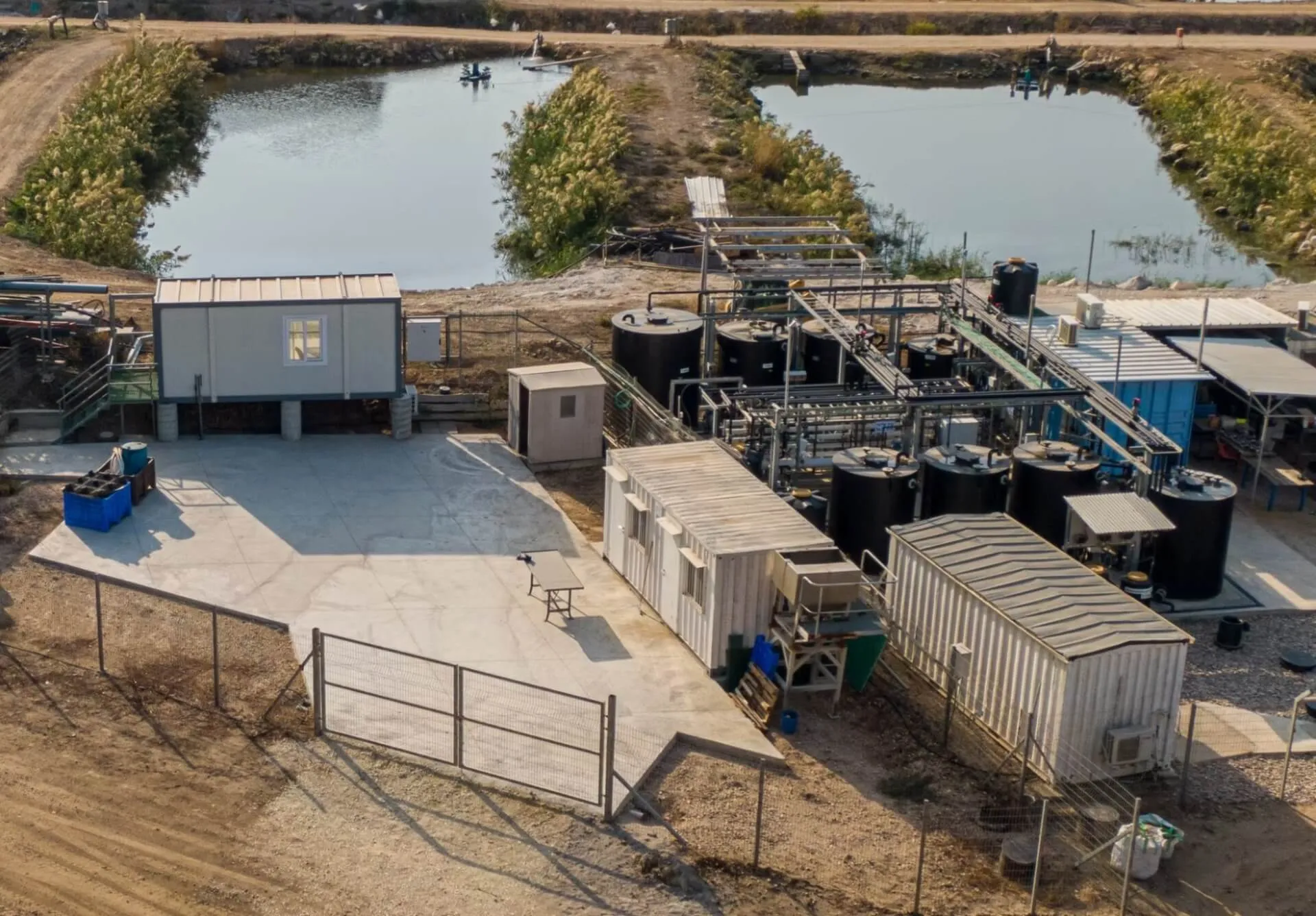
The Ma’agan Michael desalination plant where the pilot is taking place

Haim Rivlin
July 22, 2026

Summary


Listen to a Dynamic Summary of the Article
Created using NotebookLM AI tool
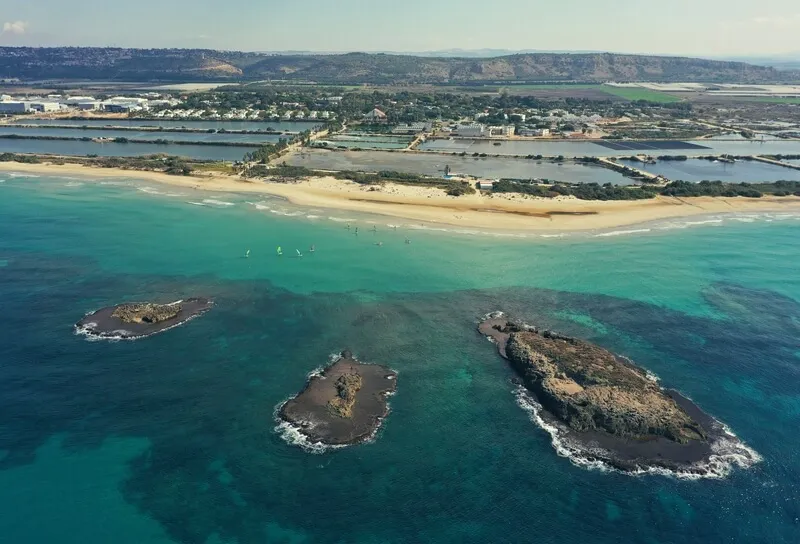
More than a decade after Israel's government pledged to restore magnesium to desalinated drinking water, the country's first national pilot has finally begun. Ironically, the project is being financed entirely by private entities rather than the state. It started some two weeks ago at the private desalination plant owned by Kibbutz Ma’agan Michael and only includes the desalinated water that the plant supplies to residents of the kibbutz. When the pilot comes to an end, authorities will decide whether to add magnesium to all of the desalinated drinking water produced in Israel.
During the desalination process, minerals that are considered vital to our health – such as calcium and magnesium – are removed from seawater. Although calcium is put back in the water shortly after the desalination process – mainly in order to avoid damaging the pipelines – magnesium is not restored to the drinking water consumed by most residents of Israel. As a result, there has been a dramatic decrease in the average national intake of magnesium, which has, according to a series of studies conducted in Israel, increased the risk of heart disease, diabetes and even dementia.
In September 2024, Shomrim and Channel 13 News published a joint investigation which found that, while the World Health Organization recommends a minimum concentration of 25 to 50 milligrams of magnesium per liter of water in order to reduce the risk of heart disease, in most large Israeli cities the concentration level in drinking water is below 10 mg/L. For the sake of comparison, before Israel’s desalination revolution, the average concentration of magnesium was around 30 mg/L.
How the government failed | ‘I instructed’ but nothing got done
In order to fully understand the extent of the government’s failure, we need to go back in time: in 2010, an interministerial committee of experts recommended adding magnesium to Israel’s desalinated drinking water. However, as a result of opposition from the Israel Water and Sewage Authority, which was worried that the move would increase the cost of water, the issue was left in limbo for two years. In May 2012, Prime Minister Benjamin Netanyahu intervened in the dispute and instructed the relevant bodies to conduct a national pilot, whereby magnesium would be added to desalinated water in some parts of the country. However, apart from a statement to the media, nothing happened. Neither public health professionals nor political leaders saw fit to push for the pilot to happen.
The health cost | Heart disease and excess mortality

Meanwhile, evidence of the damage caused by the government failure has continued to pile up. Large-scale studies, such as one conducted in 2016 by the Sheba Medical Center cardiology department in collaboration with Bar-Ilan University, found that heart patients living in areas with desalinated water die at twice the rate of those living in areas supplied by groundwater aquifers. The study reviewed approximately 5,000 patients who had suffered a myocardial infarction. Blood tests from patients residing in areas with desalinated water indicated magnesium levels significantly lower than those of patients living in areas with regular water. Similar findings were also discovered in a massive database belonging to the Clalit health fund.
“The level of magnesium in the drinking water of most Israeli cities is far below the World Health Organization’s recommended levels,” Prof. Michael Schechter, the director of the Clinical Research Unit at Sheba’s cardiology department, tells Shomrim, “which potentially carries a risk of a higher incidence of type 2 diabetes, hypertension, obesity, heart disease and stroke.”
Prof. Schechter, who participated in the countless meetings convened by various Knesset committees, as well as by the Health Ministry, at which the decision to add magnesium to desalinated drinking water was approved, sounds hugely frustrated. “Unfortunately, for political and financial reasons, the decision still has not been implemented,” he says. “I am pleased that residents of Kibbutz Ma’agan Michael, at least, have taken up the gauntlet and will investigate this extraordinarily important public health issue.”
The pilot | The dosage will return to pre-desalination levels
As mentioned earlier, the so-called “national pilot” is actually being jointly funded by the kibbutz and a company called Environmental Protection Technologies (EPT), which operates the desalination plant on the kibbutz’s land. The technology used at the plant was developed at the Technion – Israel Institute of Technology and was presented as part of Shomrim’s investigation some two years ago. However, it was only recently that the regulations enabling the implementation of the technology within the framework of the pilot program were signed.
The pilot, which began some two weeks ago, will continue for between six and 12 months, during which the amount of magnesium will be increased from 5 mg/L to the final goal of 30 mg/L – the concentration level that was normal in Israel before the desalination revolution. Avi Menuchim, from Protection Technologies, stresses that only residents of Ma’agan Michael will actually enjoy the health benefits of the added mineral into the drinking water. “The point where we introduce the magnesium sulfate solution is at the entrance to the kibbutz, which consumes 100 cubic meters per hour,” he says.
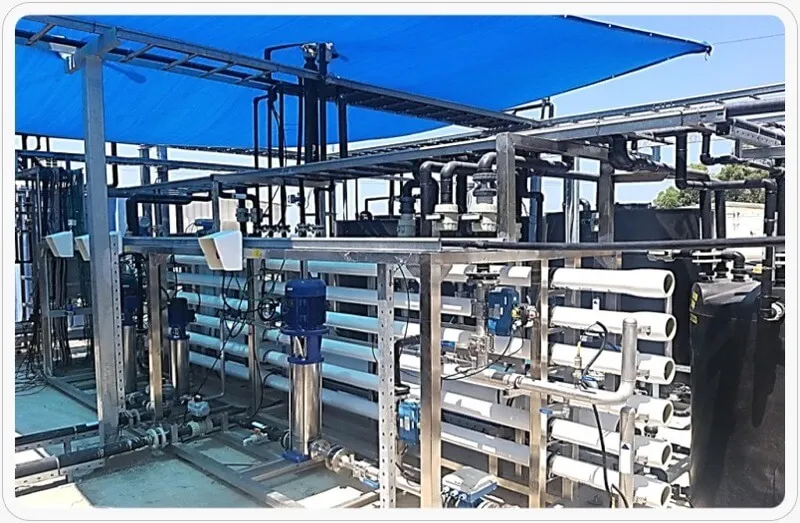
A statement published by the company said that: “The facility uses advanced membranes to separate magnesium from other components found in seawater. The process yields a concentrated magnesium sulfate solution, which undergoes further treatment to ensure its quality and safety. This solution is then introduced into the drinking water at a controlled dosage, meeting both the national pilot’s targets and Health Ministry requirements.”
What next | ‘There’s no budget for research’
If the national pilot is completed successfully and meets the targets set for it, it could provide the scientific, engineering and economic basis for a plan to add magnesium to drinking water across Israel – and could even be used as a model for other countries which rely on desalination as their main source of potable water.
“The technology makes it possible to add more than 20 mg/L of magnesium to drinking water, at a cost two to three times lower than any other alternative,” says Prof. Ori Lahav of the Technion, one of the developers of the technology.

According to information relayed to Shomrim, residents of the kibbutz will not undergo blood tests or any other kind of medical monitoring as part of the pilot; rather, they will be asked merely to participate in a health survey. “There’s no budget for research,” says one official familiar with details of the pilot scheme. “It would be better to think of it as a feasibility study. Most of what we are testing is connected to the technological aspect of the pilot,” another source tells Shomrim.
Kibbutz Ma’agan Michael is delighted to be part of the pilot. “This is a historic moment for the kibbutz and for the State of Israel,” a spokesperson said. “We are proud to be the first community in Israel to be part of the national project to restore this mineral to our drinking water.” A kibbutz source added that, almost 10 years ago, the general assembly of the kibbutz decided to look for a solution to the absence of magnesium in the drinking water, after members reported suffering from more frequent muscle cramps following the switch to desalinated water.
Once the pilot ends, the government will have to decide which technology to adopt: whether to implement the one developed at the Technion, which uses magnesium extracted from seawater at the desalination plants themselves, or to introduce magnesium into the drinking water from alternative sources. Only then will it be possible to assess the cost of reintroducing magnesium and how much more we will pay on our water bills. Given that the current process has dragged on for two decades, one can only hope that these future decisions will be made rather more quickly.